It’s simpler to grasp someone else’s point of view when the ocean isn’t between you. The La Toja Forum brings together both sides of the Atlantic, yet listening to Carlos Díaz-Rosillo makes it clear that a gulf still separates the United States from Europe. Perhaps that gulf isn’t as wide as it seems.
Europe has spent years debating how to reduce its dependence on the United States. But discussing this without first addressing Donald Trump is difficult, a figure Díaz-Rosillo knows well from his time as the White House’s public policy director. During Trump’s first term, the political scientist became immersed in the negotiating approach outlined in The Art of the Deal. I asked him to view it from Europe’s side of the table and explain how Europeans should handle Trump: “It’s easy to figure out what [Trump] wants, and when you know what the other side is trying to achieve, negotiating becomes much easier.”
We also explored other dimensions of U.S. foreign policy. Díaz-Rosillo, now the founding director of the Adam Smith Center for Economic Freedom, believes that the upcoming congressional elections could push Trump to concentrate his efforts beyond American shores. He also contends that some of Trump’s policies, including tariffs, could outlive his presidency, even if a Democrat wins the White House.
We discussed NATO, China and why, in his view, Europe faces more opportunities than threats in its relationship with Washington. And given our shared Cuban roots, I asked him about the island’s geopolitical situation and Trump’s potential next moves. The former Trump adviser expects political change, but not through a direct military intervention like the one in Venezuela. He believes it will come “from within.”
After listening to him, one might conclude that the rift between Europe and the United States has less to do with their interests and more with what each side expects from the other.
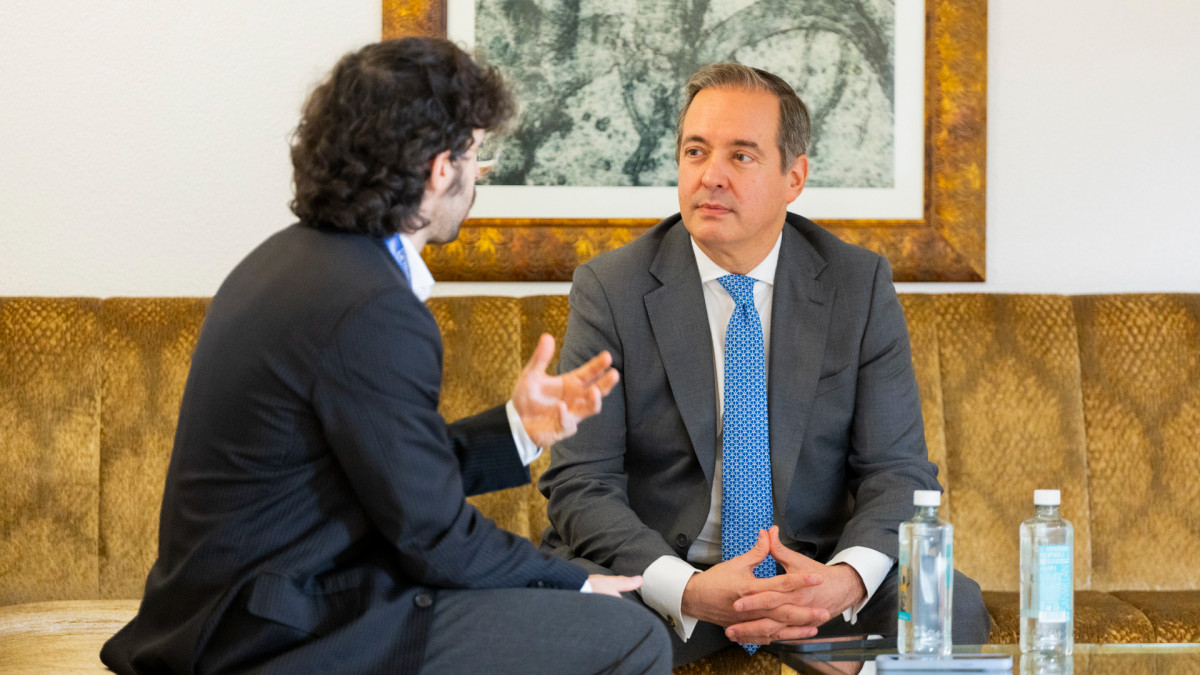
Díaz-Rosillo is the founding director of the Adam Smith Center for Economic Freedom, a think tank at Florida International University. Photo: Agenda Pública / Yanka Soto
I’d like to begin with something you mentioned during the forum, the idea of Trump 3.0. What consequences do you foresee for U.S. domestic politics and, subsequently, for Europe’s ties with Washington?
On the domestic front, I anticipate very little legislative activity. Significant public-policy changes require Congress. If Democrats gain control of Congress, Trump won’t have the votes needed to push through new laws. He’ll turn his attention to what he can accomplish via executive actions, though there isn’t much he can alter in domestic policy that way. He can enforce existing laws with varying vigor and set priorities, but he can’t fundamentally redesign public policy by executive order.
“If Democrats win control of Congress, Trump won’t have the votes he needs to pass legislation. He’ll focus instead on what he can do through executive action”
That scenario would likely frustrate him and push him to focus more on a realm where he has substantial unilateral freedom: foreign policy. The president wields considerable power there, and I think he’ll devote much of his time to it.
Do you see that as a problem or an opportunity for Europe?
A significant opportunity. His remarks often trigger controversy, but I think they contain a lot of truth. We can question the way he communicates, but as far as NATO—an issue of fundamental importance for Europe—the alliance is stronger today because Trump has insisted that its members meet their defense-spending pledges. We can debate his style, but there’s substantial truth in his message.
You said here at La Toja that some of Trump’s ideas will outlive his presidency. Which ones will endure, even if a Democrat assumes office?
Two elements stand out. First, tariffs, which I believe have staying power. Tariffs may decrease in rate or change forms, but I don’t see a Democratic administration scrapping that revenue source. It gives the president a wide latitude to fund priority projects. That’s why tariffs won’t vanish entirely, even under a Democratic regime.
“Tariffs may come down, and the rates may change, but I don’t see a Democratic administration giving up that revenue”
The second enduring feature is the “America First” posture. The average American voter feels that other nations have exploited the United States’ goodwill. And while the United States has benefited from free-trade agreements and globalization, voters sense that others have gained more than they have. Hence there will continue to be a strong emphasis on prioritizing U.S. interests and ensuring foreign policy yields tangible benefits for American citizens. That approach is here to stay.
You worked in the White House, closely with Trump. If you were advising Europe, how would you counsel approaching him?
Negotiating with Trump is relatively straightforward. He is quite transparent: he tells you what he intends to do, and then he does it. As I noted, his first book [Trump: The Art of the Deal] maps out his strategy clearly. It’s easy to deduce what he wants, and once you know what the other side aims to achieve, negotiation becomes much smoother.
The first step is to understand why he acts and speaks as he does, including his frustration with what he views as a global order that takes America’s goodwill for granted. He was elected president not to be popular in Brussels or Paris, but to defend Americans’ interests. He doesn’t care about winning praise abroad. Recognizing that can be very helpful for any leader.
“He was elected president of the United States, not to be popular in Brussels or Paris, but to defend the interests of Americans”
It’s also essential to grasp how much he values personal rapport. Getting along with the person across the table matters to him, but that doesn’t mean feeding him what he wants to hear. Trump respects strength, and he dislikes leaders who appear weak or eager to appease him. He admires leaders who project resolve and who recognize how important personal ties are to him.
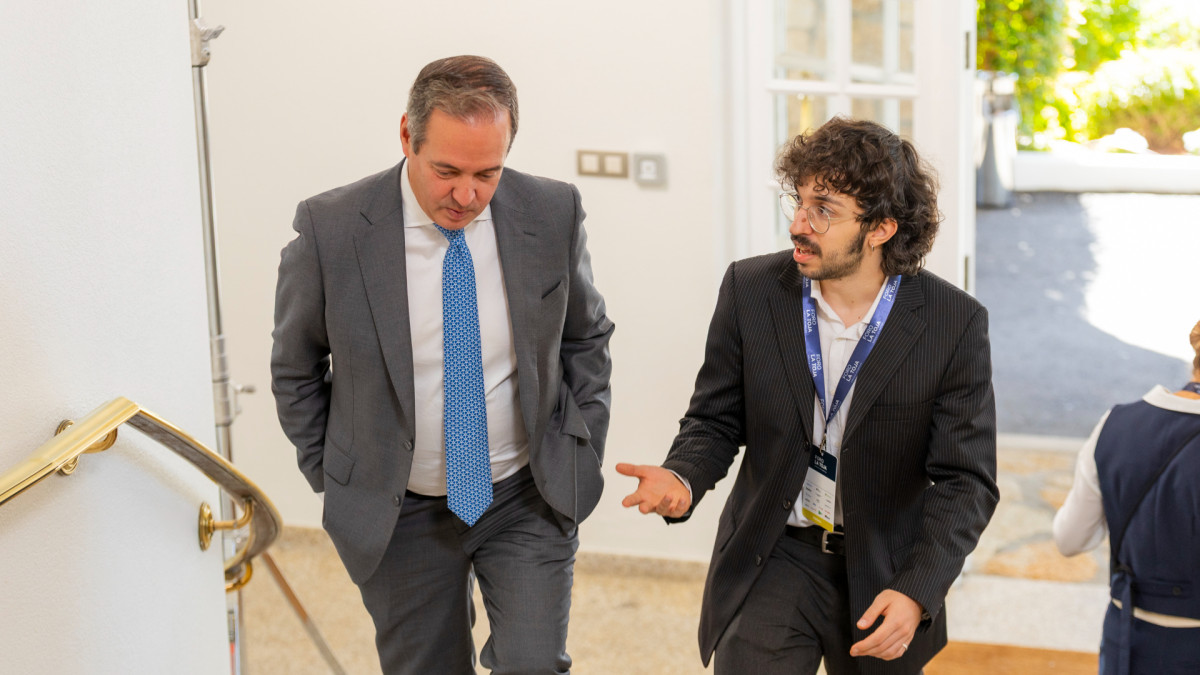
In addition to his political roles, Díaz-Rosillo has taught at Harvard University. Photo: Agenda Pública / Yanka Soto
It’s evident that Europe isn’t currently in a position to outcompete the United States, and that China stands as America’s main rival. Given that rivalry and Trump’s particular approach to Europe, wouldn’t closer ties with Washington make it easier for the United States to contend with China?
Indeed, and this mirrors Trump’s objective. Yet reciprocity remains a sticking point. He would welcome an even tighter alliance with Europe, but he does not believe the relationship is currently reciprocal.
“Trump would like an even closer alliance with Europe, but he doesn’t believe the relationship is reciprocal at the moment”
The primary risk in this strategy is that Europe becomes disillusioned and drifts toward China. If Europe acts prudently and understands that the United States remains its natural partner for defense, trade and culture, I don’t think that scenario will unfold. The danger exists, and it would be particularly perilous for Europe, yet no strategy is free of risk.
You and I both have Cuban roots. What do you anticipate for Cuba? What might Trump have in mind?
I am convinced there will be change. The focus on Iran has delayed it longer than many anticipated, because Washington has been preoccupied with that conflict. Trump has repeatedly stated that Cuba will be the next country in the Western Hemisphere to experience change. I have no doubt it will happen. I don’t foresee a military invasion, and I don’t expect it to unfold exactly as Venezuela did. It will be a shift similar in spirit—change from within—but I don’t expect an operation to forcibly remove the leadership, since there are numerous differences.
“Trump has said clearly, time and again, that Cuba will be the next country in the Western Hemisphere to see change”
Cuba’s current leader does not hold all the strings, unlike Maduro in Venezuela, and we are dealing with a regime that has been in power for almost seventy years. That’s why I believe the change will come from inside. Trump will catalyze that shift by working with someone who will likely emerge from the same system to ensure operational control. A democratic process will eventually follow, but it will not happen overnight, or even in a matter of days. It will take months, if not years.
So is democracy the ultimate aim, or are there other interests at stake?
Both Trump and Secretary of State Marco Rubio, who has Cuba personally at heart, ultimately want a free and democratic Cuba. There’s no doubt about that. But to reach that end, control of the country’s operations must be secured first. At present, those who can guarantee that are the military—who themselves are part of the system.
“Both Trump and Secretary of State Marco Rubio, for whom Cuba is personal, ultimately want a free and democratic Cuba”
So while democracy is the long-term objective, the immediate and medium-term priorities are to seize operational control and revive the economy. And that economic rebound should benefit not only Cubans, who must, of course, be beneficiaries, but the United States as well. After all, Trump is the president of the United States, not Cuba.
En alianza con