
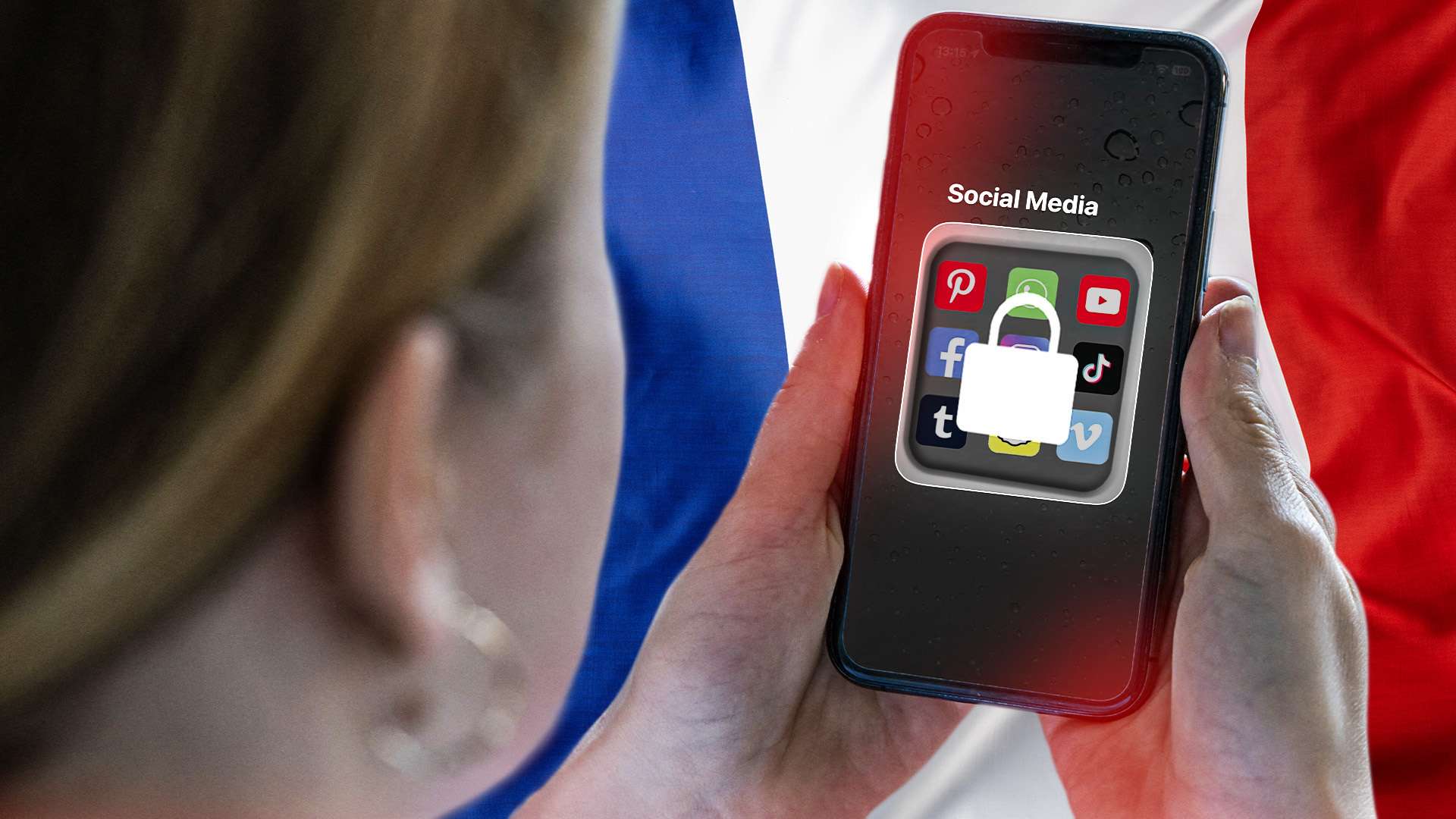
Amid a worldwide push to curb minors’ online activity, France this week became the EU’s first member to approve a ban on social media for users under 15.
President Emmanuel Macron, whose term is set to end next year, has advocated such prohibitions in the past. In June of the prior year, he pressed the European Union to enact a ban on social platforms for under-15s after Reuters reported that a 14-year-old boy fatally stabbed a teaching assistant during a bag search. Macron told a French public broadcaster at the time that if the EU failed to act, France would step in and act on its own.
This Tuesday, Macron’s objective materialized as both houses of Parliament approved the measure by broad margins, which also includes a prohibition on phone use in high schools. The bill still requires clearance from the Constitutional Council before it can become law.
“Under the terms of the law,” The New York Times reports, “it would be up to social media platforms to use age verification systems to filter out underage users.” Exceptions would exist for online encyclopedias and educational digital services. The ban would apply to existing accounts starting in January of next year, according to The Guardian.
Despite broad support, the measure has its critics. As the Associated Press reports, “lawmakers from the left-wing party France Unbowed opposed the bill, arguing that its constitutionality is unclear, that it would effectively end online anonymity, and that it would be impossible to enforce.”
Yet opponents of online restrictions remain a minority as the global online safety movement gains momentum. The New York Times notes that Italy, Poland, Portugal, and Spain are also drafting laws to curb social media use. European Commission President Ursula von der Leyen has suggested that the European Union may soon face age-verification measures, and the United Kingdom has plans underway to enforce a social media ban for kids under 16 by next year. Notably, Australia passed a law banning kids under 16 from social media in 2024, but the country’s youth have found ways to skirt the restrictions.
Even if tech-savvy youngsters can use VPNs and other workarounds to access age-restricted apps, government-imposed social media bans still create a chilling effect online. As Reason’s Elizabeth Nolan Brown has noted, whatever remains of the open internet may soon be upended by overly zealous regulators. When we allow governments to regulate the internet and social media, Brown recently wrote, “we normalize the idea that every online interaction should be traceable and every forum we visit should know who we are.”
France’s ban reinforces the idea that bureaucrats and the state, not parents or individuals, should control and gatekeep access to social media. Most disturbingly, few voices oppose these restrictive measures. In fact, much of the Western world appears ready to embrace these laws and relinquish online freedom in the name of “protecting children.” The end of the open internet will be ushered in with popular support by the world’s most “free” countries.
