
The diagnosis presented by Mario Draghi’s report on European competitiveness is blunt: Europe needs an additional 800 billion euros per year in investment. Political leaders play a central role in that massive injection of capital—without which the continent risks decline. That is the message delivered by Benjamin Haddad, France’s minister delegate for Europe and one of the rising figures in French politics, in conversation with Jeremy Cliffe for at the Munich Security Conference.
In this context, Haddad openly advocates for joint debt issuance and argues that “there is no reason for it to be taboo”, recalling that Europe already crossed that line to fund Ukraine with €90 billion. The strategy, he explains, involves mobilizing private savings that today flow to the other side of the Atlantic—about €300 billion annually—and keeping them at home through a genuine union of capital markets, supported by the coordinated action of a coalition of countries willing to move forward, with “Germany, Spain and Italy” at the core.
Money, however, is only part of the equation; the other part is speed. In the face of the agility of its global competitors, Haddad argues that Europe must simplify its bureaucracy and back more decisive industrial policies. “There is no reason why we should not help our champions emerge”, he says, pointing to the need to emulate—without hesitation—the subsidy and public procurement strategies that the Biden Administration has normalized. The view is pragmatic: free markets do not exist when the playing field is not level.
Haddad also warns about the need to protect critical assets. From quantum technology to payment systems, European sovereignty depends on its ability to act as a coercive power when necessary. He highlights the EU’s Coercion Instrument, which allows taxing tech companies, restricting access to public procurement, and confiscating intellectual property from predatory actors. The message from the French government is clear: Europe is prepared to respond to defend its interests—and to deploy economic power where it previously relied solely on diplomacy.
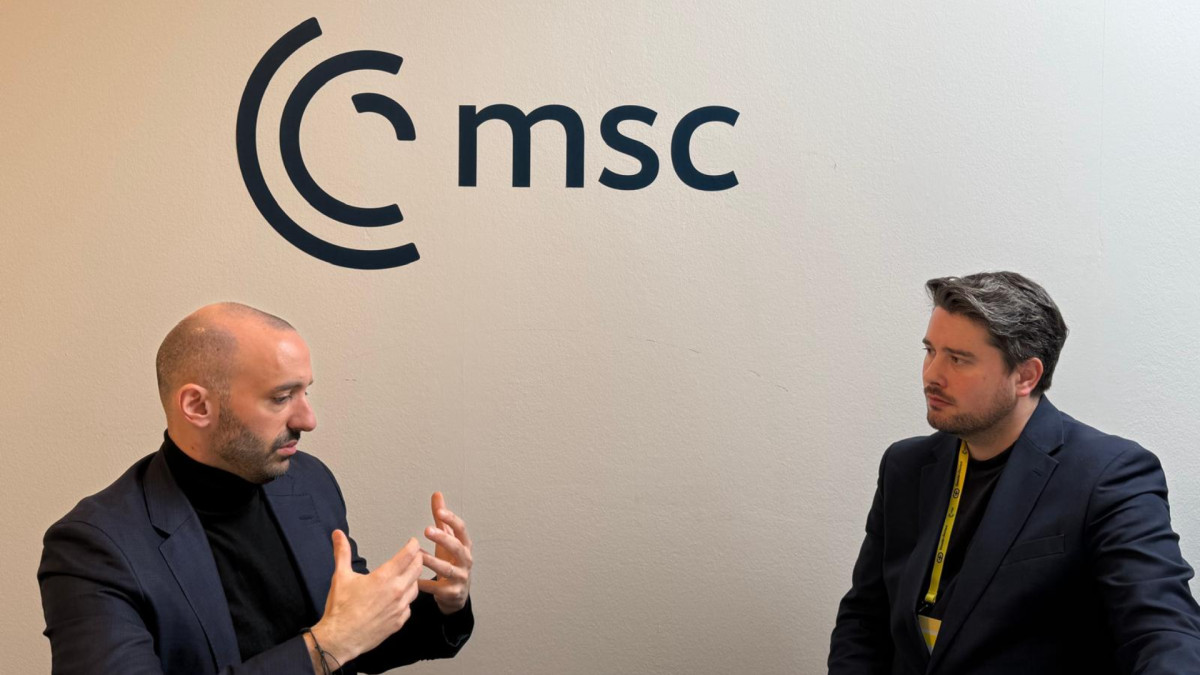
Haddad has been part of the French government since Michel Barnier appointed him as delegated minister for Europe in 2024. Photo: Agenda Pública
I’d like to start with something you recently mentioned, which is the French government’s argument that Europe needs eurobonds to finance common investments. Some say it’s politically difficult or just a way to transfer income within the Union. How do you respond to the skeptics? Why should eurobonds be part of the toolkit?
Let’s look at what we must do to be more self-sufficient or stronger. We need to massively invest in our defense capabilities, in space cooperation, in artificial intelligence, in quantum technology and in green technology. That is clear in the Draghi report. Europe is short by €800 billion per year in investments if we want to catch up with the United States, reduce our dependencies and be more self-reliant. A large part of this, of course, will come from private funds. And what we’ve done in recent days—for example, at the EU leaders’ meeting in Belgium—is to chart a competitiveness agenda: reduce fragmentation, create the union of capital markets, make sure we can fully seize the opportunity offered by 450 million people, a single market, incredible innovators, and ensure that the €300 billion in savings that flow across the Atlantic every year to finance U.S. capital markets stays in Europe to support our companies. But we also need public money, to invest and create a leverage effect for private financing. And what better way to obtain it than by borrowing on the market?
“The key question, once again, is how to find the funding to meet the enormous investment needs we require to become more sovereign”
Let’s not get into a theological debate about it. This is a financial instrument, simply borrowing on the market. By the way, when you do it with twenty-seven, you do it at a discount, because obviously it’s stronger to do it at the European level. There’s no reason for it to be taboo, because we did it in December for Ukraine. In the European Council, we agreed to support Ukraine with €90,000 million for military and economic needs. That’s eurobonds. It’s a very important instrument for Ukrainians to continue defending themselves against Russian aggression in the coming years. The key question, once again, is how to find the funding to meet the enormous investment needs we require to become more sovereign.
Do you think policy is changing within the European Union on this? France clearly defends this stance. It has supporters among some governments, but also skeptics. Do you think the moment’s urgency is reshaping the realm of what’s possible?
There are voices like the Bundesbank governor who have voiced support. I sense an urgency regarding all these issues: defense, common public procurement, and European AI players who need more backing to grow. We have to be much more agile and accelerate progress. Both on financing and on another very important issue, which is European preference. In the United States, the Biden administration passed the Buy American Act and the Inflation Reduction Act, a massive subsidies program for American industry. There is no reason we should not help our champions emerge and conquer the world and compete with the Americans and the Chinese. By the way, that does not mean protectionism.
I’m not saying we should close ourselves to trade and other actors. What I’m saying first is that level playing field is needed. And when trading partners like the United States and China are subsidizing and buying American and Chinese products, we must be able to rise to the same level, not be naïve. And secondly, when it comes to dependencies that could pose security concerns—think technology, defense and payment systems—it’s clear that we must develop common European solutions on those topics.
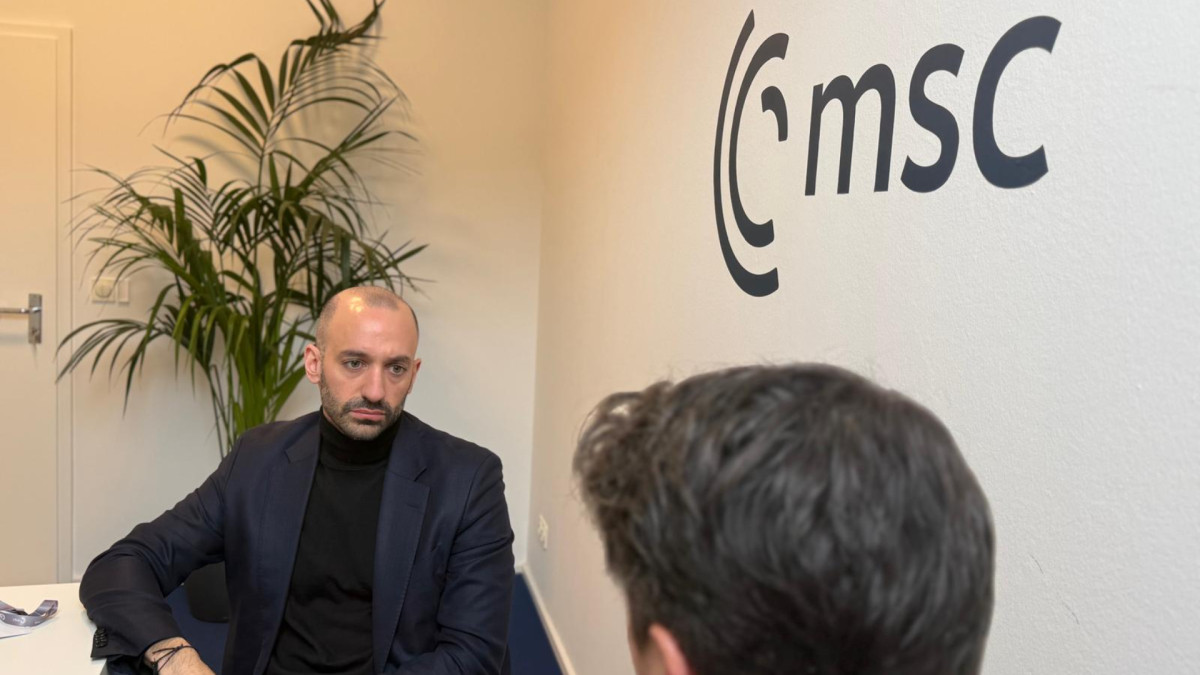
Cliffe asks Haddad about the Munich topics and the role of France alongside Italy and Germany. Photo: Agenda Pública
¿Qué opina de esta nueva sensación de que los italianos y los alemanes, en particular, están liderando una acción en contra de esto? ¿Ve algún margen para el compromiso? ¿Algún margen para persuadirlos?
I don’t see it that way necessarily. Look at the funding we agreed for Ukraine in December. Italy has, in fact, been a partner that supported this initiative. There are many things we agree on, such as simplification, reducing bureaucracy and administrative simplification. Regarding deepening the single market, a capital markets union, a 28th company-law regime to ensure that the same rules apply on contracts, patents and similar matters at the European level—this is something all our companies are asking for and, clearly, we are very much in agreement on. I think the key issue still debated is investment and how to cover Europe’s investment needs.
Leaders like President Macron have said that if by June we do not have a solid package to deepen the single market of the 27 member states, we will resort to greater cooperation. Do you think that will be necessary? And if so, how do you see policy moving forward to achieve it?
It’s something we should embrace because we need to be much more agile in how we decide and how we can cooperate. The truth is Europe has always functioned this way; look at the eurozone or Schengen. There are certain countries that are part of them, and that creates momentum for others to join. Yes, compared with the United States, China, Russia, etc., we understand that we are stronger together and when we cooperate. But that does not mean the EU of twenty-seven has to do everything. Look at what we did for Ukraine. Last year at the Munich Security Conference, after the meeting between President Trump, Vice President J. D. Vance and President Zelensky in the Oval Office, many feared we would abandon Ukraine, that there would be a forced capitulation in twenty-four hours between the United States and Russia without Europeans and Ukrainians. The Europeans took responsibility. We built a coalition with the United Kingdom and other willing European partners, as well as like-minded partners outside Europe—Canada, Japan or Australia—that share the same interests and values.
“I think there is growing convergence on what needs to be done, but we all know decision-making processes vary. Let’s push together with the countries that want to move forward”
We decided to say: “Okay, let’s work together to shape security guarantees for Ukraine for the day after, but also in what we can do today to increase pressure on Russia or to continue financing Ukraine.” I think creating voluntary coalitions in other areas we have discussed, such as defense or artificial intelligence or common economic instruments, is the way to build momentum. The key issue now for us is speed. I think there is increasing convergence on what to do, but we all know decision-making processes vary. Let’s push together with the countries that want to move forward.
¿Qué países considera socios valiosos, especialmente en el frente económico, a favor de la inversión común y la integración de los mercados de capitales? Desde París, ¿ve algún socio en particular con el que sepa que puede forjar el núcleo interno de una coalición de voluntarios?
En lo que respecta a los mercados de capitales, podemos trabajar especialmente bien con Alemania, España e Italia. Estos países comparten la misma valoración de la necesidad de profundizar el mercado único. En lo que se refiere a la inversión en áreas como la inteligencia artificial, en Gran Bretaña hay ecosistemas muy interesantes. Se podrían considerar países que están fuera de la UE.
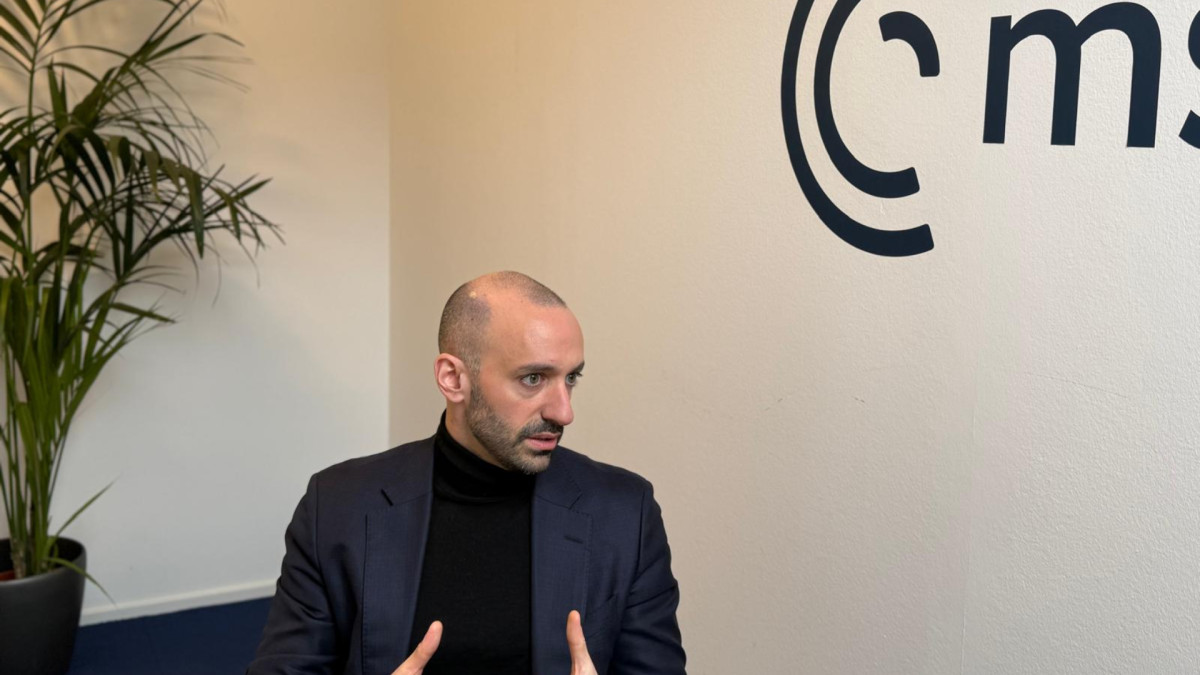
El ministro delegado Haddad insiste en que la velocidad es un factor clave para los próximos pasos de la Unión Europea. Photo: Agenda Pública
Geometría variable, as they like to say.
Yes, of course. This should not be viewed as something that weakens European institutions. On the contrary, it is a way for Europeans to continue moving forward in concrete projects. When people think about Europe, they think of its institutions and the euro, but they also think of common projects like Airbus, which are the result of industrial cooperation. It is also these concrete projects that will guarantee security and economic growth and will make the European idea prosper.
Regarding volunteer coalitions, a lot has been said about the geopolitics of technology at this MSC. President Macron spoke of the need for algorithmic transparency and ‘one person, one account’, which is clearly the direction in which things are going. Do you think there is room for a coalition on that specific point? Because, obviously, we have a mix of opinions within the European Union. Some are at the forefront of this new push to humanize this technology. I would undoubtedly include France in that group. We have also been speaking with the Spaniards. Others are more cautious. How do you view policy on this?
When it comes to building digital sovereignty, you need to back investment in innovation with standards. In recent years, Europe has democratically established a regulatory framework with elements like the Digital Services Act. And there is no reason to dismantle it in response to external pressures. We have seen how the United States has pressed on our rules, and I think we must be very firm and stay true to our principles: what is illegal in the real world must be illegal in the virtual world; we do not want hate speech, anti-scientism, racism or algorithmic manipulation; we support freedom of expression, but not the freedom of expression by Russian bots. I think this must be made very clear. Therefore, we must support these rules and enforce them. Because sometimes the European Commission has shown some timidity in applying the DSA. Then, of course, and here is where countries like Spain and others have also led the way, is the protection of our youth.
“We have very interesting companies, such as Mistral. But at the same time, we must take into account the risks and the challenges and protect our democratic space and our young people”
And that has been a major concern for President Macron, given the impact on mental health, especially among young children. That is why we decided in France to pass a law banning social networks for those under fifteen. We see other countries joining this initiative. And to be honest: we will be much stronger if we do this at the European level and harmonize European rules on the matter. But that should not be an obstacle for countries that want to move forward on this issue and gain momentum. These issues arise everywhere in our democracy. Parents see the impact on their children. Teachers and educators wonder how to address screens. We must support our startups and innovators and be very optimistic about what technology and artificial intelligence can do for our societies and our prosperity. A few months ago we held in France the AI summit, which led to massive investment in data centers in France. We have very interesting companies, such as Mistral. But at the same time, we must take into account the risks and challenges and protect our democratic space and our youths.
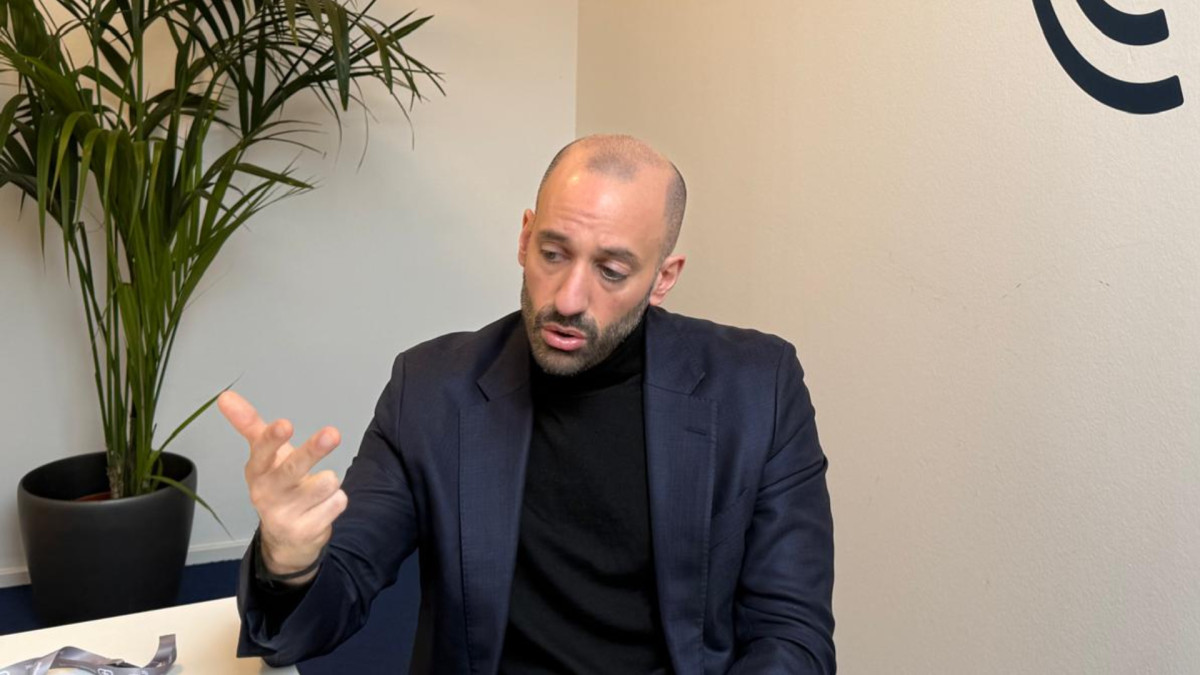
As Haddad and Cliffe explain, digital policy is one of the central topics of debate at this Munich Security Conference edition. Photo: Agenda Pública
Why do you think the Commission has been timid in this sense? On one hand there is the idea of the “Brussels effect” and the EU’s strong competition where the union of twenty-seven has genuinely led. But there is also frustration in some capitals because progress is not moving faster. Is it simply because there is a variety of opinions among member states? Or does the Commission need to feel more empowered? What do you think could help unlock that new ambition?
I don’t know. We have developed these instruments. And ultimately, it isn’t really a political issue. It is a matter of the rule of law.
Law enforcement.
Exactly. When actors like X do not respect algorithmic transparency and do not reject hate speech, we need investigations, and rapid ones. Of course, these investigations must be solid and capable of standing up in court. But at the same time, they must be swift and, if necessary, lead to fines and sanctions. Again, I believe that does not contradict a very ambitious agenda of supporting innovation, startups, reducing bureaucracy when needed, and investment.
Do you think prohibitions should be on the table as an option?
It is one of the tools of the DSA. Of course, there is a whole range of graduated responses when a platform acts irresponsibly, but it is one of the tools at our disposal. By the way, there are other instruments, such as the Anti-Coercion Instrument, something we didn’t have a few years ago but established to protect ourselves against predatory behavior. It allows us to tax tech companies, prohibit access to public procurement, and confiscate intellectual property. And it proved useful in the recent Greenland crisis to say: “We are ready to put this instrument on the table.” It is also a question of mentality. Are we willing to act and think like a power? That also means using the instruments at our disposal, striking back to defend our interests, and using force when necessary. And that is the gradual change that Europe is undergoing.
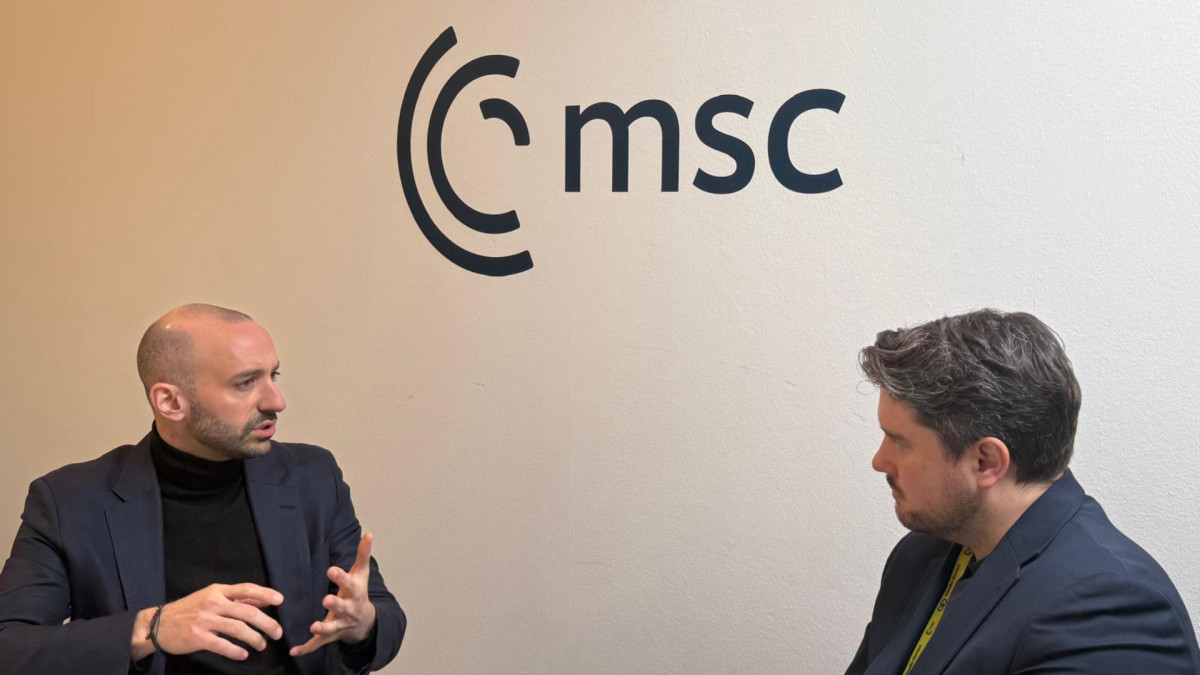
The delegated minister Haddad calls for defending Europe’s interests using “force” when necessary. Photo: Agenda Pública
There are many different interpretations of the current state of the transatlantic relationship. And when analyzing Marco Rubio’s speech this weekend, people have given very different readings. Some say it’s reassuring. Others say it was a challenge to Europe’s cultural standards or to its self-image as a civilization. How do you view that scenario?
Europeans should not spend their time commenting on, debating and interpreting the various speeches of American leaders at European conferences. They should focus on what they themselves can do and the levers at their disposal to carry out everything we have discussed. The truth is that Americans are our partners and allies, and we work with them when we share common interests, as we have done over the past year to realign and converge again on Ukraine. I think it was truly essential to bring them into the coalition of volunteers to monitor any ceasefire and provide security guarantees. And of course, we maintain ongoing dialogue with U.S. authorities. But let us be clear: in the last decade there has been a very explicit pivot of the United States toward Asia and toward protectionism, a strong call for Europeans to take more responsibility for our own security and defense, and an increasingly dangerous international environment, from Russia’s aggression and the broader threat to European democracies, to China’s shifting trade stance that puts much more pressure on our economies.
“The Americans are our partners and allies, and we work with them when we share common interests, as we did over the past year to realign and converge again on Ukraine”
And we must draw lessons from all of this. I always say: “Let us be more stoic, focus on ourselves and on what we control—the only thing we control is ourselves—and rise as a power.” Therefore, it will be difficult and there will be bumps along the way, but I’m convinced this is what will lead to a much more mature and balanced transatlantic relationship.
Healthier.
A healthier relationship for both sides. Because right now there is an asymmetry that is not healthy for either side and is causing resentment, frustration and tension. Therefore, when you have a European partner who has its own interests, its own opinions, but who at the same time adds value to the alliance, I think that is what will reshape and save the relationship.
More honesty?
Yes, more honesty. But honesty must be backed by strength and power. Otherwise, it’s just words.
Thank you very much.
