
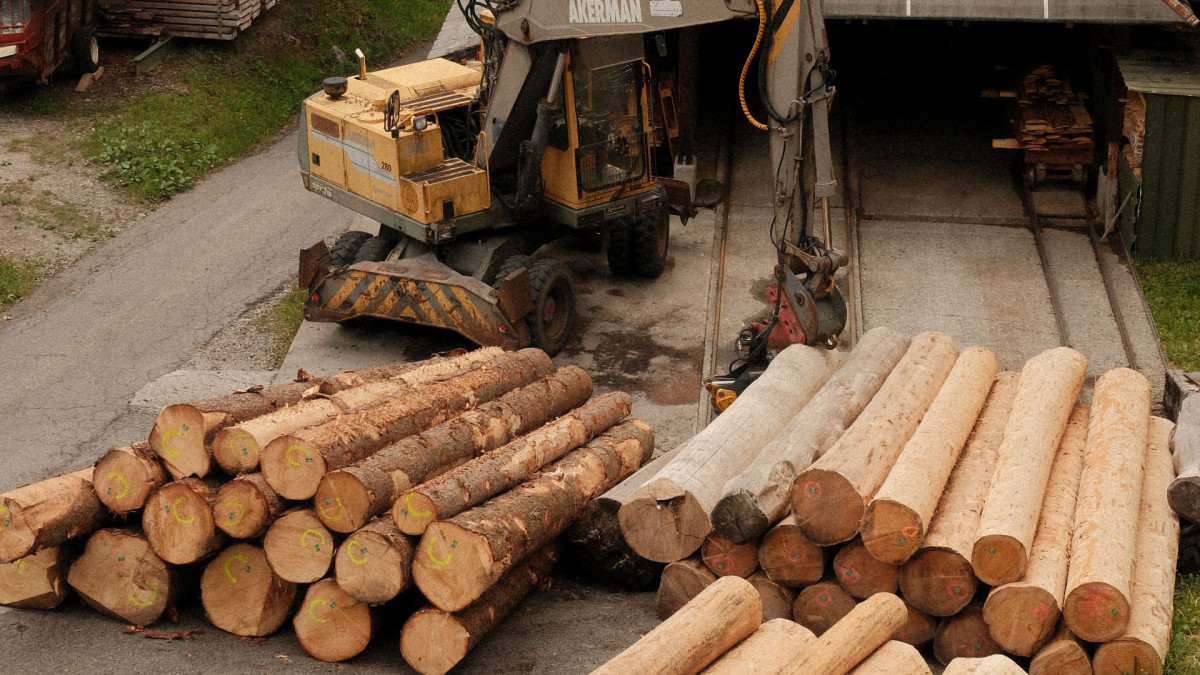
There is a datum that should sit at the center of the European debate on rearmament and is barely mentioned: the majority of the raw material used to manufacture the powders and propellants for European ammunition is not produced in Europe. Nitrocellulose, the basic energetic component of almost everything an army fires, is produced on the continent from cotton linters, and cotton hardly grows here. It is imported, imported from a few countries, and several of them are not allies. We have spent three years talking about strategic autonomy and about stocking up on projectiles, and we still discuss little about what they are made of.
“We have spent three years discussing strategic autonomy and stocking up on projectiles, and we still discuss little about what they are made of”
I write these lines as someone who a year ago decided to found a company to tackle exactly that problem: to produce military-grade nitrocellulose from European wood pulp, and since then I have been able to observe up close how the rest of Europe moves and what place Spain could occupy. My conclusion is optimistic, with one condition: there is a real opportunity and it is ours if we recognize it in time.
I will start with what already works, because it works more than is believed. The European Union has moved in a few years from strategy documents to instruments: the European Defence Fund funds research and development with annual calls, and the new industrial program puts money into plants, not just on paper. The European Defence Agency brings governments and industry together in capability-based technical groups, where a Spanish SME can sit beside major German, French or Nordic manufacturers and propose. NATO does the same with its scientific groups. In all those forums I have found the same attitude: tell us what you can do, who validates it, and when you can have it. And the same urgency: no one in Brussels or in the Alliance believes there is time to waste.
I have also seen how the countries we compete with are positioning themselves for the same funds and the same place in the value chain. There are governments that have published technological roadmaps for ammunition with explicit focus areas and calendars, and that are inviting their industry to ask what role it wants to play. There are ministries that have turned their defense research budget into a fixed and rising share of total spending, with a five-year target. There are public centers that have been studying alternative raw materials for nitrocellulose for years in multinational programs, with domestic companies included. And there are private defense-focused equity funds that advertise hundreds of millions with entries starting from two million euros, because their investors have understood that the sector has entered a new cycle. None of this is science fiction: these are countries of about our size or smaller, with less industry than we have.
And here lies the opportunity. The Spanish public defense debate has rightly focused on the digital sphere: drones, artificial intelligence, cybersecurity, space. It is where the narrative lies and where the startups are. But a decisive part of European autonomy is chemistry, and in industrial chemistry Spain has advantages that almost no one is foregrounding. We have the largest fast-growing forest area in the Union and a wood-pulp industry that exports worldwide. We have top-tier public research centers in materials. We have a serious defense industrial base, with companies that manufacture ammunition and propellants and that today buy their raw materials abroad. And we have, for the first time in decades, a budget. The molecule Europe needs and does not produce could come from a Spanish tree. That sentence cannot be uttered by Germany, France, or Poland.
“The molecule Europe needs and does not produce could come from a Spanish tree. That sentence cannot be uttered by Germany, France, or Poland”
For that opportunity to become capability, the pieces need to meet, and that is where the State can make a difference with very little. The current procedures are designed for contractors with forty years of history, three closed exercises and a legal department. The new companies, which are precisely the ones that can fill the gaps that the large players do not find profitable to cover, fit badly into those molds. It is not the fault of the people: in every directorate general I have dealt with I have found civil servants and military personnel who understand the problem, respond, and help. It is the structure that was designed for a world in which programs lasted fifteen years and which now must accompany projects whose requirements change every six months.
I propose three things, and I believe all three are reasonable and inexpensive. First, a clear dual-use framework for the emerging industry, which specifies which activities, which technologies, and which third-party relationships require which authorizations, and that can be read in an afternoon. Today, an entrepreneur entering this sector learns through consultations, and each consultation takes weeks. Second, a one-stop window with deadlines for new sector companies: a single entry point at the ministry that accompanies the project from registration to qualification and that answers in weeks, not quarters, because coordination between agencies is a problem of the State and not of the administered. Third, that public financing instruments and national calls admit those who do not yet have three completed rounds, with whatever guarantees are needed, because demanding a track record from someone who is born to fill a gap is a polite way of saying the gap will remain there.
We have chosen to move forward while those pieces arrive, and I share this as proof that it can be done, not as a merit. We have validated the raw material with a Spanish public research institute, which is the one that signs what a company a few months old cannot sign on its own. We have built and submitted a proposal to the European Defence Fund with partners from five countries, coordinated from Madrid by a small enterprise. We have entered the technical forums of the European Defence Agency and NATO where decisions are made about what will be researched in the coming years, and in one of them we occupied a seat that Spain had left empty. All of this has been accomplished in months, with our own capital and that of friends, and with more help from the Administration than the usual bureaucracy would lead one to expect. If a newborn company can reach that point, imagine what the country could do if it decides this is one of its bets.
“If a newborn company can reach that point, imagine what the country could do if it decides this is one of its bets”
Speed is today a military capability, and the countries around us are treating it as such. Spain has the forest, the industry, the talent, and the budget. What is needed is to decide that defense chemistry is also ours, and to put a clock on it. This opportunity will not wait: the raw material Europe does not produce will be produced by someone, and today, for once, the arguments for it being here are stronger than anywhere else.
