
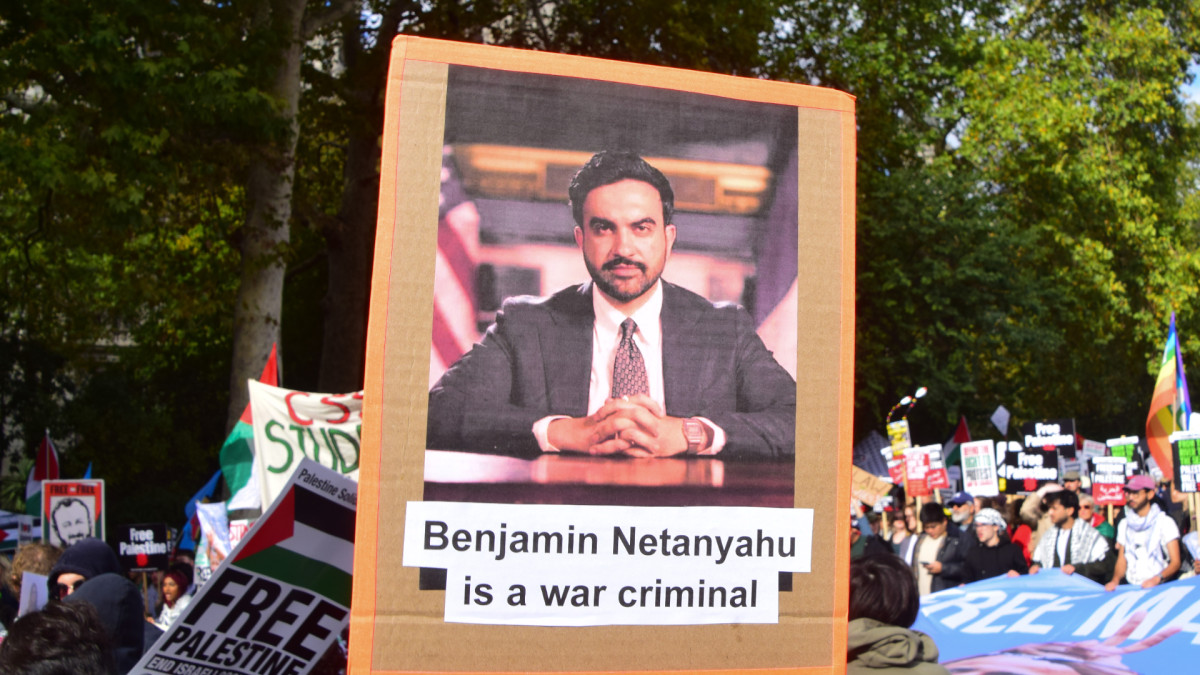
In November 2023, a small group of lawmakers and activists began a hunger strike outside the White House to demand a ceasefire in Gaza. They protested the Israeli military offensive and the backing Joe Biden provided to Benjamin Netanyahu’s government. Among them was Zohran Mamdani, then a member of the New York State Assembly and little known outside his political circle. Three years later, Mamdani is the mayor of New York and one of the benchmarks of a wing of the Democratic left that questions U.S. policy toward Israel and the decisions of the prior Administration. That protest anticipated a division that the Democratic Party has not yet resolved and that could influence the midterm elections on November 3. The Gaza war has pitted generations of leaders against each other, called into question the party’s historic relationship with Israel, and opened a dispute over the accountability of those who backed Netanyahu’s actions. It has also given space to candidates who seek to change U.S. foreign policy from Congress.
Aquella protesta anticipaba una división que el Partido Demócrata todavía no ha resuelto y que puede influir en las elecciones de medio mandato del 3 de noviembre. La guerra de Gaza ha enfrentado a distintas generaciones de dirigentes, ha puesto en cuestión la relación histórica del partido con Israel y ha abierto una disputa sobre la responsabilidad de quienes respaldaron la actuación de Netanyahu. También ha dado espacio a candidatos que aspiran a cambiar la política exterior estadounidense desde el Congreso.
“The Gaza war has pitted different generations of leaders against each other, challenging the party’s historic relationship with Israel”
The writer Peter Beinart recalled the hunger strike in a September review for The New York Times of Crossing the Red Line: Biden, His Advisors, and Israel’s War in Gaza, the book in which journalist Akbar Shahid Ahmed investigates White House decisions during the war. Mamdani was then one of the protesters demanding a change in course; today he holds one of the country’s leading elected positions. But entering the institutions does not guarantee that those who opposed Biden can alter a policy sustained by the same networks of power across successive administrations.
Las decisiones de Biden y una élite que no se renovó
The Biden Administration repeatedly condemned the suffering of Palestinian civilians, called for the entry of humanitarian aid, and expressed concern about certain Israeli military operations. Those warnings, however, rarely translated into effective conditions to maintain cooperation. Washington kept its military and strategic support for Israel despite having tools to pressure the Netanyahu government.
“Washington maintained its military and strategic support for Israel despite having tools to pressure the Netanyahu government”
Ahmed attributes part of that continuity to the concentration of decisions in a small circle of officials: Biden himself, Secretary of State Antony Blinken, National Security Advisor Jake Sullivan, and Brett McGurk, who oversees the Middle East in the National Security Council. The fundamental decisions about Gaza were left in their hands, while other officials warned about the humanitarian consequences of the offensive and the responsibilities that the United States might bear.
There were debates and objections within the Administration, but they hardly altered the White House’s priorities. According to Ahmed’s reporting, Biden and his aides resisted revisiting decisions even when their consequences grew increasingly hard to justify. His account is critical of the president and his top advisers, though it also reconstructs the functioning of a government in which the warnings of numerous officials had little influence over their superiors.
Beinart finds part of the explanation in the career paths of those responsible for U.S. foreign policy. Many had built their careers during the war on terrorism that followed the September 11, 2001 attacks. The protection of allies and the fight against terrorist threats had defined their understanding of the United States’ international role.
That experience conditioned, according to Beinart, their interpretation of Hamas’s October 7, 2023, attacks. Israel’s security became the principle around which the American response organized itself, while the protection of Palestinian civilians was subordinated to a military strategy barely questioned at its core. The problem, in his reading, was deeply tied to the political culture of those leading the Administration and their way of conceiving the alliance with Israel.
Progressive critics have gone beyond the personal decisions of Biden. Those who question his conduct also point to the advisers who have defined U.S. foreign policy for years, the trust between them and the influence of lobby groups. For these sectors, a change of president is of little value if the main decision-makers on international affairs remain the same people.
“For these sectors, changing presidents is of little value if the main decision-makers on international decisions remain the same”
There is a recent precedent. In the 2008 Democratic primaries, Barack Obama defeated Hillary Clinton after opposing the Iraq invasion, which she had supported. The weariness over that war allowed him to present himself as a generational alternative to Democratic leaders linked to some of the most controversial decisions of the George W. Bush Administration.
But Obama’s victory did not produce a comparable renewal in the leadership of foreign policy. Biden was his vice president and Clinton became Secretary of State. Numerous figures who had participated in prior decisions kept positions of responsibility. Obama had managed to build a presidential bid around his opposition to the Iraq War, although later he governed with much of the political elite that had supported that intervention.
The candidates who today challenge U.S. support for Netanyahu face a similar challenge. They can win primaries, win seats, and reach positions within the Democratic Party, but changing foreign policy would also require intervening in appointments and the power dynamics that condition decisions. Beinart raises a question that remains open: whether this generation can reshape those structures or will end up joining them.
De las protestas a las primarias demócratas
The November 3 elections will test candidates who have turned their criticisms of the Gaza war into a core part of their political activity. Some have won Democratic primaries in districts that have traditionally voted Democratic and now aspire to represent their constituents in Congress. Their trajectories show how part of the opposition to U.S. military support for Israel has moved from protests to electoral competition.
In New York, Claire Valdez, linked to the Democratic Socialists of America (DSA), is part of a political current close to Mamdani. She advocates housing, labor rights, and the cost of living, and opposes U.S. military support for Israel. Brad Lander, another New York candidate and progressive Jewish politician, has criticized both Netanyahu’s actions and certain forms of military cooperation between the two countries.
Dr. Adam Hamawy, a Democratic candidate in New Jersey, attended Gaza war victims and has incorporated that experience into his campaign. In Michigan, Donavan McKinney represents another generation of progressive candidates calling for changes in foreign policy and questioning the influence of big donors on party decisions.
Not all propose the same. Some advocate ending arms transfers to Israel; others call conditioning military aid on compliance with international law, while some campaigns focus their criticisms on Netanyahu. Gaza may not be the central issue in all platforms. Housing, healthcare, and the economic struggles of citizens carry substantial weight, as in the municipal campaign that propelled Mamdani to the New York mayoralty.
The difference with the 2023 protests is that these candidates are already competing for posts that until now were held by Democratic leaders favorable to Biden’s policy. Michigan offers the most significant example of that clash.
“Neither is Gaza necessarily at the center of their platforms. Housing, healthcare, and the economic difficulties of citizens carry substantial weight”
In August, Abdul El-Sayed defeated Haley Stevens in the Democratic Senate primary. A former public health official, El-Sayed had argued during the campaign to end U.S. military aid to Israel and had described Israel’s actions in Gaza as genocidal. Stevens took a more pro-alliance position with the two countries, though she had also criticized Netanyahu. She also had the backing of Chuck Schumer, the Senate Democratic leader.
The campaign mobilized extraordinary sums of money. According to AdImpact data collected by The Washington Post, pro-Stevens advertising amounted to roughly $64.7 million, versus $7.4 million spent to back El-Sayed. Much of the gap came from organizations linked to the American Israel Public Affairs Committee (AIPAC), one of the leading lobbying groups supporting the U.S.–Israel alliance. United Democracy Project, its political action committee, dedicated more than $30 million to backing Stevens.
El-Sayed won by about one percentage point. The victory had national repercussions because a candidate who favored ending military aid to Israel defeated a rival supported by the party leadership and by organizations with far greater funding power.
“A candidate who favored ending military aid to Israel managed to defeat a rival backed by the party leadership and by organizations with far greater fundraising power”
It would be a mistake to credit that outcome solely to Gaza. El-Sayed also centered his campaign on inequality, the cost of living, and the influence of big donors. The enormous spending backing Stevens allowed him to turn his campaign into an argument against the influence of money in U.S. politics.
The loss did not end the differences between them. In the final days of the campaign, Stevens argued again against El-Sayed’s positions on Israel, while the Democratic leadership tried to prevent the clash from harming its candidate. The dispute continued into the last weekend before the election, after Stevens demanded that El-Sayed publicly reject an ad critical of Israel financed by an external organization. Ultimately, Stevens decided to back Republican Mike Rogers, going against her own party.
El-Sayed faces Rogers, a former FBI agent, in a state that is especially competitive. A defeat could affect the Senate balance and would force the Democrats to confront the consequences of a rift that remains less visible elsewhere. In districts where the party is virtually guaranteed victory, disagreements over Israel may be resolved during primaries. Michigan requires reconciling electors with significantly different views on the alliance with the Israeli state.
Candidates critical of Israel have not won all their internal battles either. In Missouri, Wesley Bell again defeated Cori Bush, one of the more vocal Democratic critics of the Gaza offensive. Bell, who had previously ousted Bush from Congress in 2024, maintains a stance more favorable to the alliance with Israel and again received backing from AIPAC.
Michigan and Missouri produce different results for the two currents within the party. The leaders who defend the traditional relationship with Israel keep support among voters and the ability to win elections. At the same time, El-Sayed’s victory has shown that the leadership’s backing and far higher funding do not guarantee beating those who propose reevaluating that alliance.
El cambio entre los votants demócratas
The growing electoral space for these candidates is tied to a shift in Democratic preferences that began before October 7, 2023 and that the Gaza war has accelerated, especially among younger voters and the more progressive.
In February 2026, a Gallup poll found that 65% of Democrats sympathized more with the Palestinians, compared to 17% who leaned toward the Israelis. Among Republicans, 70% expressed greater sympathy for Israel and only 13% for the Palestinians. By contrast, in 2001, when this trend started, 51% of Democrats sympathized more with Israel. Twenty-five years later, their preferences have inverted.
“In February 2026, a Gallup poll found that 65% of Democrats sympathized more with the Palestinians, compared to 17% who leaned toward the Israelis”
The gap also appears across generations. Among Americans aged 18 to 34, 53% sympathize more with the Palestinians and 23% with the Israelis. Among those over 55, the share leans toward Israel at 49% and toward Palestine at 31%. These differences help explain why the new progressive candidates find an electorate ready to challenge positions that had been dominant within the Democratic Party.
It is worth distinguishing, however, between the sentiments expressed in a poll and preferences on specific foreign policy decisions. Sympathizing with the Palestinians does not necessarily equate to calling for an end to military cooperation with Israel. nor does it imply that Gaza will decide the vote on November 3. For Americans overall, the economy, the cost of living, immigration, and views of Donald Trump’s presidency still carry more weight.
Where that shift is already shaping the debate is in Democratic primaries. Leaders who previously could defend support for Israel without facing significant opposition from their own voters must now answer for their ties to AIPAC, the donations they receive, and their positions on certain Israeli military operations. In some districts, those issues have taken on a presence comparable to domestic policy concerns.
The division also does not simply track differences between Jewish and Muslim communities. Brad Lander and other progressive Jewish politicians participate in criticizing Netanyahu and U.S. military support. Other Democratic Jewish leaders and voters continue to defend the alliance with Israel, even when they disagree with their governments’ decisions.
For some of the new candidacies, arms transfers to Israel are tightly linked to broader criticisms of how the Democratic Party functions. They question the influence of large fortunes, the autonomy of representatives, and the ability of lobby groups to shape policy decisions. Their opposition to war is part of a broader debate about who wields power within the party.
“Their opposition to the war is part of a broader discussion about who wields power within the party”
But winning primaries and general elections requires drawing together divergent electorates. Democratic candidates must appeal to voters who do not necessarily share the party’s most progressive stances and who, in some states, remain favorable to maintaining the traditional alliance with Israel. El-Sayed’s Michigan result will be especially telling to see whether a Gaza-focused platform can build a broader majority beyond the primary victory that brought him there.
Israel after the elections: Netanyahu without a majority
The Israeli elections on October 27 left Benjamin Netanyahu without the parliamentary majority he had enjoyed until now. His bloc dropped from 68 to 53 seats, fifteen fewer than in the previous Knesset. The opposition led by Gadi Eisenkot tallies 48 representatives, while Arab parties scored a historic result: eleven seats for the Joint List and eight for Ra’am, for a total of nineteen.
Those nineteen seats could prove decisive. If the opposition parties agreed to form a coalition with both of these groups, they would reach 67 seats, six above the required majority. But that arithmetic runs into political differences among those who would have to support the new government.
Avigdor Lieberman, head of Yisrael Beiteinu and a former Netanyahu ally, refuses to govern with Arab parties. There are also resistances within other opposition formations, including Eisenkot’s and former Prime Minister Naftali Bennett’s. None has yet found a formula to turn the potential 67 seats into a governing majority. Israel could face prolonged negotiations, a unity government, or even another election.
The result matters especially for Israel’s Arab citizens, who make up about a fifth of the population. Their parties have achieved
“There exists a potential parliamentary majority capable of unseating Netanyahu, but a large portion of its members rejects backing representatives of that minority”
The stalemate also reflects the priorities that have dominated Israeli politics since Hamas’s October 7, 2023 attacks. National security and the government’s responsibility for the failures that made those attacks possible remain central concerns for many citizens. Netanyahu has endured substantial political wear, though that rejection of his management does not necessarily translate into a challenge to Israeli policies toward the Palestinians.
Gadi Eisenkot, former Chief of Staff, presents an alternative to Netanyahu in leadership, institutional functioning, and demands for accountability. However, he shares much of his opponents’ security concerns and does not advocate a broad break with Israel’s foreign and military policy.
A government led by Eisenkot could therefore be far from the positions held by the most critical American Democrats. The possible departure of Netanyahu would not, by itself, resolve the disagreements that the Gaza war has deepened between sectors of both countries.
“Gadi Eisenkot, former Chief of Staff, offers an alternative to Netanyahu in leadership, institutional operation, and the demand for political accountability”
In Israel, opposition to the prime minister centers mainly on his political responsibility, national security, and institutional functioning. Among the U.S. progressive ranks, by contrast, critiques extend to arms supplies, humanitarian obligations, and the role of the United States in its allies’ military operations.
These are movements with very different traits. Arab Israeli parties represent a national minority with its own parliamentary presence; U.S. opponents of the war belong to a much broader and more diverse political coalition. Their demands and institutional positions are not equivalent. They share, however, a common challenge: getting traditional parties to accept incorporating those who question some of their historic stances.
The relationship between Washington and Jerusalem had enjoyed substantial continuity regardless of which party occupied the White House. Administrations could differ with Israeli governments and maintain difficult personal relations with their leaders, as occurred between Barack Obama and Netanyahu, without calling into question the main security commitments between the two countries.
That consensus has weakened with the Gaza war, Netanyahu’s political rapprochement with Trump, and changing U.S. voters’ preferences. Republican support for Israel remains more expansive, while Democrats increasingly seek to reexamine the terms of military cooperation.
A new Israeli government could improve personal relations between leaders and adjust aspects of bilateral diplomacy. But recovering the old bipartisan U.S. consensus would be much harder if its positions on Gaza, the West Bank, and the Palestinian question remain distant from those of a significant portion of the Democratic electorate.
Limits to Democratic renewal
The Obama precedent in 2008 remains relevant for understanding what this new generation of candidates might achieve. His opposition to the Iraq invasion helped defeat Hillary Clinton in the primaries, but it did not stop him from eventually governing with leaders who had supported that war. Nearly two decades later, the Democrats face a comparable dispute, now with electorates far more critical of Israel and with candidates who have begun to challenge the power of traditional leaders.
“A new Israeli government could improve the personal relations between leaders and alter aspects of bilateral diplomacy”
The capacity of these representatives to change foreign policy will be tested when they must decide on arms transfers, military cooperation, or diplomatic initiatives related to Palestine. It will also be tested when they have influence over the appointments of a future Democratic administration. The circle of officials described by Ahmed during Biden’s presidency helps explain the weight of those decisions: personal relationships, shared experiences, and inherited commitments shape the direction of U.S. policy long after each election.
The succession of Netanyahu does not automatically bring the Democrats’ progressive positions closer. The differences between the two electorates’ preferences could end up weighing more than personal trust among the leaders of their governments. Even if relations improve, the disagreements over Israeli policy toward the Palestinians would remain unresolved.
If El-Sayed wins in Michigan, his victory would strengthen calls for rethinking the alliance with Israel. But winning elections and turning those positions into government decisions are two different aims. Progressive candidates have already shown they can mobilize their voters, contest primaries, and defeat rivals backed by far greater funding organizations. The question remains what influence they will exert when they must bear governmental responsibilities.
“Winning elections and turning those positions into government decisions are two different aims”
The Gaza war has ended the possibility of maintaining military support for Israel apart from Democratic intra-party disputes. The candidates tied to the 2023 protests have driven that debate to the ballot box and have forced traditional leaders to defend positions that previously faced far less challenge among their voters.
If the Democrats aim to reclaim the White House in 2028, they will need to address the demands of a generation that no longer shares one of the longest-standing consensus in U.S. foreign policy. Their influence will depend not only on how many seats they win but also on whether they participate in decisions on armaments, alliances, and appointments that have largely remained in the hands of the same leaders until now.
