
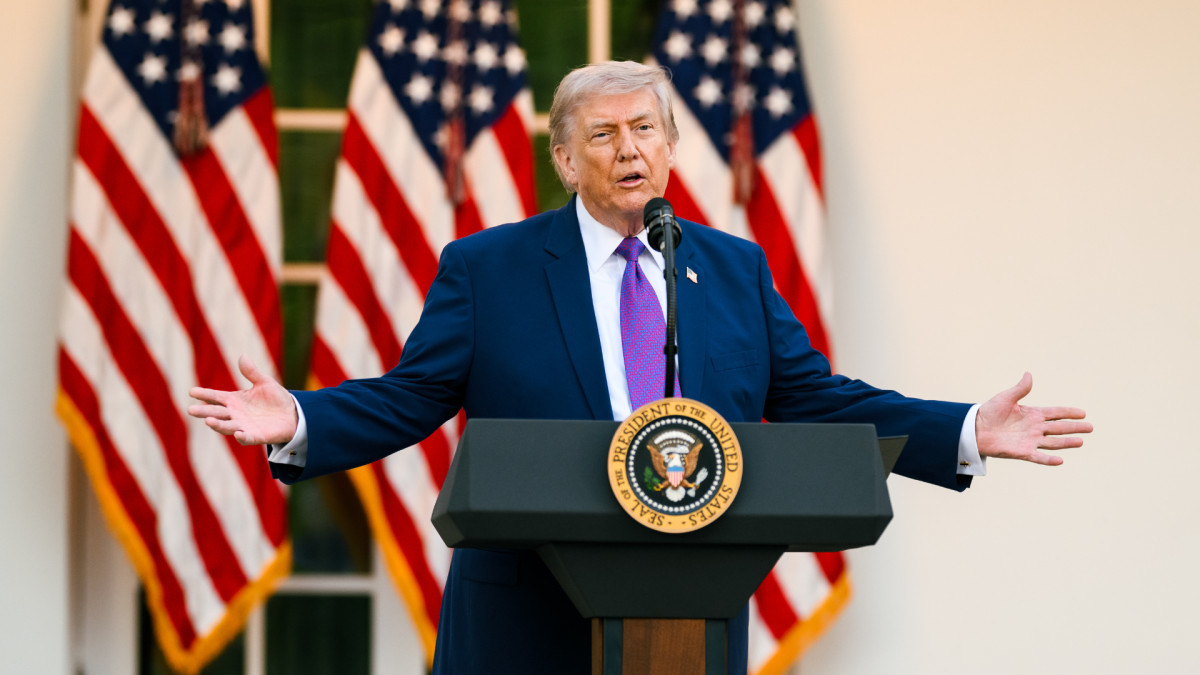
The rules-based international order is not only crumbling, it is also being revalued. For financial institutions, this distinction turns key geopolitical indicators into a central battleground for decision-makers. The collapse demands a defensive stance, while the reassessment calls for strategic repositioning. The difference between these two responses is the difference between survival and competitive advantage in a post-Trump world.
“More than a disorder, we are facing a new operating system, one that rewards institutions that quickly learn its logic”
The three-year horizon presents several plausible scenarios. The most likely —we could call it a new Cold War— envisions a stabilized rivalry between the US and China in the form of de facto competition, but without direct confrontation. States such as Indonesia, Brazil, or Saudi Arabia swing between the two poles, in a context where diplomacy is a transactional political act and security, a service. The European Union consolidates its strategic autonomy by working with Canada, the United Kingdom, or Mercosur. More than a disorder, we are facing a new operating system, one that rewards institutions that quickly learn its logic. Bi-lateral trade agreements partially replace the multilateral architecture.
A second scenario, with a cascading energy disruption, anchored in the instability of the Middle East and the logistics of Hormuz, is real, but manageable if valued correctly from today. The fragmentation of supply chains deepens and hits European corporate balance sheets asymmetrically. The disruption would last between eighteen and twenty-four months, affecting credit conditions and central bank policies. Decisions will tighten not so much because of rate moves, but due to the geostrategic revaluation of counterparty risk.
A third scenario of geopolitical détente and institutional reset remains possible and represents the upside margin that a disciplined stance can capture. What if US midterm elections yield a rebalanced populism? What if Russia and Europe sign a peace agreement? And what if diplomacy achieves a sustainable ceasefire in the Middle East? We can also dream.
“The most undervalued risk is not geopolitical in the conventional sense. It is the transmission channel between geopolitical shock and balance”
The three scenarios are here, and the future will be a blend of all of them. We can make decisions for the next hundred days and for a post-Trump world. The immediate priority is to correct what markets systematically misprice. The most undervalued risk is not geopolitical in the conventional sense. It is the transmission channel between geopolitical shock and balance: the cascade from supply chain disruption to insurance revaluation, the squeeze on corporate margins, and credit events that standard models do not anticipate. Banks with loan portfolios exposed to energy-intensive European industries are taking on more geopolitical risk than their value-at-risk (VaR) calculations suggest. Acknowledging it is the first step to managing it productively.
Also undervalued is the slow marginal erosion of dollar hegemony. The freezing of Russian reserves in 2022 was a signal that the financial infrastructure is already a geopolitical instrument. Institutions with material exposure to dollar-denominated emerging markets should actively build optionality, not because dollar dominance will end tomorrow, but because the cost of not hedging this transition rises with each passing year.
On the opportunities side, the map is starting to become clearer. Three sectors enjoy structural state backing across all plausible scenarios: defense, energy transition, and critical infrastructure. Positioning in credit and investment in these areas aligns with the incentive architecture of major Western governments. Similarly, relocalization and the proximity of industrial capacity require a massive capital allocation in manufacturing, logistics, and energy storage. It’s not about ideology: it is the invertible consequence of geopolitical fragmentation.
“Three sectors enjoy structural state backing across all plausible scenarios: defense, energy transition, and critical infrastructure”
For the risk-management architecture, the necessary changes move from theory to practice. Scenario-based profitability modeling — with up to three hypothetical trajectories — should be a permanent feature of annual planning. Geopolitical exposure metrics need visibility at the board level, alongside capital ratios. The geography of supply chains should become a standard dimension of counterparty analysis. None of this requires new regulation to justify it because the business case already exists.
The main shift in focus for financial executives is this: geopolitical risk is no longer external noise interrupting a stable system. It has become a fundamental input in credit origination, portfolio construction, and capital allocation. Institutions that treat it as a compliance function will repeatedly be surprised. Those that integrate geopolitical literacy into their investment and risk culture will discover that the current environment offers a real edge for those who move first.
The world is more expensive, more volatile, and less predictable. It is also full, for those who know how to read it, of positions that have yet to be taken.
