
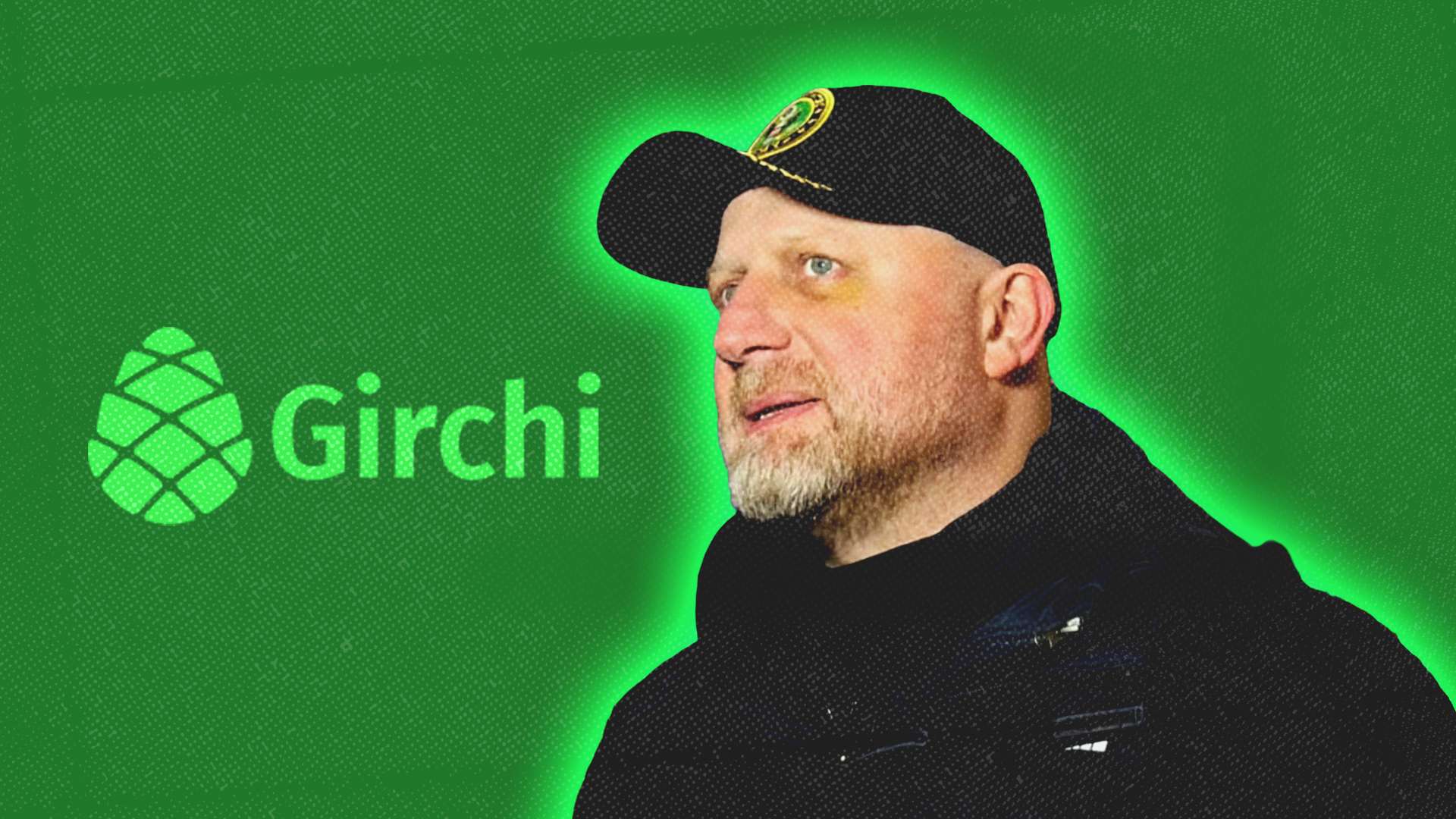
As the head of the “Girchi—More Freedom” party, Zurab Japaridze endured seven months of imprisonment as a political detainee. He is ready to endure a far longer spell if necessary.
“This contest against Soviet tyranny, and today this battle against Russian influence within this nation: this is my life,” declares the Georgian opposition figure Zurab Japaridze.
Japaridze founded one of the few openly libertarian political outfits in a post-Soviet landscape — Girchi (which translates to “pine cone”) — the party slogan being “More Freedom.”
In June 2025, he received a seven-month sentence to serve in Rustavi prison after challenging a parliamentary inquiry led by the ruling party, Georgian Dream. Although Japaridze was not connected to the United National Movement (UNM) government reportedly under scrutiny by the commission, he nonetheless ended up in pretrial detention. He refused to mount a defense on principle.
In a Facebook post, former President Salome Zourabichvili criticized Japaridze’s detention as shameful, insisting it bears no relation to justice and is a strictly political case. She also charged that the commission exists solely to frame the very political leaders they wish to see imprisoned.
Georgians nationwide have now spent well over 500 consecutive days marching and vocalizing their opposition to the ruling party since the last elections on October 26, 2024. Those polls drew scrutiny from Tbilisi and from the international community alike.
A leading global NGO, the OSCE Office for Democratic Institutions and Human Rights, has cited “significant procedural irregularities” in the vote. The International Society for Fair Elections and Democracy, a Georgian NGO focused on election monitoring, filed a report detailing “numerous troubling incidents and violations” observed nationwide, including instances of multiple voting, ballot stuffing, bribery of voters, physical intimidation, and threats.
In the wake of the controversy, authorities linked to the Georgian Dream government detained peaceful demonstrators and independent journalists, blocked the accounts of several civil-society groups, and—according to evidence gathered in a 2025 BBC investigation—allegedly deployed a World War I–era chemical agent to disperse protests.
Georgia’s recent drift toward authoritarianism began with parliament’s passage of the Law on Transparency of Foreign Influence, a bill reminiscent of measures implemented after Vladimir Putin’s 2012 return to the presidency in Russia. Often called the “foreign influence law,” it requires NGOs and media outlets receiving more than 20 percent of their funding from abroad to register with the Georgian Ministry of Justice as “organizations serving foreign interests.”
A draft of the law was unveiled in 2023 but dropped after massive protests. Yet in 2024, Georgian Dream revived the so-called “foreign agents bill,” and pushed it through. In 2025, the regime broadened the law’s reach to cover individuals under a Foreign Agents Registration Act framework.
Advocates contending for the law argue it enhances transparency. Yet the European Court of Human Rights and Human Rights Watch contend that laws of this kind are designed to silence dissent.
“They have extinguished much of the international community in Georgia, and with it, civil society as a whole,” remarks Japaridze, likening many affected groups to “islands of freedom within this country.”
From the Collapse of the Soviet Union to Georgia’s Free-Market Experiment
All of this clashes with Georgia’s more recent past.
It has been less than twenty years since the Cato Institute hosted President Mikheil Saakashvili and lauded Georgia as a rapid, post-socialist success story of economic liberalization — a “modern-day capitalist utopia among Europe’s tallest peaks,” as described in a 2008 report by the European Stability Initiative, a nonprofit research group focused on Southeast Europe.
The praise was not unfounded. During the period of strongest reform following the Rose Revolution, Georgia’s economy expanded at an average annual rate of 7.6 percent. Kakha Bendukidze, Saakashvili’s economy minister, led this rapid program of liberalization.
Bendukidze observed the collapse of the Soviet system while working in Russia, where he prospered in manufacturing and heavy industry—and he found himself at odds with Putin. He returned to Georgia, joined Saakashvili’s government, and propelled reforms: simplifying the tax regime, cutting burdensome licenses and permits, and undertaking a sweeping privatization drive, joking that he was ready to “sell everything but Georgia’s conscience.”
Japaridze speaks of Bendukidze with affection.
“When he arrived in Georgia, basically everything I had learned from books and everything I believed in, he was actually implementing,” he recalls.
Georgia’s GDP doubled in the first four years and tripled in the first eight under Bendukidze’s tax reforms. The country jumped from 137nd to 11th on the World Bank’s Ease of Doing Business index, even surpassing France and Germany in some rankings, and it became a magnet for international investment.
Bendukidze is the one who nudged Japaridze into politics. Japaridze had been contributing a column to the online magazine Tabula and debating economics on television. His first exposure to free-market thinking came from a PDF of Hayek’s The Fatal Conceit: The Errors of Socialism. But it was the experience of working within a state agency that opened his eyes to the rot and corruption at the heart of the system.
“I was young, and I watched it, and I went mad,” Japaridze says. “A country cannot function like this.” Every official standardization or permit had become a means for extracting bribes.
Mock Churches and Legal Cannabis: How Activists Employed Guerrilla Tactics
Bendukidze died in 2014. The following year, Japaridze parted ways with UNM and founded Girchi. To spread its message, the party embraced provocative stunts.
“By pulling off outrageous acts, we captured a lot of attention,” Japaridze says. “We spent substantial time explaining why we were doing them.”
To oppose military conscription, for instance, Girchi staged a mock church. Georgia suddenly found itself with a cohort of young, devout “priests.”
To protest cannabis laws, Girchi planted cannabis seeds inside party headquarters and broadcast the stunt on New Year’s Eve 2016. The plants were confiscated, but the effort paid off: in 2018, Georgia became one of the first nations to allow recreational marijuana and enshrine constitutional protection for cannabis consumption. This right has since faced restrictions, and the ruling party recently criminalized possession of more than five grams of dried marijuana.
To protest crackdowns on sex work, Girchi opened a brothel within its headquarters, complete with a bed and condoms.
“Our bodies belong to us, and we should be free to do with them as we wish,” Japaridze says. He adds that “whenever the government wrestles with economic troubles or crime… the instinct is to crack down on sex workers.”
Georgian Dream’s Repression of Opposition Leaders
For Japaridze, such civil disobedience feels increasingly untenable. As Georgian Dream cemented power, the regime fostered an atmosphere of intimidation — raids on offices, assaults, and heavy-handed arrests. In March, Elene Khoshtaria of the Droa (“It’s Time!”) party was detained and given a year and a half in prison merely for scribbling “Russian Dream” on a campaign poster for Tbilisi mayor Kakha Kaladze the previous autumn.
The Fraser Institute’s Economic Freedom of the World index places Georgia in the top quartile globally (roughly 25th) for the latest available year (2023), surpassing every neighbor. Yet this is scant consolation amid daily protests, frozen bank accounts, and a growing sense that the country is living under the shadow of a bear. Human rights and civil-society groups estimate that 50–60 political prisoners remain behind bars.
Japaridze was released in December, but he already faces new charges — along with eight other opposition leaders, including Saakashvili — of various “crimes against the state,” such as “sabotage” and “assistance to a foreign state in hostile activities.” A conviction for Japaridze could carry a sentence ranging from seven to fifteen years in prison.
Japaridze does not flinch.
“You ask yourself, ‘Okay, seven months, perhaps that’s enough. But what if it’s seven years? Or ten? Or fifteen?’” he reflects. “I’ve come to the conclusion that it simply doesn’t matter to me. I am prepared to spend the rest of my life here if needed.”
