
More: How a conservative Supreme Court justice helped spark the rise of modern zoning
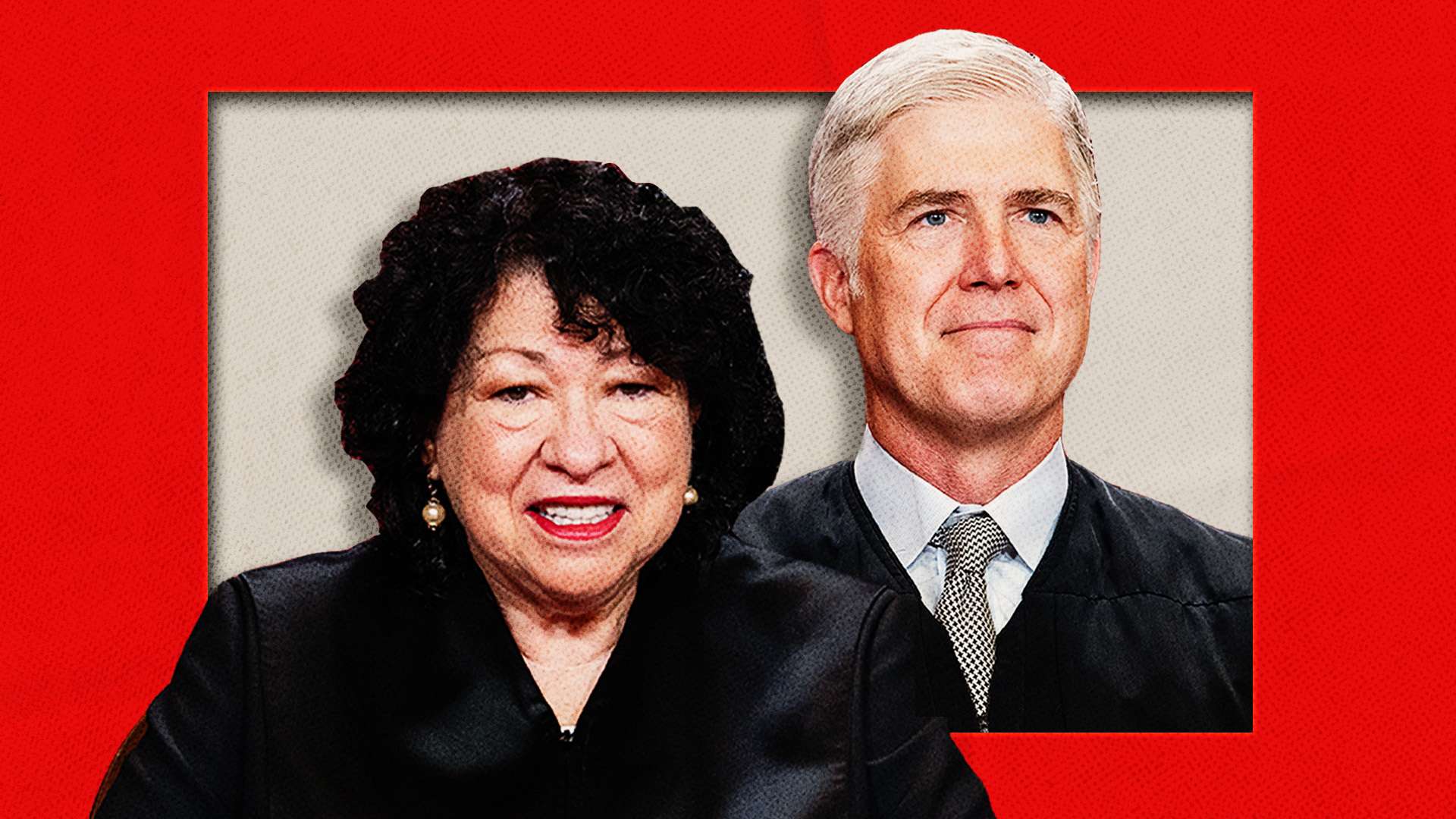
One of the more notable trajectories at the U.S. Supreme Court in recent years is the emergence of an irregular, yet tangible, through-line in defense of civil liberties linking Justices Sonia Sotomayor and Neil Gorsuch.
In 2018, for example, Gorsuch—together with Sotomayor—assailed the Court for declining to grant review in Stuart v. Alabama, a pivotal dispute concerning forensic evidence, criminal proceedings, and the Sixth Amendment right to question one’s accusers.
Likewise, in United States v. Davis (2019), Sotomayor joined Gorsuch’s controlling opinion which invalidated a federal sentencing enhancement tied to the use of a firearm in connection with certain offenses, because the provision was too poorly drafted to pass constitutional muster. “When Congress enacts a vague statute,” wrote Gorsuch, “the courts’ duty under our Constitution is not to fashion a more precise statute to replace it, but to treat the existing law as void and invite Congress to try again.”
Gorsuch and Sotomayor have also found common ground on a number of Fourth Amendment matters, though Sotomayor’s overall Fourth Amendment record arguably carries more weight. Take Torres v. Madrid (2021), for instance, where the Court concluded that shooting a fleeing suspect still constitutes a seizure for Fourth Amendment purposes, even if the person continues to move after the force is applied. The Court held that “the intentional use of force to restrain the body constitutes a seizure,” regardless of whether the individual yields or is subdued. Sotomayor joined that decision favoring civil liberties, while Gorsuch, joined by Justices Clarence Thomas and Samuel Alito, dissented with the officers.
Recently, the Gorsuch–Sotomayor partnership resurfaced to weigh in on a dispute that balanced property interests against police powers. As Reason’s Billy Binion noted, the Supreme Court declined to hear a case challenging a lower court’s rigid rule that “property destroyed during the exercise of a state’s police power is immune from Takings Clause claims,” which protect private property from government taking without just compensation.
Sotomayor, joined by Gorsuch, strongly suggested that she viewed the lower court’s rule as unconstitutional, even as she allowed that additional consideration would be prudent before the Court intervened. “Where, in cases such as this, the government directly takes private property for its own use or to satisfy a debt like a tax lien, the mere invocation of the state’s ‘law enforcement authority’ may fall short of avoiding the requirement of compensation.”
(Citations omitted.) Sotomayor subsequently urged lower courts to handle the issue with caution, ensuring that respect for state police powers does not overshadow constitutional protections.
Just as Gorsuch’s Fourth Amendment record is not flawless, Sotomayor’s track record on property rights has shown gaps at times. Consequently, it is all the more welcome to witness these two justices collaborating again in this particular arena of civil liberties.
Elsewhere in the Law
Writing for SCOTUSblog, Anastasia Boden, a senior attorney with the Pacific Legal Foundation, offers a provocative take on the Supreme Court’s landmark 1926 ruling in Euclid v. Ambler, describing how the Court endorsed a municipality’s authority to enact comprehensive zoning and rejected a developer’s challenge that the plan exceeded local police power and diminished property values. In effect, the Court’s decision is often regarded as laying the groundwork for modern zoning.
One detail that has long intrigued me about Euclid v. Ambler is that the opinion was authored by Justice George Sutherland, who is now chiefly remembered for his opposition to President Franklin D. Roosevelt’s New Deal. Yet in Euclid v. Ambler, Sutherland endorsed a view of regulatory power that liberal scholars have praised as a model of pragmatic and balanced Progressive jurisprudence.
It strikes me as a legal history irony: the leading light of the Court’s anti–New Deal bloc ended up leaving a deeper imprint on the law by strengthening the clout of urban planners.
