
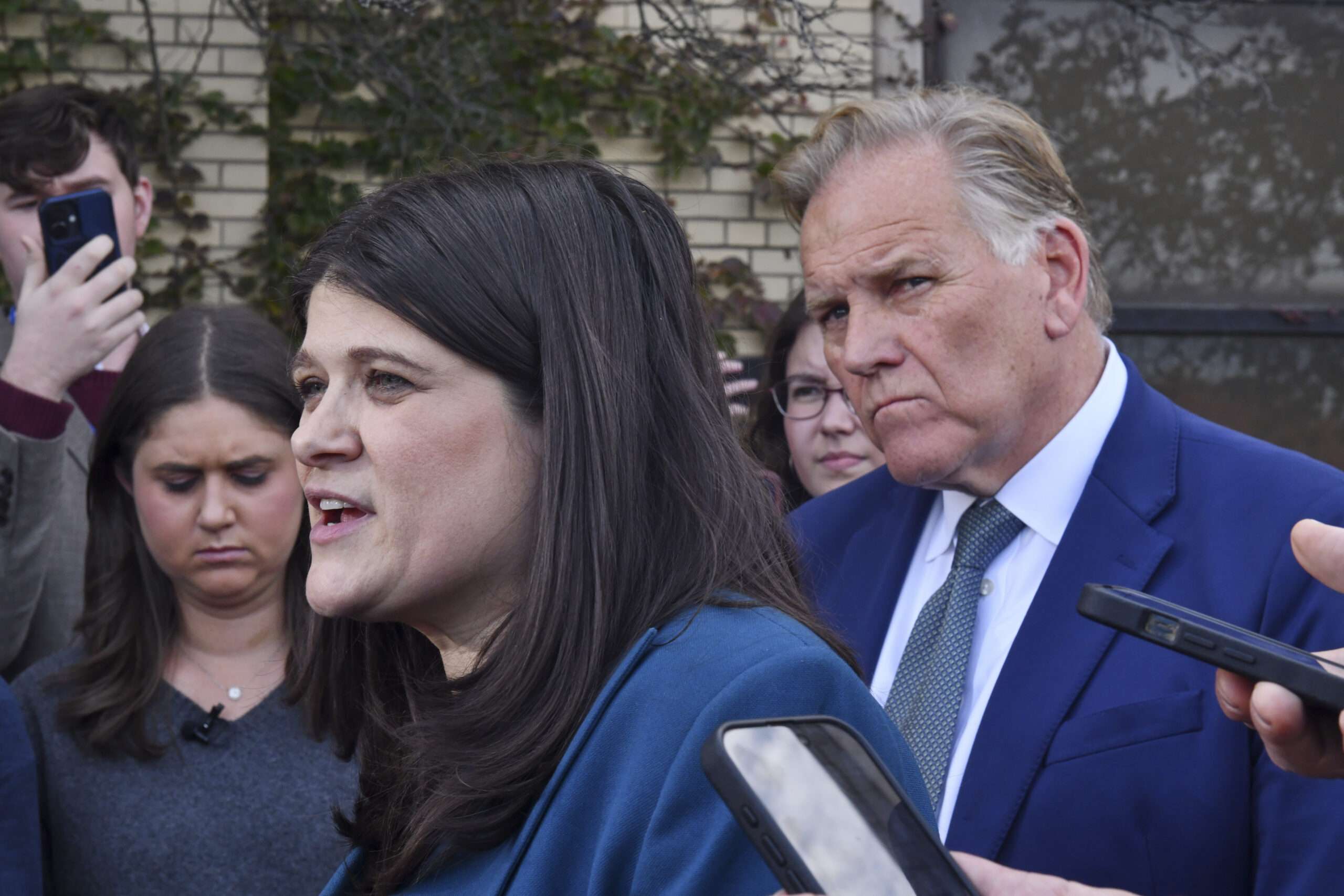
Democrats are vocally accusing Stevens of treachery.
Exhibiting a remarkable shift in allegiances, Representative Haley Stevens of Michigan, who had just been beaten by Abdul El-Sayed in the Democratic Senate primary, has unexpectedly lent her backing to Mike Rogers, the Republican contender in the Michigan Senate race.
Her endorsement appeared on X on Sunday afternoon, following several days of rising tensions with El-Sayed. Although Stevens had initially backed her fellow Democrat, her fiancé, Jason Turkish, disclosed last week that he could not vote for El-Sayed because of the candidate’s stance and associations with left-wing critics of Israel such as Hasan Piker and Cenk Uygur. In response, El-Sayed removed Stevens from upcoming campaign events; Rogers, sensing an opening, reached out and won Stevens over.
“Our Democratic nominee for U.S. Senate Abdul said I was no longer welcome in his campaign and I should stay away, and he’s right,” Stevens wrote on X. “And that’s why I am endorsing Mike Rogers for the United States Senate today.”
I am endorsing Mike Rogers for the United States Senate today. pic.twitter.com/pQgfSBuhOJ
— Haley Stevens (@HaleyforMI) November 1, 2026
Unsurprisingly, the reaction within the Democratic ranks was furious, with many colleagues branding Stevens a traitor. Her congressional office reportedly witnessed a mass resignation as staffers were caught off guard by the reversal. Even liberal moderates who had previously backed Stevens over El-Sayed in the primary expressed anger. Neera Tanden, a Democratic strategist known for clashing with the party’s left wing, accused Stevens of betraying “all of her supporters.” Activist David Hogg urged those who had backed Stevens to apologize and condemn her, while commentator Matthew Yglesias voiced intense frustration with her actions.
To be honest, the intensity of the backlash feels disproportionate.
There is no denying that controlling the Senate matters greatly, and thus individual races carry immense significance. Supporters of Trump want Republican majorities to shield them from what they view as harmful Democratic policy, while anti-Trump opponents want the opposite. The United States’ deeply entrenched two-party system—often prompting compromises that betray personal principles—is laid bare in scenes like this.
Yet those scolding Stevens as a traitor should understand a basic point: unwavering, absolute party loyalty isn’t a virtue in itself. I would prefer a political environment where Republicans and Democrats alike are more willing to challenge their own leadership and defend voting choices that may seem outside conventional expectations. It would be healthier for the country if more Republicans followed Karl Rove’s lead in refusing to back Bo French, a Texas Railroad Commissioner candidate who has openly opposed Indian interests, and if they would similarly hold their state attorney general, Ken Paxton, accountable for corruption.
The same framework applies to Stevens’ counterpart on the other side. El-Sayed doesn’t appear to be corrupt or racist, and some of the charges of anti-Semitism tossed at him are unfair. Criticizing the government of Israel does not automatically equate to hostility toward Jewish people. Still, El-Sayed is emblematic of a very far-left political posture—a socialist in nearly every practical sense—that once chose to campaign alongside Piker, a figure with a long history of sympathetic remarks toward groups that advocate violence. He previously criticized President Barack Obama, who pushed a notably progressive policy agenda, by labeling him as “fairly centrist, middle-of-the-road.” Democratic primary voters are free to select outspoken left-wing candidates, but mainstream Democrats need not feel bound to follow those choices. Even a milder form of socialism can be deemed excessive, given the potential consequences of such ideologies on governance and freedom.
It’s true Stevens seems to be acting out of personal resentment rather than a principled objection to El-Sayed’s economic plans, and I would not nominate her for any “Profiles in Courage” distinction. Still, the impulse to brand politicians who maintain independence as traitors feels melodramatic at best.
As for El-Sayed himself: his campaign lags behind that of the gubernatorial nominee Jocelyn Benson, suggesting that Stevens is not the sole Michigan Democrat uneasy with his candidacy. The outcome will become clear on Tuesday, or perhaps by Wednesday morning.
