
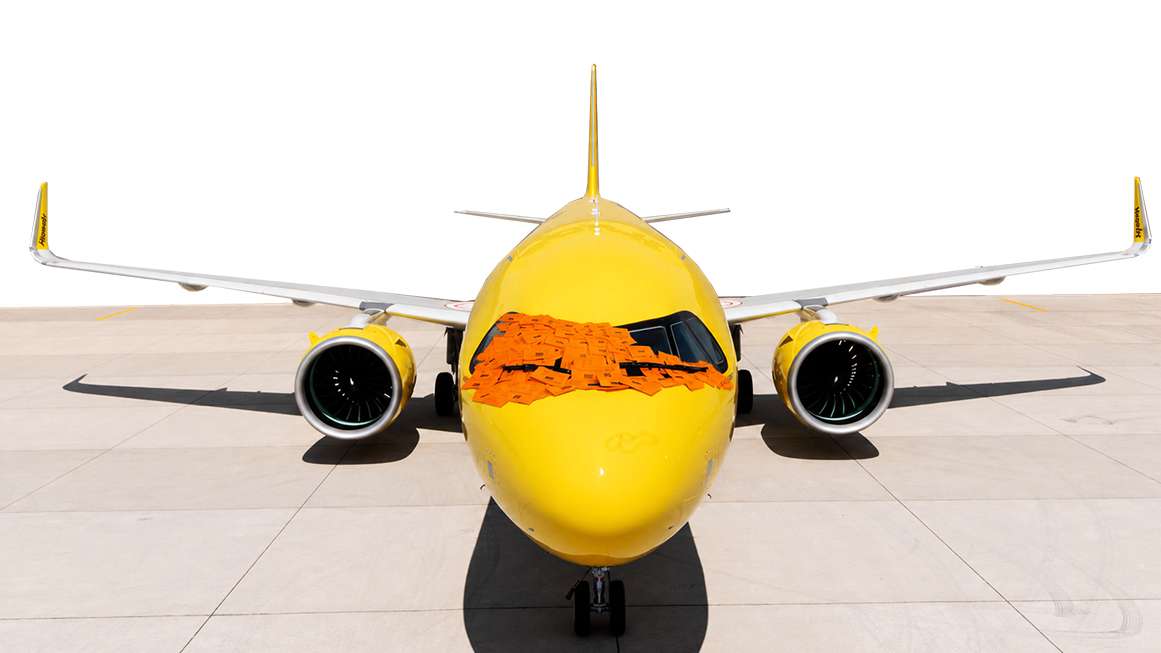
No single factor fully accounts for the demise of the budget carrier, yet government action certainly played a role.
In May, Spirit Airlines, renowned for its ultra-low fares, said it would suspend all operations and cease service immediately. The announcement came despite the carrier describing in a press release its “extensive and comprehensive efforts to reorganize the business” and to chart a sustainable path forward.
Interference by authorities, however, contributed to the failure of Spirit’s rescue efforts. In July 2022, JetBlue disclosed plans to acquire Spirit for $3.8 billion. Spirit had long built its business on low fares and generous margins, but the pandemic era left it weakened, and JetBlue’s bid represented a last-ditch effort to salvage something. The Biden administration moved to block the merger, arguing that a combined airline would reduce the number of low-cost competitors in several markets. “Spirit’s presence in a market forces other air carriers, including JetBlue, to lower their fares,” the Justice Department explained.
The government prevailed. In January 2024, a federal court blocked the deal as anticompetitive. “To those dedicated customers of Spirit, this one’s for you,” wrote U.S. District Judge William G. Young. Jonathan Kanter, then the assistant attorney general in charge of the Justice Department’s Antitrust Division, called it “a victory for U.S. travelers who deserve lower prices and better choices.”
It wasn’t a victory for Spirit, which declared bankruptcy later that year and again in 2025. Then, in February 2026, President Donald Trump launched a war against Iran, sending oil and gas prices skyward. Between February and May, the price of jet fuel nearly doubled, rising from $2.12 to $4.16 per gallon.
Announcing the end of operations, Spirit cited “the recent material increase in oil prices and other pressures on the business.” But the airline was in dire straits even before the war began.
Weeks before the war, The Air Current reported that “at least two major U.S. airlines” expected Spirit to shutter within days. Frontier Airlines, which had offered to buy Spirit before JetBlue’s offer won out, reopened talks in December 2025, but Spirit again rejected its offer. “Spirit could have survived if they had accepted our agreement and merged with us,” former Frontier CEO Barry Biffle told Forbes.
Airline industry expert Gary Leff thought it would have been a mistake for JetBlue to buy Spirit, but only because the Justice Department had also sued to kill a previously approved partnership with American Airlines that would have let JetBlue access larger markets. “It was a bad antitrust theory,” Leff wrote, that treated such partnerships as illegal “rather than looking at consumer benefit or total competition in the market.”
No single factor is wholly responsible for Spirit’s failure. But any postmortem should note how two successive presidential administrations exacerbated the struggling carrier’s misfortunes.
