
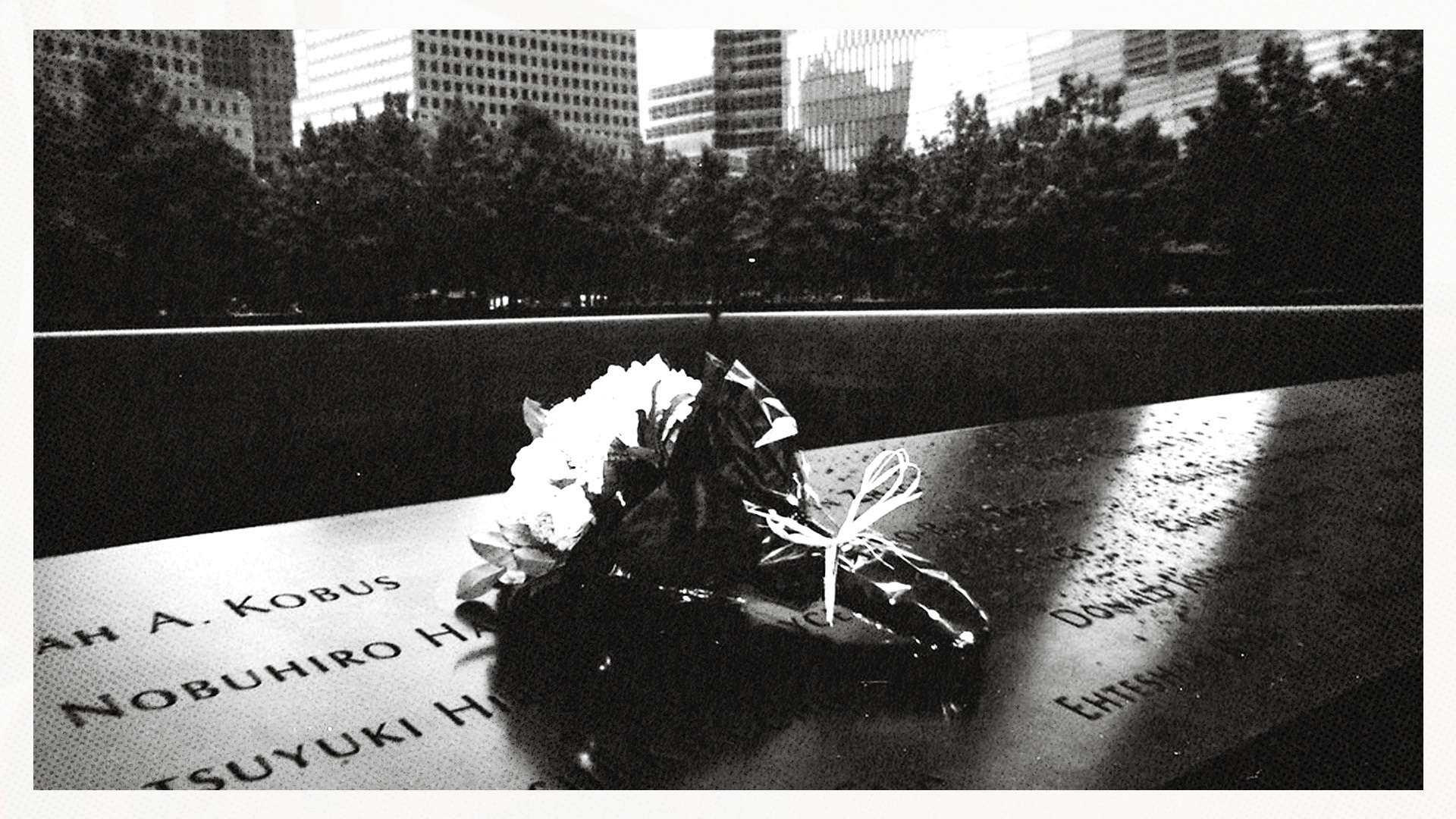
The administration guaranteed that fear would persist for the public—and that bin Laden’s victims would not receive genuine justice.
I witnessed my first murder at the tender age of three, on September 11, 2001. While I could not fully grasp the meaning of the blazing towers across the river, it quickly became clear that countless families nearby had suffered irreplaceable losses. (I later learned that, like many other New Yorkers, my aunt narrowly avoided being among the victims by arriving late to work.) I also heard that a man from a distant land named “Osama bin Laden” stood behind it.
Nearly ten years later, the U.S. government announced it had killed bin Laden, prompting cheers from my middle-school classmates. Yet bin Laden’s death did not deliver the relief Americans sought. President Barack Obama promptly cautioned the public that “his death does not mark the end of our effort.” In truth, the darkest phase of the war on terror lay ahead.
The U.S. military continues to wield Congress’ authorization to wage war on Al Qaeda in pursuit of a vast array of adversaries. Although several accused individuals remained held at Guantánamo Bay, there has never been a “9/11 trial.” A quarter of a century later, the memory of 9/11 still bleeds into American society, offering neither closure nor justice.
This outcome is intentional. Rather than treating the massacre of American civilians as a crime to be adjudicated, the U.S. government used it as a lever to broaden its own authority, instituting a perpetual state of emergency at home and waging wars aimed at reshaping the Middle East. Those wars frequently targeted groups with little direct connection to 9/11, forcing the government to confuse and mislead the public.
Despite the hijackings’ lethal precision, the network behind them proved fairly straightforward to identify and seize, partly because Washington had already begun monitoring Al Qaeda. But the Bush era did not hand these suspects to seasoned prosecutors capable of swift convictions. Instead, the administration experimented with novel legal labels (“enemy combatants”) to strip detainees of rights, built a new framework of secret prisons to hide them, and devised new torture techniques to extract information.
The system blurred innocence and guilt. Bystanders like Murat Kurnaz and Mohamedou Ould Slahi were disappeared and scarred through no fault of their own, while confessed 9/11 plotters such as Khalid Sheikh Mohammed (KSM) have endured decades without a proper court hearing. When Obama attempted in 2011 to bring KSM to a civilian court near the crime site—an effort that could have offered New Yorkers some closure—hawks in Congress blocked the trial. Fifteen years later, the military tribunal pursuing KSM remains mired in differentiating legitimate evidence from coerced confessions obtained under torture.
It is no wonder Obama’s advisers assumed they would kill bin Laden rather than capture him. The raid on bin Laden was being planned alongside the legal chaos surrounding the proposed KSM trial, a dilemma that weighed on U.S. planners.
Adherents argue that torture clashed with peacetime justice, yet they maintain it was a necessary emergency measure to root out further assailants. Congressional investigators with access to secret CIA materials reviewed this claim and found that torture yielded only “faulty intelligence.” Perhaps another explanation is required.
FBI agent Ali Soufan, among the first to pursue Al Qaeda and later a vocal opponent of torture, notes that the CIA aimed to make a suspect “perceive his interrogator as a god who controls his suffering.” The Bush administration embraced a similar arrogance toward the entire world. As an administration official once told The New York Times, “We’re an empire now, and when we act, we create our own reality…and you, all of you, will be compelled to study what we do.”
Although Al Qaeda’s core murderers—and those unlucky enough to be mistaken for them—presented a politically convenient target, the administration’s appetite extended far beyond them. Their true objective, in the words of New York Times journalist Thomas Friedman, was to tell the entire Muslim world to “suck on this.” Or, as neoconservative thinker Michael Ledeen was quoted by The National Review, “Every ten years or so, the United States needs to pick up some small, crappy little country and throw it against the wall, just to demonstrate that we mean business.”
The neoconservatives were eager to name targets for this punitive strategy. The Project for the New American Century pressed to finish off Saddam Hussein, the Iraqi dictator whom the U.S. had defeated and isolated after the 1991 Gulf War. A 1999 policy paper titled A Clean Break, drafted by American neoconservatives for Israeli Prime Minister Benjamin Netanyahu, proposed coupling Iraqi regime change with a containment campaign against Iran and Syria. Members of the Project for the New American Century and the authors of A Clean Break eventually filled key roles in the Bush administration.
There was a wrinkle: none of the neocon targets actually bore any relation to 9/11. Consequently, they merely misled the public. U.S. officials disseminated conspiracy theories suggesting Iraq remained linked to Al Qaeda while concealing the alleged existence of weapons of mass destruction. National Security Adviser Condoleezza Rice hinted that the next 9/11 could arrive as a “mushroom cloud.” The most notorious conspiracy theory, concocted by speechwriter David Frum, argued that a global “axis of evil” was plotting to manufacture nuclear weapons and arm terrorists.
Bush identified Iraq, Iran, and North Korea as members of that axis. His adviser Douglas Feith, a former member of the Project for the New American Century and a co-author of A Clean Break, even drafted a memo suggesting that “an American strike in South America or Southeast Asia might surprise the terrorists.” Indeed, it would be.
In reality, the regimes of Iraq, Iran, and Syria viewed Al Qaeda as a threat. Bin Laden himself had offered to join the 1991 campaign against Iraq, which he then perceived as an aggressor menacing his homeland of Saudi Arabia. Iran, which had once clashed with bin Laden’s hosts in Afghanistan during the 1990s, held public vigils for 9/11 victims. Iranian intelligence later cooperated with the U.S. invasion of Afghanistan. Syria became another covert partner in the broader war on terror. “If you want suspects tortured, you send them to Syria,” former CIA officer Robert Baer once remarked.
In 2006, the sitcom It’s Always Sunny in Philadelphia mocked the public’s muddled understanding of the situation: “There’s a war on terror, Charlie. Have you watched CNN? George Bush, right now. Saddam Hussein holds the oil. We’ve chosen to assist the people of Israel by reclaiming our oil by defeating Saddam Hussein.” Yet for those living directly under the shadow of 9/11, the joke was far from funny.
At a moment when U.S. leaders could and should have offered reassurance to a traumatized nation and directed Americans’ righteous anger toward appropriate targets, they instead entrenched the public in confusion, secrecy, and paranoia. By expanding the war on terror from a single group to a vague global conspiracy, the Bush administration made the public’s fears almost impossible to quell. It is impossible to defeat an enemy that does not truly exist.
The war in Iraq ultimately claimed more American lives than 9/11 did, not to mention the hundreds of thousands of Iraqis who perished. It also empowered Al Qaeda, which settled in a war-ravaged Iraq and spread like a cancer, hijacking the momentum of the 2011 Arab Spring across the region. Meanwhile, the U.S. military interjected itself into conflicts around the world, labeling groups that did not exist in 2001 as Al Qaeda’s “associated forces,” a pattern that Obama and his successors would maintain.
These wars eventually delivered neoconservatives their ultimate prize: a confrontation with Iran. The U.S. occupation of Iraq and later campaign against the Islamic State, a splinter of Al Qaeda, created abundant friction with Iranian and Iran-backed forces. In 2020, the first Trump administration killed an Iranian general to “protect U.S. forces” in Iraq, and in 2026, the second Trump administration struck Iran largely to avenge U.S. troops killed by Iraqi militias backed by Tehran.
The fight against Al Qaeda has seemed to take a back seat, and Washington has even tolerated Al Qaeda in the name of contesting Iran. Saudi Arabia, a state whose intelligence services reportedly have tangled links to 9/11, invaded Yemen in 2015 to suppress an Iranian-backed rebellion. The Saudi-led coalition fought alongside Al Qaeda and nonetheless received substantial U.S. support.
During the Syrian conflict, Gen. David Petraeus and Ambassador James Jeffrey entertained the possibility of opposing U.S. adversaries with help from Al Qaeda’s Syrian wing, whose leader Ahmad Al-Sharaa celebrated 9/11 as vengeance for “the Americans’ injustice.” Remarkably, that gamble paid off: Al-Sharaa decisively cut ties with Al Qaeda, seized control of Syria in 2024, and installed a regime amenable to American interests. Washington has since reciprocated that outreach. The original sin of the war on terror—allying with those who carried out 9/11—appears, in the eyes of the U.S. government, more forgivable than other grudges.
Israel, once a relatively minor player in U.S. foreign policy, has become a central beacon in the war on terror. Some politicians strive to shift Americans’ trauma from 9/11 onto the much older conflict between Israelis and their Palestinian neighbors. President Joe Biden described the October 2023 attacks on Israel, which killed fewer people than 9/11, as the equivalent of “fifteen 9/11s.” Netanyahu called it the equivalent of “twenty 9/11s” in a 2024 address to Congress, receiving enthusiastic applause.
Ambassador Mike Huckabee, the current U.S. envoy to Israel, spoke in an interview with Newsmax on Tuesday about the legacy of 9/11. “I hope we never forget what happened that day, and I don’t want us to forget who did it, because when Americans ask what about Iran, we say—well, Iran didn’t directly participate, but they’re part of this jihadist network,” he asserted.
The casual manner in which Biden and Huckabee discussed 9/11 and its victims is shocking. Equally troubling is the muted response to such rhetoric, which only shows how cheapened the memory of 9/11 has become within American political culture—by precisely the figures who keep invoking it. And the pattern has endured for some time: when confronted in 2014 with evidence that the CIA had tortured innocent people, former Vice President Dick Cheney responded with a graphic scene of a worker burning to death in the Twin Towers.
When younger generations crack uncomfortable jokes about 9/11, they reflect the cynicism bred by politicians and pundits who have become their sole frame of reference for this event.
Could the war on terror have unfolded differently? Of course, hindsight is always perfect, and some missteps after 9/11 were understandable excesses. (A former Baltimore deputy police commissioner reminded me that authorities at the time believed “9/11 was the first of many [attacks] to come.”) Yet the Bush administration chose to weaponize 9/11 victims as raw material for its world-building project, and its successors chose to persist, across party lines.
A quarter-century later, I have encountered many people in the Middle East who saw parts of their cities leveled by bombs. I cannot help but recall the smoke drifting over the Hudson. What is it like to grow up around a building being blown apart every day, rather than just once? And I cannot shake the thought that this entire mess might have been put to rest much earlier.
