
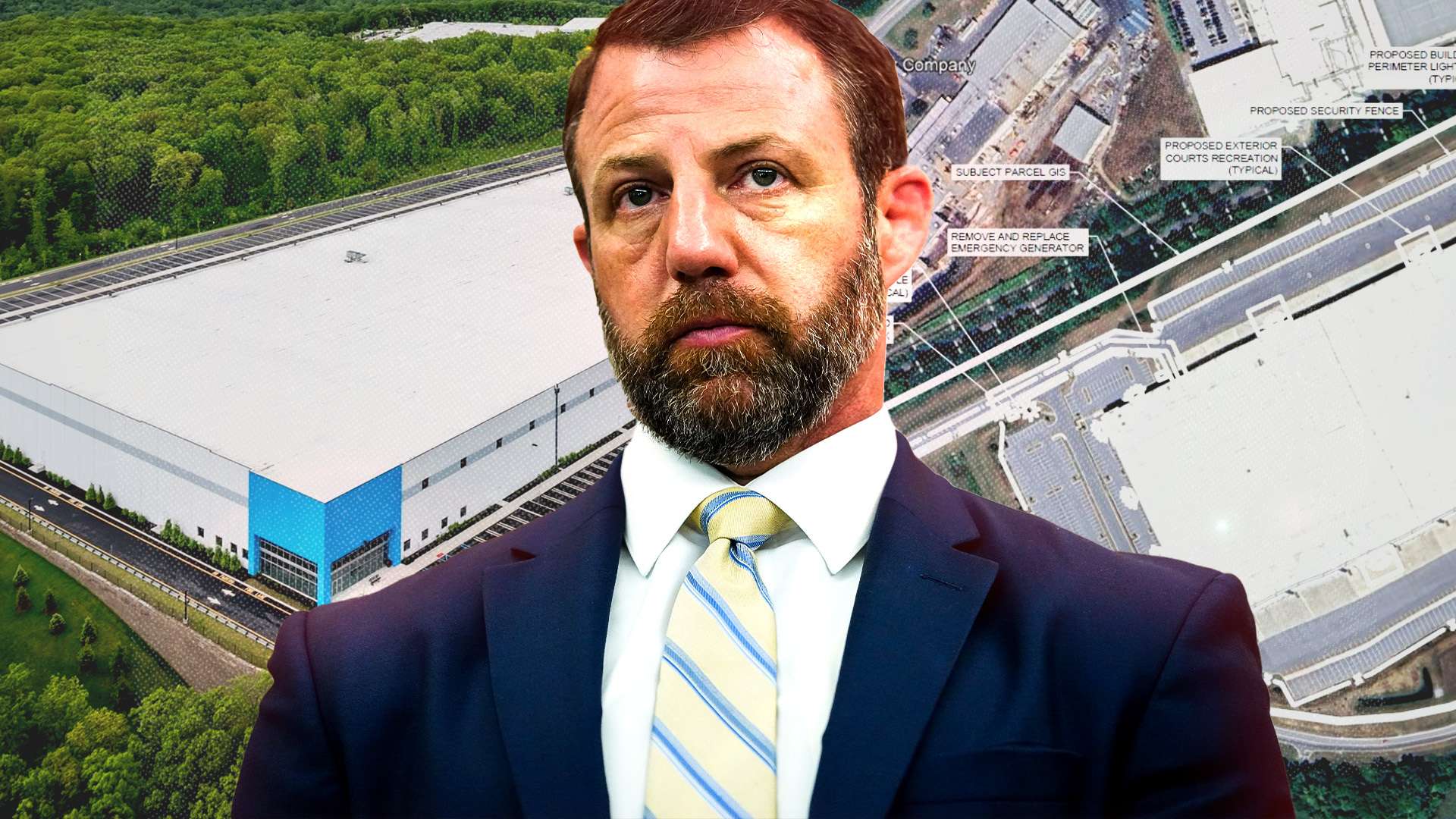
The Department of Homeland Security is moving to divest seven warehouses that were originally acquired to serve as detention facilities for migrants.
As part of President Donald Trump’s aim to deport every undocumented immigrant—and potentially tens of millions of citizens and lawful residents—the Department of Homeland Security (DHS) and U.S. Immigration and Customs Enforcement (ICE) anticipated spending billions to acquire industrial warehouses across the country. The plan was to convert these sites into centers for detaining migrants slated for removal, with the overarching objective of boosting total detention capacity to 100,000 people.
According to recent reporting, and in what many would consider a welcome turn, DHS appears to be largely abandoning the initiative, with most of the warehouses it already bought set to be sold or repurposed for different uses.
“In a major reversal, [ICE] is moving to dispose of seven warehouses purchased for more than $700 million by transferring them to other federal agencies or selling them outright,” Hamed Aleaziz wrote this week for The New York Times. The sites include two in Georgia, two in Pennsylvania, and one each in Michigan, New Jersey, and Utah.
The shift seems to have been developing for some time. “DHS and ICE officials have identified several of the eleven warehouses previously purchased, some of which were expected to be repurposed to hold as many as 8,000 immigrants, for potential sale,” NBC News reported last month.
The warehouse scheme appears to have been a remnant of former DHS Secretary Kristi Noem’s tenure: Aleaziz described it as a “signature initiative” of Noem, while her successor, Markwayne Mullin, privately questioned the plan and publicly indicated a desire for the agency to pursue immigration enforcement more quietly.
“These heinous criminals, once arrested, should be removed at breakneck speed, not housed on American soil at the taxpayers’ expense,” Mullin told The Times in a statement. “D.H.S. is moving swiftly to utilize existing detention space with our state and county partners.”
The plan does not appear to be entirely dead: Aleaziz notes that ICE “appears to still be moving forward with four of the warehouses purchased for detention purposes”—two in Texas and one each in Arizona and Maryland—and “also plans to buy immigrant detention facilities from private prison companies that it already contracts with.”
That prospect is troubling to advocates who argued the warehouses were wasteful, inhumane, and short-sighted; folding the program would represent a net positive, they contend.
When Trump dismissed Noem in March, reports suggested her extravagant spending had played a role, and the warehouse initiative was part of that pattern. As NBC News noted last month, “The DHS inspector general is examining ICE’s purchases of warehouses around the country as part of an audit examining whether DHS met the need for new detention space in a ‘cost-effective manner.'”
The warehouses were criticized as a boondoggle from the outset. Each was expected to cost hundreds of millions of dollars to purchase and retrofit, not to mention ongoing operational costs.
The government also faced accusations of significant overpayment: Project Salt Box, a Substack that tracks government procurement and infrastructure spending, estimated that ICE has spent $1.07 billion on the 11 facilities—about 134 percent above their total estimated market value.
That overshoot will affect the ability to recover money. “The markups the government paid in rushing to acquire the warehouses set a floor for any potential loss, and a private buyer has little incentive to pay what the government did for warehouses that had been idle for years before ICE acquired them,” wrote Michael Wriston of Project Salt Box.
The haste surrounding the purchases also raised questions about how the government planned to explain the construction of large detention complexes—capable of holding 8,500 people or more, plus staff—in rural or suburban areas without overburdening local resources.
As Reason reported earlier this year, many of the targeted areas—even towns and states favorable to Trump—opposed the plan. Officials in small towns warned that local infrastructure was already stretched to capacity and could not accommodate such a sudden surge in residents.
Officials’ explanations were frequently unsatisfying, and in many cases plans were abandoned in the face of opposition from residents and elected leaders. (Project Salt Box notes that in addition to the 11 facilities purchased, the government also canceled the sale of 13 sites.)
Social Circle, Georgia, is among the towns where the government had bought a warehouse that it now intends to dispose of.
“I’m glad that DHS has concluded Social Circle is not the right location for this kind of facility,” city manager Eric Taylor told Reason. “That is what we have been saying from the start. If they had taken the time to consult us before purchasing the building, perhaps they would have realized that the $129 million they spent could have been put to better use elsewhere. We are interested in seeing what ultimately happens to the property. If it remains under government ownership, we hope they will involve us in planning discussions from the outset.”

Natalie Foster
I’m a political writer focused on making complex issues clear, accessible, and worth engaging with. From local dynamics to national debates, I aim to connect facts with context so readers can form their own informed views. I believe strong journalism should challenge, question, and open space for thoughtful discussion rather than amplify noise.