
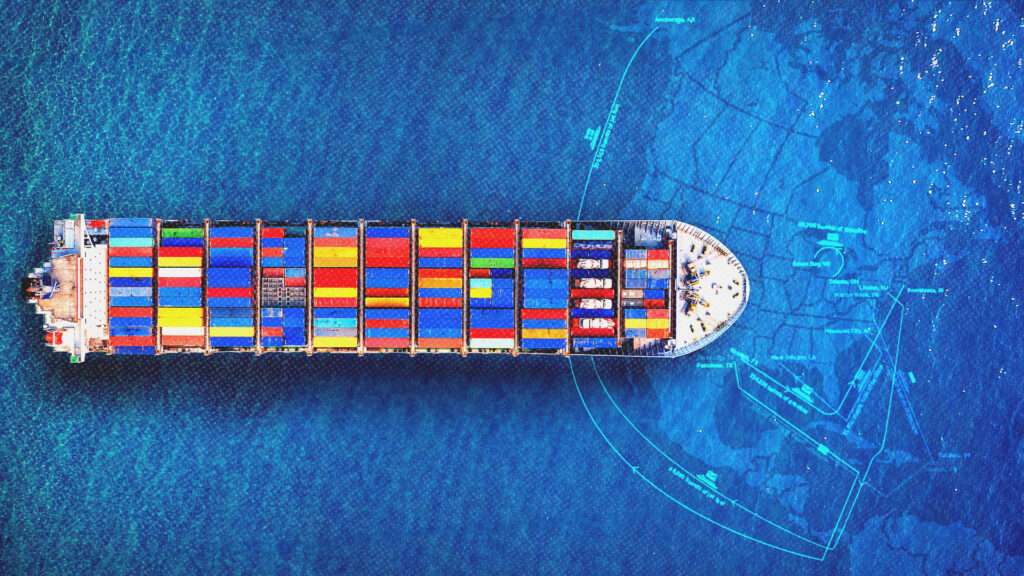
The Jones Act mandates that any goods transported between U.S. ports travel on vessels built in the United States and manned by American crews.
America’s protracted confrontation with Iran has claimed thousands of lives, disrupted the web of commerce that passes through the Strait of Hormuz, and pushed prices higher at home.
Yet there may be a glint of positive news. In an effort to tamp down gasoline costs that spiked because of the conflict, the Trump administration has repeatedly issued waivers to the Jones Act, a century-old rule that requires all goods moved between American ports to be carried on American-built, American-crewed ships.
With the law temporarily sidelined, trade activity has surged.
As Colin Grabow, a trade policy analyst at the Cato Institute and perhaps the nation’s leading advocate for scrapping the Jones Act, points out, propane shipments from the mainland United States to Puerto Rico have surged.

Since March, when the initial waiver was granted, Puerto Rico has imported over 800,000 barrels of propane from the mainland. That figure surpasses more than double the total American propane shipped to Puerto Rico in the previous 22 years combined.
The United States remains a leading producer and exporter of propane, yet the absence of Jones Act–compliant vessels capable of transporting fuel has rendered mainland-to-outlying shipments nearly impracticable. In the past, Puerto Rico has sourced gas from Nigeria, Chile, and other places precisely because those shipments aren’t bound by the Jones Act.
For years, libertarians have contended that the Jones Act artificially depresses American consumers and businesses that want to transact within the same country, effectively inflating the cost of moving goods across water. Easing the law appears to vindicate that claim: there are plenty of ships available to ferry gas and oil across the country, provided the government stays out of the way.
“The instant the Jones Act no longer applied to energy shipments, mainland propane displaced foreign imports, suggesting it had been the cheapest option all along,” says Grabow.
Puerto Rico is far from the sole beneficiary.
The Jones Act waivers offer a glimpse into a world where the statute does not constrain activity. From March through mid-August, 210 voyages were completed that would have been illegal under the act without the waivers, according to an analysis of Maritime Administration data conducted by the Institute for Energy Research.
It is a world in which American oil and natural gas can be moved more readily from the Gulf Coast to New England, a region that had relied on imports from Russia and Europe. Another notable beneficiary is California, which had been importing gasoline from as far away as the Bahamas because shipping fuel legally from Texas or Alaska to the West Coast was nearly impossible.
President Donald Trump renewed the Jones Act waiver in mid-May. A subsequent extension, issued in August, will endure for 90 days but applies only to ships carrying energy products such as gasoline and crude oil. Before this waiver expires in November, lawmakers ought to terminate the Jones Act permanently.
There is a degree of irony in the fact that one of Trump’s most successful policy moves has paused a protectionist rule that throttled commerce, at a time when much of his economic agenda has been aimed at erecting trade barriers. It’s also amusing that a conflict in the Middle East—something Trump had pledged to avoid—triggered this transformation.
Nevertheless, the evidence lies in the shipments. The case for free trade, long argued by supporters, appears vindicated.
