
Izaskun Bilbao spent eight months negotiating a report in the European Parliament, moving between meetings, technical discussions, and conversations with representatives from different countries and political traditions. When the moment arrived to defend it in a session focused on agricultural matters, something happened that she still recalls. Another MEP held up a cucumber during the debate, and the gesture made headlines, while the legislative work Bilbao had carried out for months barely received attention.
The anecdote, recounted during the gathering organized by Agenda Pública in Madrid on November 20, illustrates one of the contradictions of contemporary politics, in which the visibility of events bears a growingly weak relationship to their outcomes. A striking intervention can dominate public conversation for hours and eclipse a complex negotiation capable of altering rules that affect millions of citizens. Communication has come to carry such weight in institutional activity that, at times, it seems to become the main measure of its importance.
“A striking intervention can dominate public conversation for hours and eclipse a complex negotiation capable of altering rules that affect millions of citizens”
Bilbao knows the demands of negotiation firsthand. She served as president of the Basque Parliament and as a European Parliament member for the PNV for fifteen years, a path that allowed her to work in institutions where political and territorial diversity requires building agreements. In Madrid, she urged the parties to regain the ability to explain their decisions and to open channels for participation, placing public service and the pursuit of shared solutions among the priorities of their activity. “People do care about politics; they just don’t like how we do it,” she observed.
Her diagnosis starts from the conviction that citizens maintain an interest in public affairs, even as they perceive a growing distance between their concerns and the mechanisms with which institutions try to respond. Citizens remain attentive to housing, employment, and public services, but they struggle to understand why some decisions take so long to be made or why agreements between parties receive less attention than episodes of confrontation.
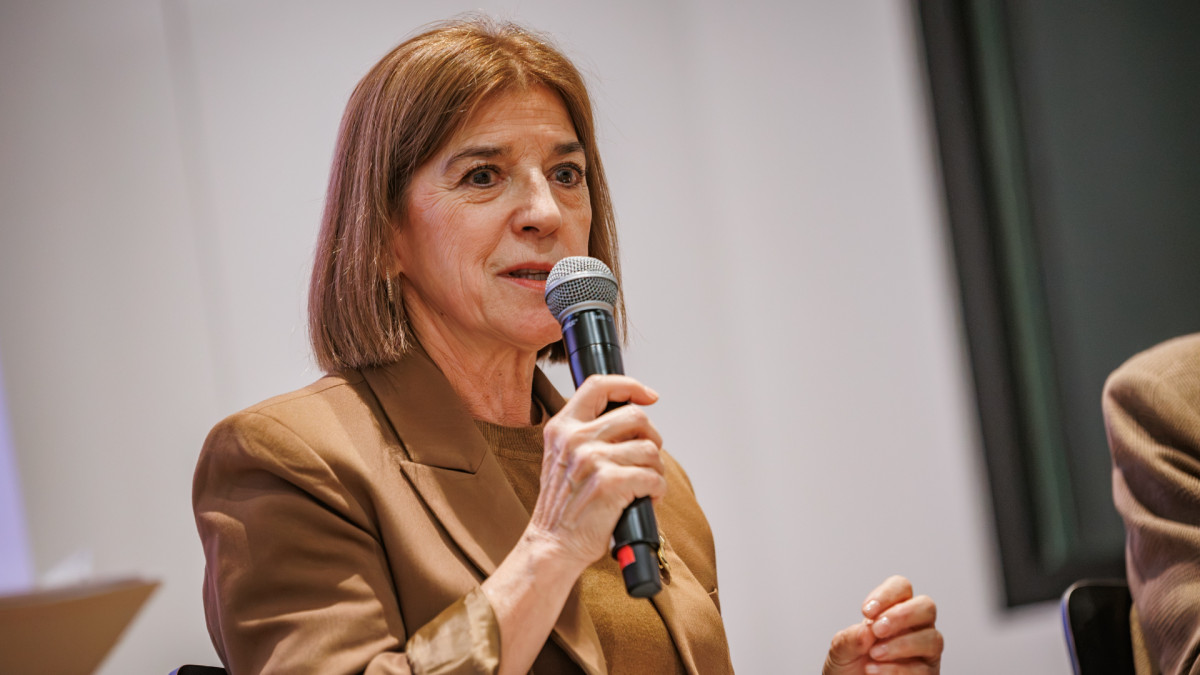
The former president of the Basque Parliament and former MEP of the PNV shares space with other former political leaders. Photo: Agenda Pública / Tania Sieira
The political negotiation in the face of the logic of showmanship
Bilbao also defended the value of negotiation among different political forces. In the European Parliament, in her experience, reaching agreements with representatives of diverse traditions is part of the usual procedure for passing legislation, because plurality obliges one to recognize that no single force holds all the answers. That culture of cooperation enables progress through commitments that incorporate diverse sensitivities and, on occasion, offer solutions to shared problems. The former parliamentarian believes it is important to reclaim that way of understanding agreements also in Spanish politics.
“That culture of cooperation allows progress through commitments that integrate diverse sensitivities and that, on occasions, offer solutions to shared problems”
Her advocacy of negotiation included particular attention to territorial differences. Spain gathers institutional, economic, and cultural realities that, in Bilbao’s view, must be recognized and taken into account in shaping public policies. An industrial, educational, or infrastructure strategy must consider the strengths and needs of each territory, while also understanding that decisions taken in one region can have consequences for others. From that perspective, cooperation requires knowing the particularities of each region and leveraging its capacities.
That territorial outlook connected to her reflections on the productive model. Bilbao defended the role of industry and vocational training, as well as the importance of maintaining links with Europe. She also called for addressing immigration as a economic and social challenge that requires planning and integration, as well as institutional responsibility. The discussion must address the inclusion of migrants into society and the changes a production model that depends on their contribution needs, taking into account labor market needs and integration opportunities.
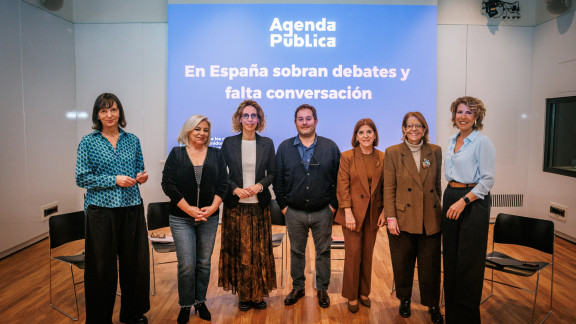
The voices who participated in the meeting, alongside the editor and director of ‘Agenda Pública’, Marc López Plana. Photo: Agenda Pública / Tania Sieira
Spain and Europe
Her European experience took a prominent place when the meeting turned to Europe’s future. The former MEP argued for completing the single market, strengthening multilateralism, and reviving a diplomacy capable of responding to an increasingly competitive international scenario. From that perspective, she advocated negotiation as an essential tool to achieve results through commitments that take time and that, by their very nature, rarely lend themselves to big headlines.
At the end of the gathering, Bilbao summarized her proposal in the need to “reclaim the value of politics”, placing people at the center and understanding the public service as a service that must recognize the different political and institutional realities. She added the importance of incorporating new forms of leadership and participation that enhance transparency, accountability, and the quality of decisions.
Her intervention left open a reflection on the incentives shaping public activity. If a spectacular gesture receives greater recognition than months of negotiation, what incentives do political representatives find to devote their time to the latter? The answer affects how parties function and also the criteria by which citizens and journalists evaluate institutional work.
“If a spectacular gesture receives greater recognition than months of negotiation, what incentives do political representatives find to devote their time to the latter?”
Bilbao had spent eight months negotiating a report that barely appeared in the news; another deputy needed only a few seconds and a cucumber to seize attention. Perhaps a part of the challenge of contemporary democracy lies in learning to recognize, with the same ease we identify striking gestures, the daily work that makes agreements and governance possible.
