
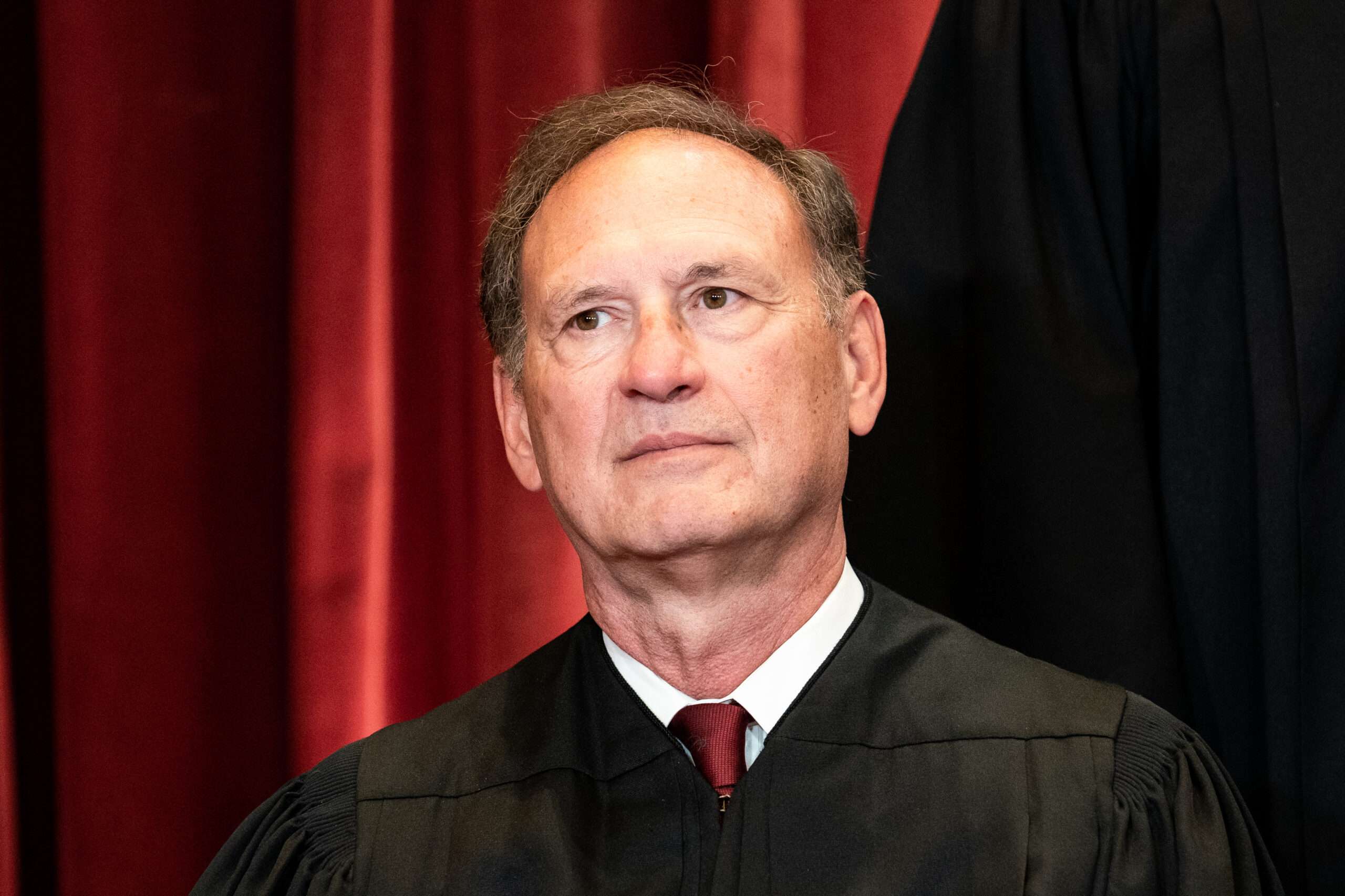

Recently, in a Wall Street Journal piece that previews his forthcoming book on the same topic, Supreme Court Justice Samuel Alito offers his perspective on constitutional originalism. Yet, in presenting his view, he generates more questions than definitive answers. Still, he puts forward several noteworthy observations about how originalism can be approached in general and about particular constitutional issues. The following points strike me as especially worthy of attention.
There has long been a debate among originalists about what counts as the proper original meaning courts should apply: should it reflect the understanding of ordinary people at the time of ratification, the understanding of lawyers and other well-informed experts, or the understanding of a hypothetical “reasonable” reader who is deeply versed in legal doctrine? I label this the divide between an elitist and a populist current of originalism. Alito clearly aligns with the populist camp:
When I think about the original public meaning of constitutional provisions, I sometimes envision a scene at a colonial-era tavern. After dinner, travelers and area residents gather around the fireplace and read newspapers that discuss the Bill of Rights. They read the text of the First Amendment and see that it prohibits Congress from making any law that impairs the free exercise of religion. What would they make of that language?
How likely is it that these men had read John Locke’s writing on church-state issues? Even if they had some rough awareness of his ideas, how likely is it that they would assume that Congress had incorporated those ideas in the First Amendment? Originalism looks for the original public meaning, not the meaning that the most well-read and philosophically minded men of the day might have adduced.
In adopting this stance, Alito seems to overlook the potential downsides of a populist approach. Ordinary people may be ignorant about a range of constitutional issues and may struggle to interpret technical legal terms embedded in the Constitution, such as “writ of habeas corpus” or “bill of attainder.” Populist readings of original meaning are also less likely than elitist ones to offer guidance on how to handle issues unforeseen at the time of enactment, including new technologies and new information.
Elitist approaches have their own drawbacks, of course. But those advocating one side or the other should grapple with these tradeoffs. I address these considerations in more depth in my 2012 law review article “Originalism and Political Ignorance” and in an earlier blog post on the topic. My own view is that the best path might be a hybrid, blending elite and popular understandings. Elite understandings are preferable when it comes to terms that ordinary people are likely to recognize as technical legal phrases requiring a lawyer or expert to interpret. Yet the matter is a difficult one, and originalists ought to give it more careful consideration. Perhaps Alito’s book will spur new analysis of this crucial issue.
Alito’s analysis also omits the distinction emphasized by many originalists between original public meaning and original “expected applications.” The former concerns the linguistic meaning of the words, while the latter concerns how they are expected to apply to specific issues. Expected applications depend in part on factual understandings, distinct from the words themselves. As facts or our understanding of them change, the same words may carry different implications for particular cases, including some that were not and could not have been anticipated at the time of drafting and ratification.
For example, Alito assumes it is obvious that originalism rejects a constitutional right to same-sex marriage, since such a right would have been unimaginable when the Fourteenth Amendment was ratified in 1868. Hence, he doubles down on his position that Obergefell v. Hodges, the 2015 decision striking down state bans on same-sex marriage, is incorrect. Yet, as discussed in the amicus brief I filed in that case (along with Andrew Koppelman), there is a strong originalist case for Obergefell when you merge the original linguistic meaning with current knowledge about the nature of same-sex relationships. This is especially true if you accept (as many originalists do today) that the Fourteenth Amendment bans most, if not all, forms of sex discrimination.
On a different Fourteenth Amendment question, Alito reiterates his long-held view that the Due Process Clause, not the Privileges or Immunities Clause, should serve as the source of various “unenumerated” rights, including the incorporation of the Bill of Rights against state governments:
If we simply read the text of the 14th Amendment, the Due Process Clause seems an unlikely home for substantive rights. Another provision, the Privileges or Immunities Clause, declares that no state “shall make or enforce any law which shall abridge the privileges or immunities of citizens of the United States.” But in the Slaughter- House Cases (1873), the Supreme Court reduced that clause to minor importance.
In McDonald [v. City of Chicago], prominent scholars filed a brief urging the court to jettison Due Process incorporation and revive Privileges or Immunities. During oral arguments, the attorney representing Otis McDonald latched onto this argument. He didn’t get far. Justice Scalia interrupted him and said that while the Privileges or Immunities argument was “the darling of the professoriate,” it was contrary to a century of case law. Scalia recommended that the attorney stick to those precedents.
Why did Scalia, a former law professor, say that? Because accepting the Privileges or Immunities argument would have opened a can of worms. Libertarians, social conservatives, progressives, socialists and others could all make a pitch for whatever rights they favored.
On this issue, Alito diverges from fellow conservative originalists Clarence Thomas and Neil Gorsuch, both of whom advocate reviving Privileges or Immunities. It is also ironic that Alito rejects Privileges or Immunities revival for fear of opening a “can of worms” that would allow judges with different ideologies to “make a pitch for whatever rights they favored.” After all, this is precisely the argument Alito and other conservatives have long used against “substantive” due process. It remains unclear why Privileges or Immunities would be any worse. If anything, the substantial body of original-meaning material about what counts as “privileges or immunities” could make it less susceptible to judicial manipulation than the substantive due process approach. While Alito expresses wariness toward what he calls “academic originalism,” the rich scholarly work on Privileges or Immunities could help guide judicial discretion in this area. And, at the very least, it might be less subjective than relying on the Due Process Clause alone.
Alito also stresses “the necessity, except in unusual circumstances, to heed precedent, since overturning it can have unsettling consequences.” Despite his stated discomfort with Obergefell, in a recent CBS interview he indicated that it probably should not be overturned because “a great deal had changed in the country as a result of Obergefell” and “there was a lot of reliance in various ways on the decision in Obergefell.” By this, he is referring to the hundreds of thousands of same-sex couples who have entered marriages and started families under the Supreme Court’s ruling.
Skeptics will note that Alito has, in fact, voted to overturn several long-standing precedents, most notably in the Dobbs decision, which reversed Roe v. Wade (1973), a ruling that had recognized a constitutional right to abortion. Alito’s claim that Roe did not create significant reliance interests strikes me as unpersuasive. Many women undoubtedly relied on abortion as a means to avoid an unwanted or medically dangerous pregnancy. That alone does not settle whether Dobbs is wrong, but it does indicate that defenders of Dobbs and other reversals of long-settled precedent need a more robust theory for weighing reliance interests against other considerations.
To be fair, Alito is far from alone among Supreme Court justices in failing to offer a fully persuasive and coherent answer to this question. Other justices, both liberal and conservative, have wrestled with the issue as well. I have previously argued that “Stare decisis will not prevent jurists from overturning a precedent they deem badly wrong and harming society,” a claim that seems to apply across the ideological spectrum. Even strong reliance interests can be overridden when preserving a flawed precedent would cause serious harm. Justices from different camps are willing to reverse precedents that are “egregiously wrong and deeply damaging,” as Alito described in Dobbs. The central disagreement is over which cases belong in that category.
That is one reason why Brown v. Board of Education and other decisions that struck down segregation laws were justified, even though they narrowed or overturned long-established precedents that many states and localities had depended on heavily. Segregation caused such profound harm that substantial reliance interests had to be subordinated to the imperative of ending it. Similarly, if one shares the view—held by many anti-abortion advocates—that abortion is morally akin to murder—Dobbs might be warranted even if Roe did generate significant reliance interests. Yet this framework for weighing reliance requires courts to engage in balancing that many would contest as appropriate only for other branches or contexts.
There is more to say about Alito’s Wall Street Journal piece and his CBS interview. And I expect that many of these issues will receive fuller treatment in his forthcoming book. For now, I will leave it here. I may have additional thoughts once I have had a chance to read the book.
