
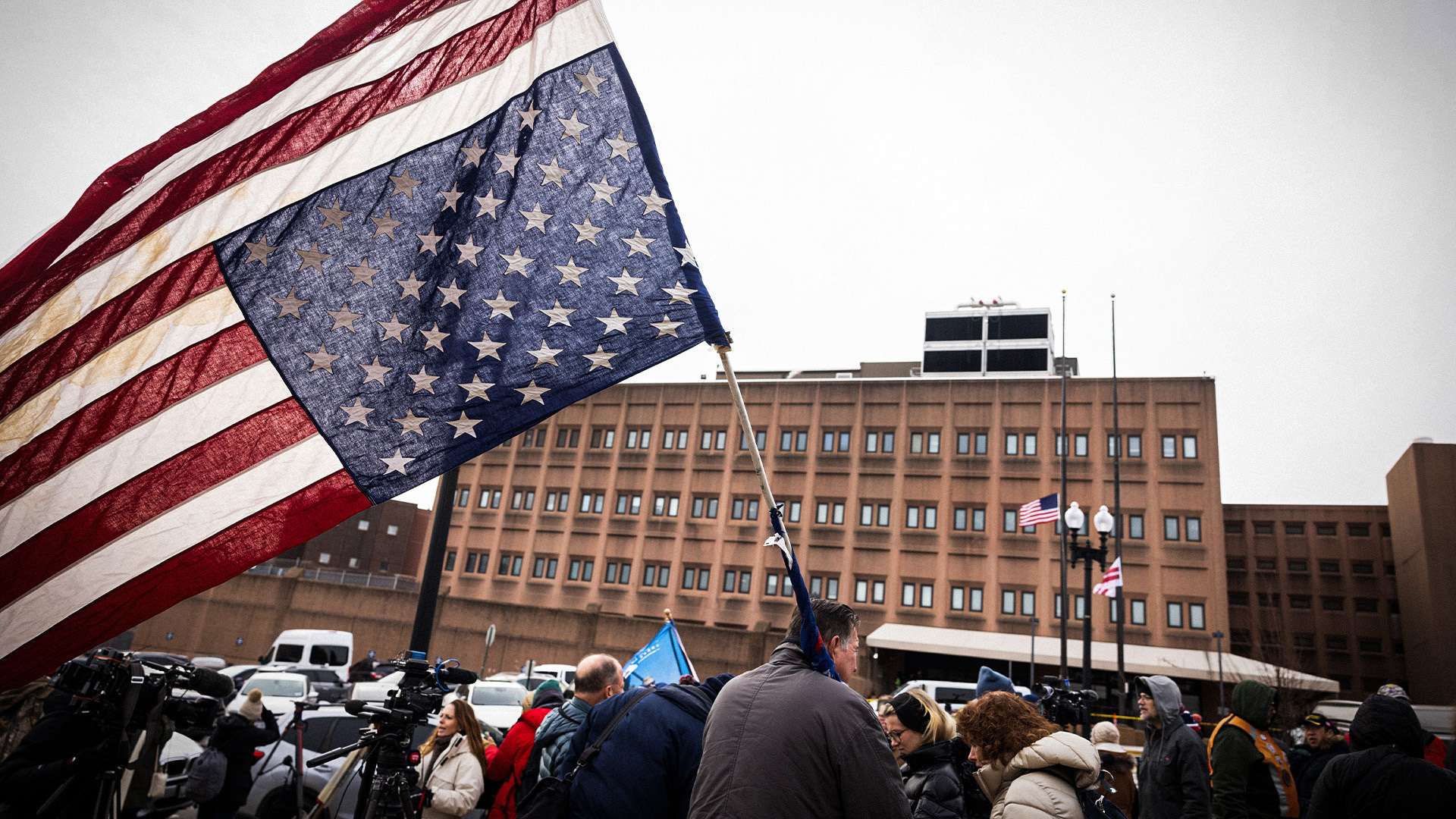
On Monday, the Department of Justice revealed that it will scrutinize the living conditions inside the Washington, D.C. Jail in response to years of accounts describing filth, medical neglect, and mistreatment.
The DC Jail, which houses all pretrial detainees and misdemeanor offenders in the District of Columbia, was the subject of a scathing 2016 Reason feature, “How Not to Build a Jail,” that chronicled how deplorable conditions had endured for more than a century. Lawsuits, audits, and investigative reporting have repeatedly documented ongoing civil rights concerns. The facility drew additional notoriety for detaining individuals awaiting trial and others convicted for their roles in the January 6, 2021, attack on the Capitol.
According to a DOJ press release, the department has received numerous claims of excessive force, inadequate medical care, unsanitary living spaces, and malnutrition inside the jail. The inquiry will assess whether the District of Columbia’s Department of Corrections exhibits a pattern or practice of violating inmates’ constitutional rights.
“The Constitution protects the rights of every incarcerated American, including those held in custody in our nation’s capital,” Assistant Attorney General Harmeet K. Dhillon stated in the DOJ release. “We are dedicated to enforcing our federal civil rights laws so that no inmate is confined under unconstitutional conditions or subjected to unconstitutional mistreatment at the District of Columbia Department of Corrections.”
Last week, six current and former inmates at the D.C. Jail filed a class-action lawsuit claiming they found dead mice and cockroaches in their meals.
In September, five inmates filed another suit alleging that guards failed to intervene or adequately respond when a man in the jail’s mental health unit initiated an electrical fire.
In 2021, the U.S. Marshals Service relocated roughly 400 inmates out of the D.C. Jail after a surprise inspection flagged unacceptable living conditions, including guards withholding water and food as punishment.
A week before that inspection, a federal judge held the D.C. Department of Corrections in contempt for repeatedly failing to provide the medical records of a January 6 defendant who had been waiting for months for a scheduled wrist surgery.
The aging jail, opened in the 1970s, faces a host of structural issues, but plans to replace it have stalled. In the meantime, the Justice Department’s Civil Rights Division will prepare a report to add to the pile.
