
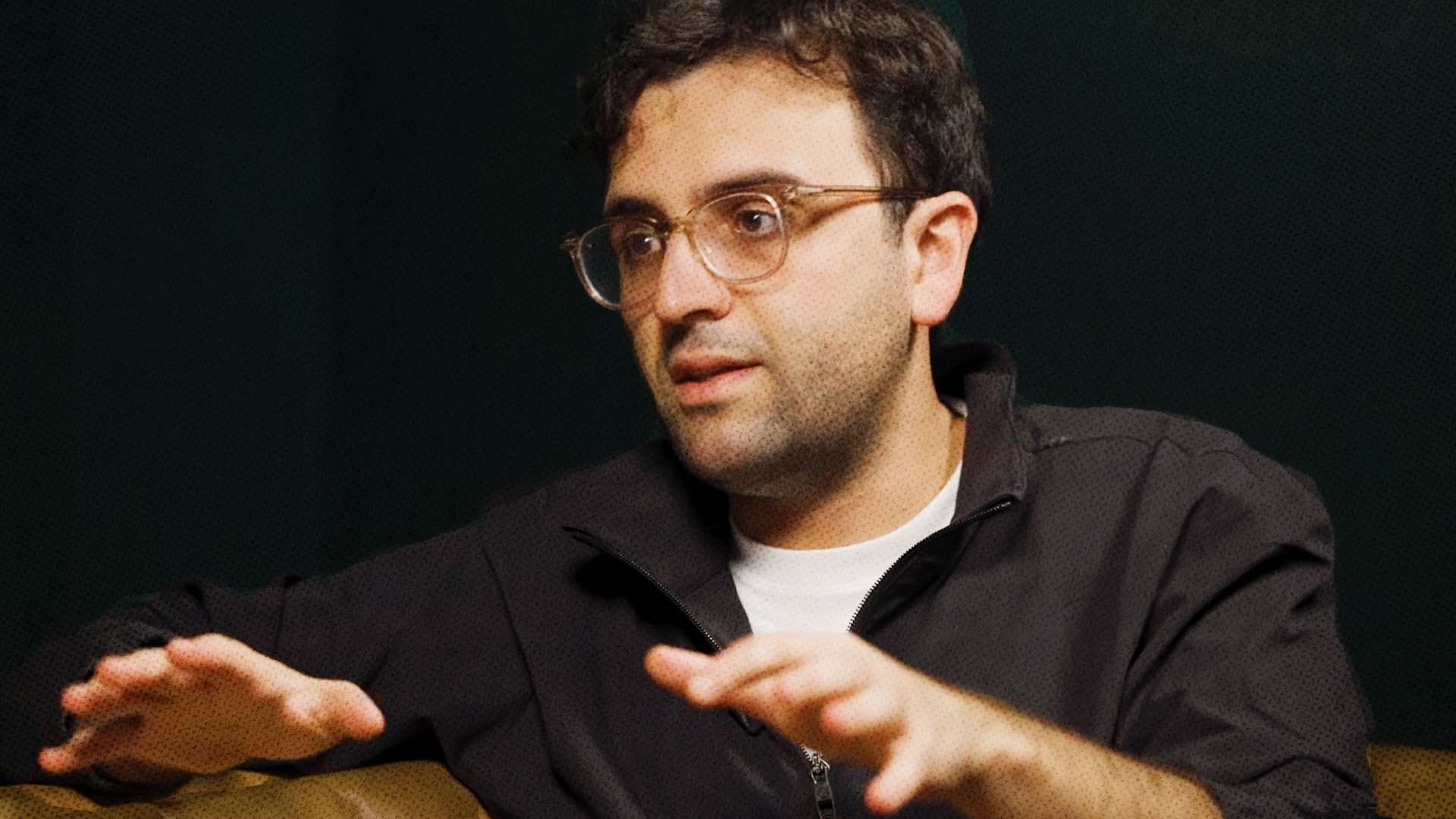
Tarek Mansour argues prediction markets can police insider trading themselves, but regulators still see a gambling app.
:15
:15
Download
Are Prediction Markets Just Gambling? Kalshi CEO Responds
“Capitalism has its merits, but we must acknowledge that a sizable portion of people never join in,” said Tarek Mansour, Kalshi’s co-founder and chief executive, in a recent conversation with Nick Gillespie of Reason. “They don’t feel included in the system. And that reality exists.”
Mansour aims to change that by making it simpler for everyday people to engage with financial markets. Kalshi operates on a straightforward premise: the platform links traders who hold opposing views on the outcome of future events, pooling dispersed pieces of information from across the country, provided that such information isn’t privileged or obtained illegally.
He faces a growing chorus of federal and state lawmakers—and not just them—alongside the NFL, traditional sportsbooks, casinos, and other regulated gambling operators who view Kalshi as merely another gambling app. At the start of 2026, more than twenty lawsuits and cease-and-desist actions were pending nationwide, brought by state attorneys general, gaming regulators, tribal authorities and private plaintiffs, according to the National Conference of State Legislatures. Utah’s attorney general, Derek Brown, stepped up an ongoing dispute by filing a complaint in state district court accusing Kalshi of operating an “unconscionable and illegal gambling operation.” He alleged the company engaged in a “brazen pattern of unlawful conduct.”
At the federal level, Bloomberg Law reported last week that Sen. Ted Cruz (R–Texas) plans to introduce legislation after the midterms granting state and tribal governments the power to regulate sports-related event contracts offered through prediction markets.
Cruz’s plan for a state-by-state regulatory regime is precisely the kind of approach Mansour says lawmakers should avoid. He told Reason that ideally there would be a single federal framework that applies everywhere, enabling a multilateral, peer-to-peer ecosystem where someone in California, Oregon, or Washington could place bets on an event’s outcome based on data supplied by someone in Texas.
Pew Research Center data show Kalshi enjoys broad nationwide appeal; yet the project faces resistance in Congress from figures such as Rep. Alexandria Ocasio-Cortez (D–N.Y.) and Rep. James Comer (R–Ky), along with Senators Adam Schiff (D–Calif.) and John Curtis (R–Utah), who have questioned whether prediction markets can truly police themselves against insider trading and market manipulation.
Mansour, who describes insider trading as “an unfair dynamic that gradually drains liquidity,” argues that prediction markets are uniquely equipped to self-regulate because trades on Kalshi are “completely transparent,” which makes it straightforward to spot unusual trading patterns. He notes that the platform’s participants play a pivotal role in this monitoring. For example, in February, after convicted fraudster and former Rep. George Santos (R–N.Y.) attempted insider trading, Kalshi reportedly received “a hundred whistleblower complaints within minutes.”
The company’s public stance against insider trading may be commendable, but it has not markedly diminished the widespread perception among state and federal regulators that Kalshi—and the broader category of prediction market platforms—closely resemble traditional gambling markets.
Indeed, the lawsuits against Kalshi center on state regulators’ view that the platform’s sports-event contracts function the same as bets offered by licensed gambling outfits such as casinos and sportsbooks. Kalshi contends that the U.S. Commodity Futures Trading Commission has exclusive jurisdiction over regulating the types of contracts it can offer, under federal law, thereby preempting state gambling authority over prediction markets.
In March, Arizona became the first state to bring criminal charges against Kalshi. Arizona Attorney General Kris Mayes accused the company of “operating an illegal gambling operation and taking bets on Arizona elections, both of which violate Arizona law.” Not everyone in the state shares Mayes’s stance. One Arizona resident, Zach, a 35-year-old who earns his living trading sports-related event contracts on prediction markets, told Reason he would “move to another state” if Arizona’s efforts succeed in driving prediction markets out of the state.
“There’s nothing preventing others from sharing in the profits I’m earning right now,” he says. “I’m not compelled to bet on Monday Night Football… I can review all markets, choose which ones to engage with; I place a limit order and wait for my price. If I don’t get it, that just isn’t part of my portfolio.”
Of course, not all participants behave responsibly. Mansour acknowledges that in any competitive arena, some will win while others lose. He champions individual liberty and the notion that people should be free to select which financial markets they participate in, with some safeguards to prevent irresponsible use that could expose vulnerable or addictive individuals to harm.
How Kalshi and other prediction-market platforms should be regulated is poised to be a major topic for federal lawmakers once the midterms are behind us and in the next Congress. Mansour seems hopeful about broad, bipartisan support for what he calls “sensible guardrails.” He points to a sizeable cross-partisan bloc that is allegedly favorable toward prediction market platforms. Yet skeptics remain, given that several lawmakers—like Sen. Elizabeth Warren (D–Mass.), the Senate Banking Committee’s top Democrat—have indicated that prediction markets require tighter controls.
In Mayes’ position, her stance against prediction markets could cost her at least one vote in Arizona’s attorney general race. Zach notes that Mayes’s legal battle against Kalshi could influence his voting choice, saying, “hypothetically, if someone knocked on my door tonight and asked me to vote for Kris Mayes to be reelected.”
“If I’m not voting for myself, then who is?” he adds. (Mayes may not be fond of Kalshi, but the platform’s track record of accurately forecasting election outcomes provides some solace—a current indicator suggests she has an 84 percent chance of keeping her job.)
Mansour describes himself as a proponent of free markets who wants everyone to “have a fair shot in the competition.” To achieve this, he will need to withstand a cadre of paternalistic officials who are determined to steer the financial choices of consenting adults.
