
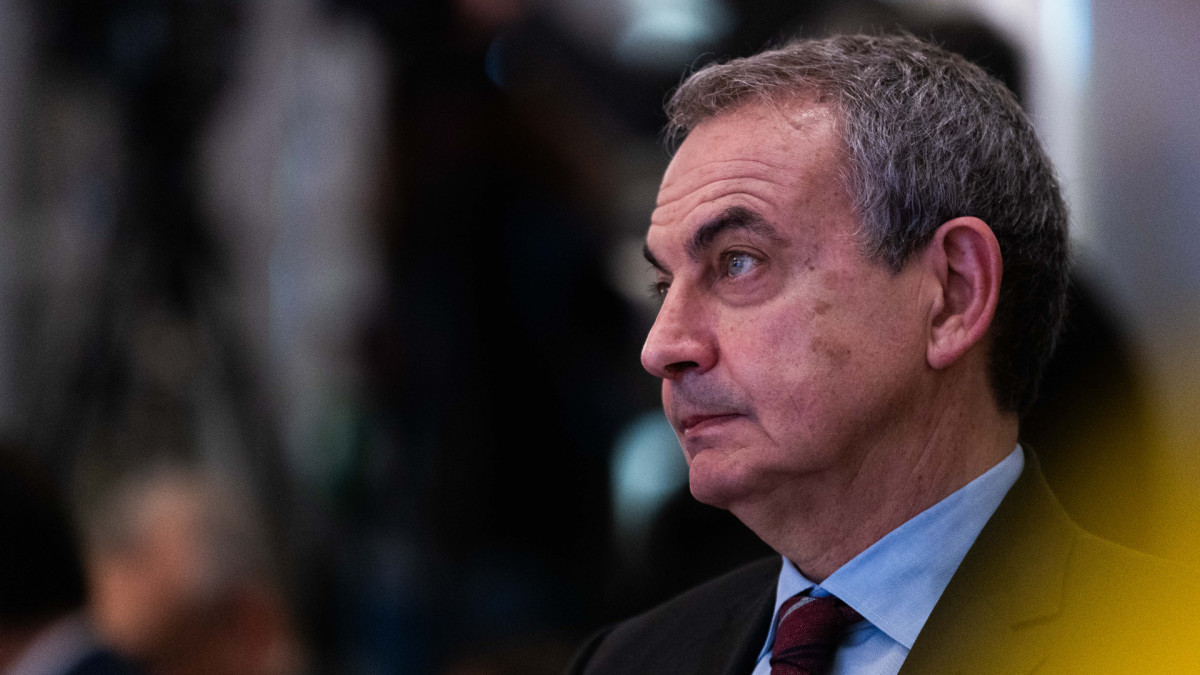
The indictment of José Luis Rodríguez Zapatero in the Plus Ultra case has completely altered the course of Spanish politics. The National Court is investigating the former president for alleged crimes of influence peddling, criminal organization, and documentary falsification in connection with the airline’s public bailout, while he denies any irregularities and is summoned to testify on June 2. Zapatero’s ties to the private sector once again raise a recent debate: what do presidents do when they leave office, what value do their contacts retain, and how is an “influence” regulated.
That a former president or former prime minister (heads of government) engage in private activity, collect speaking fees, advise companies, participate in foundations, or take part in international forums does not delegitimize their time in charge, nor is it, in itself, a toxic element for democracies. Governing experience is an asset. So are institutional knowledge, geopolitical insight, and the ability to engage in dialogue.
“The relevant issue is not only what a former president knows, but the doors they can open, the positions they have access to, and the expectations generated by their very presence”
No obstante, la cuestión empieza a ser distinta cuando esa experiencia se mezcla con el acceso. En sectores regulados, operaciones internacionales, rescates públicos o mercados donde la relación con el Estado resulta decisiva, la línea entre asesoramiento, intermediación e influencia puede estrecharse. En otras palabras, lo relevante no es solo qué sabe un antiguo presidente, sino las puertas que puede abrir, los cargos a los que tiene acceso y las expectativas que genera su propia presencia en cualquier operación.
The shift in the role of former prime ministers over the last forty years is one of the major transformations in contemporary politics. In the early stages of liberal democracies, the career path of a head of government was understood as a culmination: party, parliament, ministries, presidency, and retirement. Today many leaders leave power with enough age, agenda, and visibility to begin a second professional phase. Political scientist Fortunato Musella explains it with a precise expression: former presidents and prime ministers seek to capitalize on their “prestige and contacts,” a combination of reputation, international agenda, and relationships built from power. In his study of 441 democratic leaders in 78 countries between 1989 and 2012, 21.4% ended up in business or consultancy activities and nearly one in five pursued a new career in the business or financial sector.
Age helps explain the change. Zapatero left the Office at 51. Tony Blair left Downing Street at 54. Nicolas Sarkozy exited the Élysée at 57. We are not necessarily talking about leaders at the end of their public life, but about leaders with many years of activity ahead. Today, the post-presidency has become its own space: memoirs, foundations, conferences, international mediation, strategic advising, boards of directors or consultancy for companies with global interests.
“The leap into consulting or the private sector after leaving office is not usually a return to the former profession, but a reconversion of the political capital accumulated”
In that second phase, former presidents arrive with a personal brand built from the state. Musella notes that many of them did not come from the business world before governing: 85.5% of the leaders in his sample had mainly institutional backgrounds and only 5% came from business or corporate activity. In other words, the post-presidency jump into consultancy or the private sector is not usually a return to the previous profession, but a reconversion of the political capital accumulated during the mandate.
That reconversion can take very different forms. Former U.S. President Jimmy Carter turned his post-presidency into a platform for mediation, human rights, and global health. Tony Blair, Gerhard Schröder, José María Aznar, or Brian Mulroney — with some more controversial cases than others — followed paths more closely linked to consultancy, business, or boards. The range is broad and varied, but they share the base that they are figures who retain a residual authority inherent to someone who has governed.
Another familiar concept in these cases is the revolving doors. From academia, these cases have been analyzed through the idea of relational capital. A study of former U.S. Congress staffers turned lobbyists found that when the senator they had worked for left office, the lobbyists’ incomes fell on average by 24%. The conclusion is that connections with active politicians carried measurable economic weight. That is relational capital: trust-based relationships, specific knowledge of decision-makers, and the ability to move within power networks. It works for mid-level posts, representatives or aides, but also for presidents.
“It is worth asking whether they are paying for analysis, reputation, access, or a blend of the three”
However, a former head of government is not an ordinary lobbyist nor can their career be reduced to a contact list. They also possess information, judgment, strategic vision, and knowledge of complex processes. Still, it is worth asking whether, when a company, a foundation, or an intermediary pays someone who sat at the pinnacle of the state, they are paying for analysis, reputation, access, or a blend of the three. The Plus Ultra case sits at the heart of this triangle because, according to the case file, the judge assigns the former president a role as a “central decision-maker” or “apex.”
It is true that not all answers can be found for this phenomenon, especially given how recent some variables are. For example, the international dimension. In the era of globalization, presidents govern within their borders, but their influence beyond them is increasingly evident. They participate in summits, negotiate with strategic companies, engage with foreign governments, know multilateral bodies, and build relationships in which politics and business cross paths constantly. When leaving office, that agenda does not disappear and can be used in mediation, cooperation, or informal diplomacy. And, at the same time, it can become an asset for private operations that are difficult to regulate from public debate.
“One should not prevent former presidents from working, advising, or taking part in international dialogue, but it is essential that citizens know when they are speaking as former public servants”
The investigation into former President Zapatero will have to determine facts, responsibilities, and evidence. The democratic debate can use the case for something broader: organizing life after power. It should not be barred that former presidents work, advise, or participate in the international conversation, but it is essential that citizens know when they speak as former public servants, when they act as private professionals, and when their involvement affects decisions that continue to commit public resources, institutions, or public interests.
