
By the end of March 2026, Brazil and the United Kingdom announced the signing of their Strategic Partnership for 2026-2030. In a move that surprised several regional actors, the Brazilian Ministry of Foreign Affairs (also known as Itamaraty) stepped to the forefront once again, establishing itself as a weighty player with its own imprint, able to offer its capabilities to the world.
“With an agenda that seems to run counter to the current global debate, the text blends alignments in international institutions, commitments at the global level and tangible exchanges in defense and economy”
The official document refers to more than two hundred years of historical ties between the two states and highlights the alignment in their views on global issues such as international law, multilateralism and the Sustainable Development Goals (SDGs). With an agenda that seems to go against the current global debate, the text combines alignments in international bodies, global commitments and concrete exchanges in defense and economy.
Credits, Defense and a Seat at the UN: the Pillars of the Partnership
The agreement elevates the bilateral relationship to the category of Strategic Partnership, with the aim of reflecting a more ambitious and long-term bond. Among its pillars, the Political Dialogue and International Cooperation section highlights a historic triumph for Brazilian diplomacy: the United Kingdom not only commits to promoting an expansion of the UN Security Council, but formally endorses Brazil’s aspiration to become a permanent member of the body.
Furthermore, both nations pledge to cooperate in regulating critical and controversial areas such as artificial intelligence (AI), cybersecurity and space. In a declared push for disarmament, the document reiterates the importance of the Nuclear Non-Proliferation Treaty, a sensitive point amid rising tensions among nuclear powers and uncertainty in the Middle East.
Economically, the treaty breaks with the protectionist trend of current world trade. While major economies close themselves behind tariff barriers, this partnership reaffirms commitments to the WTO and promotes free trade. Here, one of Itamaraty’s major achievements is the line of guaranteed credits amounting to £5.4 billion. This financing represents an opportunity for Brazil to access the capital necessary to modernize its infrastructure and technology, while London renews its role as a financier in the region.
“The renewed military proximity between the bloc’s leading partner and the British Crown is viewed with caution in Buenos Aires”
One of the most striking aspects is the Security and Defense section. The agreement seeks to deepen industrial collaboration and technology transfer, but goes further: it contemplates joint military exercises, defense training and the development of a shared doctrine. This rapprochement has stirred controversy in Argentina, given the historical conflict over the Falkland Islands and Antarctica with the United Kingdom. The renewed military closeness between the main Mercosur partner and the British Crown is viewed with caution in Buenos Aires, amid fears that Brazil may weaken its support for Argentina’s diplomatic claims.
Finally, the partnership contemplates ambitious objectives in sustainable development and climate governance. It centers on the shift to low-emission economies, the fight against deforestation and the transition to clean energy. At the same time, both parties commit to meeting the terms of the Agenda 2030 and its SDGs, promoting climate finance and technology transfers. These are items in which Brazil has much to contribute, given its remarkable biodiversity, a clean energy matrix and its leading edge in areas such as bioeconomy, low-emission agriculture and biofuels.
Multilateralism and Protagonism: the Reconfiguration of Brazilian Foreign Policy
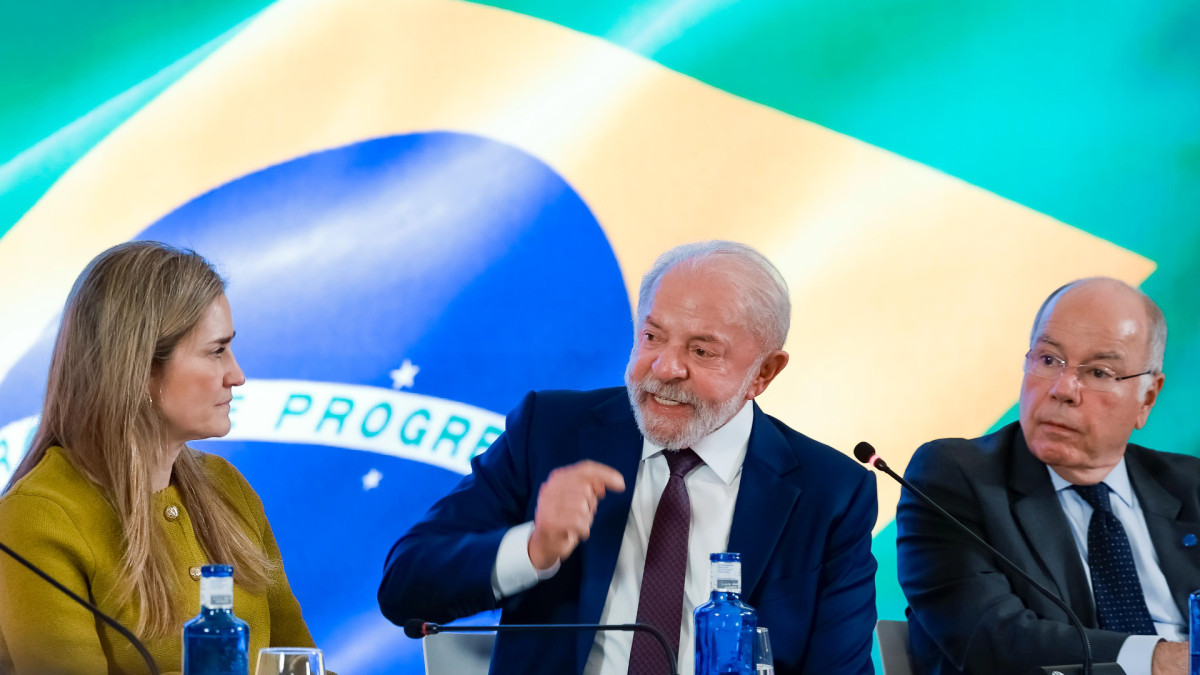
The pact with the United Kingdom is inscribed as another milestone in a thread of profound reconfiguration of Brazilian foreign policy. Since returning to power, Lula da Silva’s government has made diplomacy a hallmark of its administration. With a profile clearly oriented toward multilateralism, Brazil not only aims to expand its alliances in commercial terms but also to assert its potential and occupy a leading role in international forums.
“Today Brazil is one of the states that most bets on diplomacy as a means of integration into the world”
The Planalto’s current international stance has been clear: the major global challenges facing humanity —such as climate change, food security or the reform of financial governance— can only be addressed through dialogue and cooperation. From this diagnosis arises the interest in revitalizing spaces where Brazil has a voice of its own. Despite the current weakening of the UN, Brasilia reaffirms the goals of the Agenda 2030, actively participates in BRICS and, at the regional level, has sought to revive CELAC and Mercosur as preferred channels of dialogue with its neighbors. Whether by conviction or as a counterpoint to the relative isolation the country endured during the Bolsonaro years, today Brazil is one of the states that most bets on diplomacy as a means of integration into the world.
At the same time, this policy is complemented by trade and political agreements with states and blocs around the globe. The rapprochement with London comes as a response to the failed attempt to close the EU-Mercosur deal in January, a moment in which Brazil mobilized all its diplomatic strength to try to seal the alliance in Foz do Iguaçu. In parallel, the Planalto revitalized the IBSA forum — shared with India and South Africa — and sealed trade and financing agreements with France, Japan, Saudi Arabia and Egypt, among others.
This is a policy that, from the proximity of the presidential office, is described as bold and active. The term bold alludes to defending national interests and rejecting automatic alignments. Under this frame, one understands Brazil’s ability to strike deals with the United States — despite clashes with Trump — or its reluctance to formally join the Belt and Road Initiative, even though China remains its main trading partner. Likewise, this approach defends state sovereignty; evidence of this has been jurisdictional conflicts with the social network X or the defense of the Pix system against the interests of transnational payment processors.
“Non-alignment is far from translating into passive neutrality; on the contrary, it becomes a constant pursuit of consensus”
Meanwhile, the term active refers to the propositive character of Brazilian foreign policy. Non-alignment is far from translating into passive neutrality; on the contrary, it becomes a continual search for consensus. From there arises the commitment to UN reforms, the expansion of BRICS and the push of global agendas such as the green transition, the fight against hunger and South-South cooperation.
Under the premise of a multipolar world, Brazil seeks its place on the global stage. To do so, it relies not only on its economic potential but also on its own imprint and its diplomatic legacy. Time will tell whether the wager on cooperation, in times of confrontation and tariffs, was the right option.
