
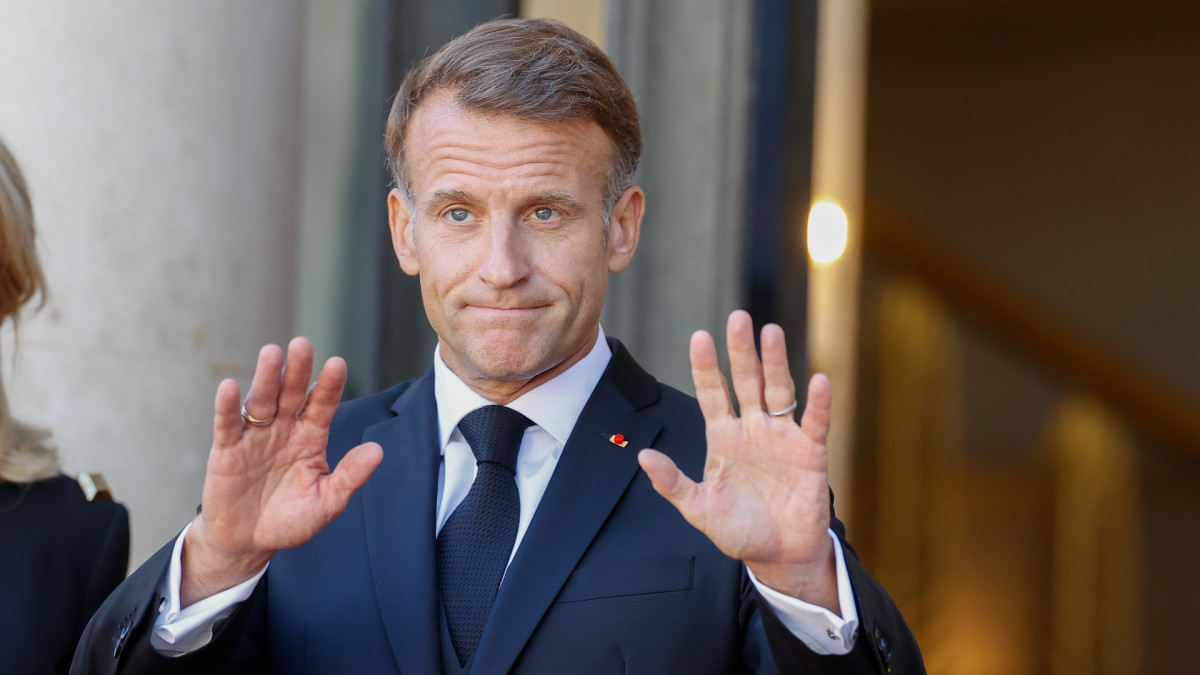
The major problems that today afflict France were already on the political agenda when Emmanuel Macron arrived at the Élysée in 2017. The country was not undergoing a bad economic moment—the economy grew that year by 2.3%, driven especially by investment—but rather a crisis of expectations, social integration and political representation, with three large structural tensions: economic, social and political-institutional.
Economically, the debate revolved around labor flexibility, vocational training, the cost of labor, and the capacity of firms to create jobs, with particular attention to the labor exclusion of young people and low-skilled workers. There was discussion about how to improve productivity, rebuild industrial fabric, facilitate innovation and adapt the economy to digitalization and international competition. Behind this debate lay another, social and territorial in nature: the consequences of deindustrialization in the old industrial regions, particularly in the north and east of the country. The underlying question was how to restore an economy capable of generating stable employment without undermining the French model of social protection. This latter issue affected pensions, the healthcare system, taxation, the efficiency of public services and the financial sustainability of the social model in light of demographic aging.
“The underlying question was how to restore an economy capable of generating stable employment without undermining the French model of social protection”
In the social realm, the question was who participated in French prosperity and who felt left out. This fracture especially affected the disadvantaged neighborhoods of large cities, where educational difficulties, unemployment, discrimination and problems of social mobility accumulated. The republican school, traditionally presented as an instrument of equality and social promotion, was the subject of debate for its effective inability to correct the starting social differences. It was not only about redistributing income, but about ensuring that social and territorial origin did not determine future opportunities. France had undergone several presidential terms—at least those of Sarkozy and Hollande—debating how to integrate a diverse population within the framework of its republican and secular tradition. Added to this was concern about immigration, intensified by the 2015 European refugee crisis, and about security after the terrorist attacks of 2015 and 2016.
In the political and institutional sphere, the debate was about how to rebuild trust in institutions and parties that a growing portion of society no longer considered representative. The 2017 presidential election represented a transformation of the French political system. For the first time in the history of the Fifth Republic (since 1958), neither of the two main political families that had organized French life for four decades —the Socialists on one side, and the Gaullists and conservatives on the other— advanced to the second round of the elections. Macron arrived at the Élysée at 39 years old —almost twenty years younger than the average of his predecessors since 1959— with 24% support in a first round extraordinarily close—the gap between the first candidate and the fourth was barely 4.4 percentage points—and three major promises: to modernize the French economy, reduce the social fracture and renew his political system.
Almost a decade later, France has reduced unemployment from 9.4% in 2017 to 8.3% projected for 2026 and has contained the loss of purchasing power in a context shaped by the pandemic, Russia’s invasion of Ukraine and, more recently, the conflict in the Strait of Hormuz. Economic growth remains weak, productivity has shown little dynamism, and public finances have spiraled out of control (the deficit rose from 3.4% of GDP in 2016 to 5.1% projected by the European Commission for 2026, while debt would rise from 96.0% to 118.1% of GDP), which has reduced the room to sustain and reform the social state.
“Economic growth remains weak, productivity has shown little dynamism, and public finances have spiraled out of control”
Territorial, social and cultural fractures have not disappeared. The Yellow Vests—born out of a controversial and regressive fiscal policy—constituted an early manifestation of that discontent. Subsequently, inflation, pension reform and tensions related to immigration and identity have kept these divisions open. The improvement in some economic indicators has not necessarily translated into a shared sense of progress.
The disappearance of the old socialist and conservative dominance has given rise to increasing fragmentation around three spaces: the left —also divided between “insoumis” and socialists—, the center and the right —where the “Republicans” have lost their positions in favor of Le Pen—. The presidential coalition obtained 32.3% of the votes in the first round of the 2017 legislative elections, 25.8% in 2022 and 20% in 2024. These latter elections, brought forward unnecessarily, represented a turning point: the problem is no longer only the distance between citizens and their representatives, but also the difficulty of institutions to transform electoral preferences into majorities capable of governing.
“The improvement in some economic indicators has not necessarily translated into a shared sense of progress”
The 2024 legislative elections were also revealing for the tone of the campaign and the attitude of much of the media ecosystem. In those weeks there was a growing sense that some sectors were more concerned with accepting what they deemed inevitable and adapting to the new political scenario than with openly challenging the radical right. It is hard to understand otherwise how Jordan Bardella could mock Jean Moulin in a primetime televised debate without seriously compromising his candidacy or political projection. It was an episode that served to show how far the bounds of what is permissible in the French public conversation have shifted: what in the past could have disqualified a candidate today hardly seems to derail a campaign. The barbarians are inside. And there are many.
Technocrat, reformist and centrist, Macron built his image on the promise to overcome the traditional left-right divide, to modernize the French economy, and to renew political life. His balance is far from those ambitions. Economic reforms have not returned France the expected dynamism, social fractures remain open and his project of political renewal has resulted in parliamentary fragmentation that makes governance difficult. Not even pension reform, one of the most controversial measures of his presidency, has managed to take hold. And it leaves France’s public finances in an unusually delicate state. In his favor will remain his convinced pro-European stance; French in spirit, as in the tradition of his predecessors, but pro-European nonetheless. There, yes, we will miss him because, if nothing changes, the barbarians will arrive at the Élysée in the spring.
