
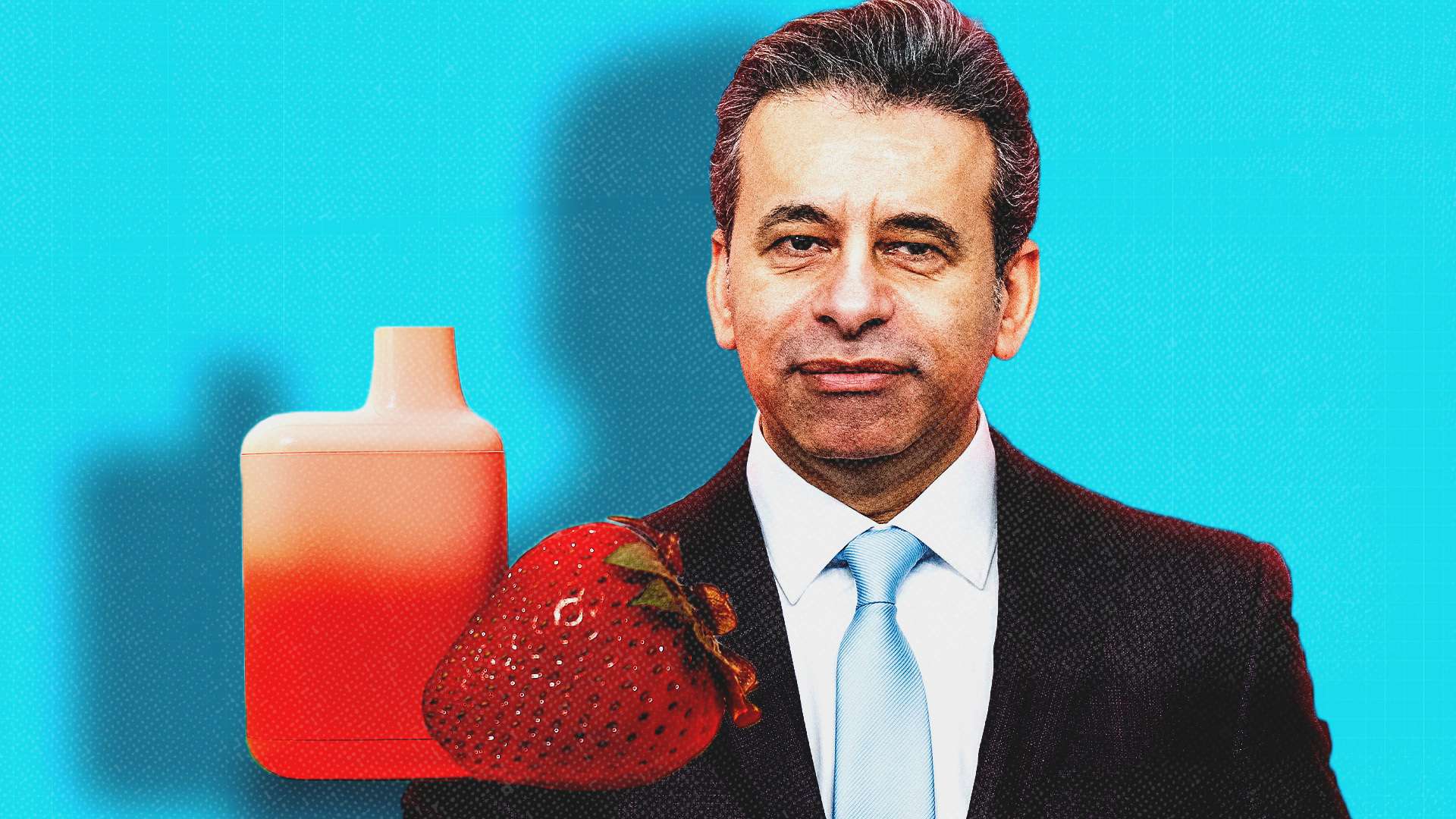
In the realm of tobacco harm reduction, the former regulator allowed emotion to overtake his stated pledge to adhere to scientific evidence.
Last week, the Food and Drug Administration (FDA) cleared Glas, a Los Angeles-based firm that develops devices equipped with age-verification technology, to market electronic nicotine delivery systems (ENDS). “The authorized pods include Classic Menthol, Fresh Menthol, Gold, and Sapphire,” the FDA stated. “This action marks the FDA’s first authorization of non-tobacco and non-menthol ENDS products.”
That decision carried weight because the agency had previously resisted nicotine vaping products in flavors beyond tobacco and menthol, arguing they could be dangerously appealing to minors. It also proved too much for FDA Commissioner Marty Makary, who stepped down on Tuesday, reportedly due to his disapproval of the policy shift.
While campaigning for the 2024 presidency, Donald Trump boasted that he had “saved flavored vaping” during his first term and vowed to “save vaping again.” But from the outset, Makary did not appear aligned with that agenda.
Testifying before a Senate appropriations subcommittee in May 2025, Makary magnified the danger of underage vaping. In remarks he highlighted on his official X account, Makary asserted that “there are high schools in America now where kids are saying half of the kids in high school are addicted to these vaping products.”
Regardless of what those students might have expressed, that claim was difficult to square with data from the National Youth Tobacco Survey (NYTS). In 2024 NYTS, 7.8 percent of high school students reported using e-cigarettes in the previous 30 days. Yet Makary implied that 50 percent of students at certain high schools were “addicted to these vaping products,” which is more than six times the national prevalence of past-month use in 2024 NYTS and about 22 times the rate of daily use (assuming 30 percent of past-month users were daily users, as in the 2023 survey).
Contrary to the impression he left, underage vaping has fallen sharply in recent years. The prevalence of past-month use among high school students in 2024 was down from 10 percent in 2023 and roughly 72 percent lower than the 2019 peak of 27.5 percent. The rate declined again last year, dropping from 7.8 percent to 5.2 percent.
Makary did not even acknowledge that downward trend. “There are kids in America today who are addicted, they know they’re addicted, they come from good families, they’re good kids, and they can’t stop,” he said. “And that is something that we have to address.”
Given Makary’s unfounded alarm about alleged rampant adolescent nicotine addiction, it is perhaps unsurprising that he balked at fulfilling Trump’s promise. Yet his reaction to Glas’s approvals—products designed to prevent underage use—remains perplexing.
“The FDA’s rigorous, scientific review of these products found that the applicant sufficiently demonstrated that Glas’s device access restriction technology, combined with FDA-required marketing restrictions, is expected to effectively mitigate the ability of youth to use the product,” the agency said last week. “The technology requires the user to verify their age and identity with a government-issued ID and pair the device with a smartphone via Bluetooth. Following verification, the device will not operate if separated from the phone. The app also conducts random biometric check-ins to periodically confirm the registered user is the one using the device.”
Bret Koplow, acting director of the FDA’s Center for Tobacco Products, hailed that technology as “a potential game changer.” Koplow, who joined the FDA in 2011 and served as senior counselor to the commissioner during the Biden administration, is hardly an industry pawn or vape-loving radical. Yet he believed the Glas products illustrated “the role innovation may serve in the effort to protect young people from threats posed by nicotine use and addiction while helping to enable availability of an expanded array of flavored options for adults who smoke [and] who may use these products to completely switch away from regular cigarettes.”
From the FDA’s point of view, such behavior changes are desirable. The agency has repeatedly acknowledged the evidence that vaping represents a far less dangerous form of nicotine consumption than smoking. But by refusing to approve flavors predominantly favored by former smokers, the FDA undermined the harm-reducing potential of vaping products.
Koplow implicitly acknowledged that trade-off, recognizing the balance between making vapes less alluring to teenagers and encouraging adult smokers to switch in a way that could literally save their lives. One might question his premise that newfangled devices—rather than, say, age-restricted sales in adult-only shops—are necessary to deter teens from vaping, especially since underage consumption has fallen dramatically since 2019. It is also worth noting that cigarettes, a far more dangerous product, do not incorporate any such technology. But at least Koplow understands that the FDA is meant to balance two distinct objectives.
During his Senate testimony, by contrast, Makary did not even acknowledge vaping’s potential as a substitute for smoking, nor the tension between the FDA’s goals that Glas’s approval sought to reconcile. His disregard for such tradeoffs rendered him ill-suited for deciding which nicotine products adults should be allowed to use, even if one assumes that federal bureaucrats should make such determinations in the first place.
Makary was commendably open-minded in his approach to psychedelic therapy. But on the matter of tobacco harm reduction, he allowed emotion to override his stated commitment to following the science.
