
The conduct of Major League Baseball (MLB) sits squarely under First Amendment protection. Yet that safeguard does not automatically render the behavior sensible.
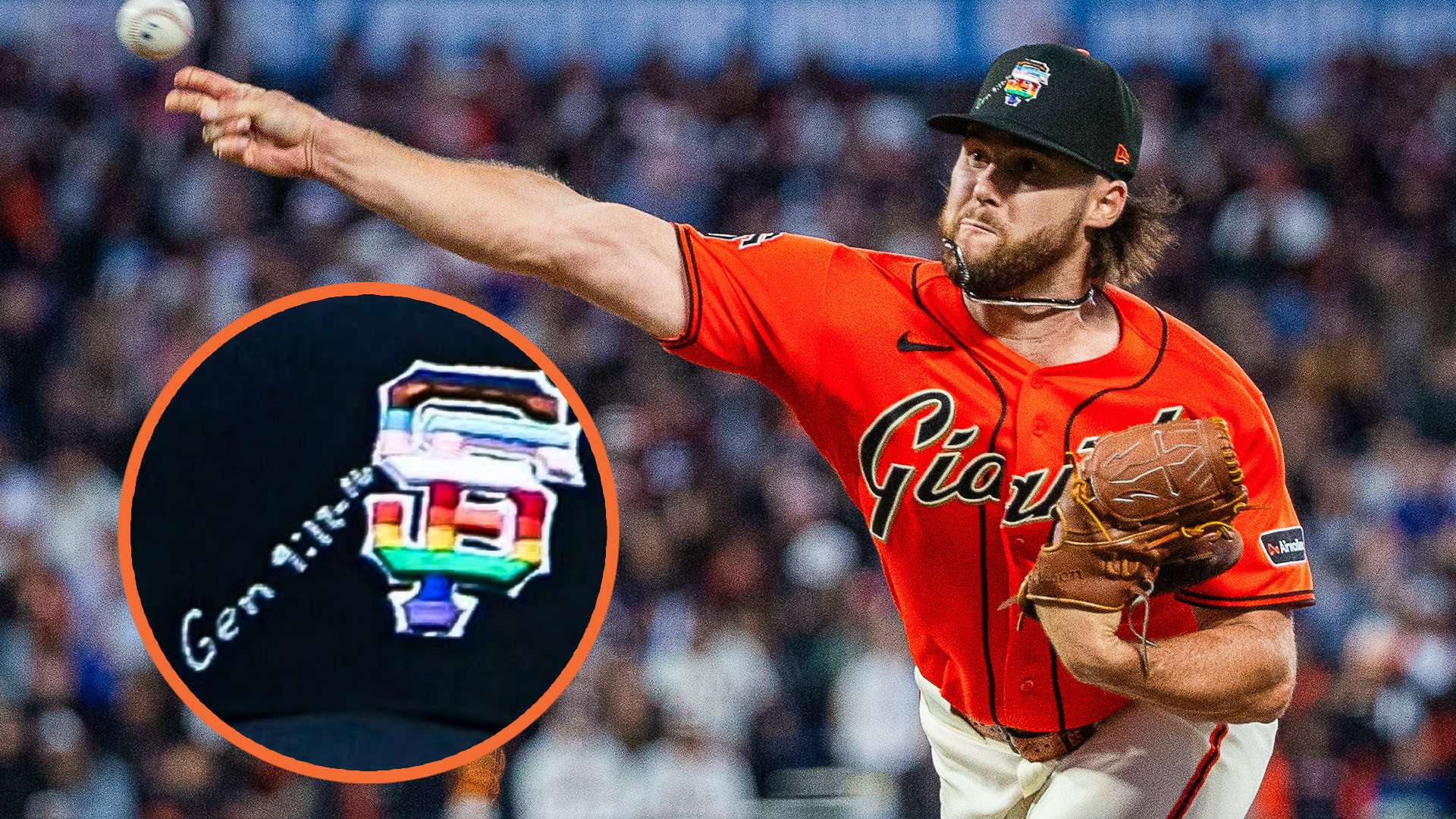
Over the past week, MLB found itself at the center of a dispute after three San Francisco Giants players—Landen Roupp, J.T. Brubaker, and Ryan Walker—had Bible verses stitched onto their Pride-night hats. A fourth player, Sam Hentges, chose not to wear the hat at all. Opinions split on whether the outcry was directed at the players for what some saw as a display of non-support, or at the club and league for what others perceived as over-celebrating Pride. Regardless of stance, the public mood was heated.
Put another way, this feels like Groundhog Day with a rainbow finale. The same battlegrounds keep surfacing, the same debates circle back again, and a lot of people end up mistaken about the core issues. So why does the quarrel persist?
The league may be asking itself a similar question. In 2023, MLB commissioner Rob Manfred stated that, when it comes to uniforms, hats, and bases, teams shouldn’t bear logos simply to shield players from potential discomfort arising from personal beliefs. Yet the Giants and the Los Angeles Dodgers have continued to integrate Pride-themed attire because a standing agreement permits it.
This dispute isn’t confined to the diamond or the culture-war trenches. Senator Josh Hawley (R–Mo.) voiced serious concerns in a letter to Manfred, expressing alarm about a reported formal warning issued to three MLB players for publicly displaying their Christian faith. He urged accountability for what he described as a pattern of discrimination against players who profess Christianity. The senator was not alone in pressing for action; figures from the Department of Justice, including Harmeet Dhillon, indicated plans to involve the Equal Employment Opportunity Commission to probe the matter.
The investigation followed news that MLB had issued admonitions to the three players who had inscribed messages on their Pride hats. In a formal statement, the league contended that the warning was a routine, non-disciplinary reminder not to wear the hat in future games and that it bore no relation to the content of the messages themselves. The league contended that it respects players’ right to free expression, but noted that any writing—regardless of message—was prohibited by MLB’s uniform regulations, citing prior instances where players had received warnings for messages such as references to relatives.
Dear reader, you may rightfully regard such a policy as silly, and you may also think that teams could avoid this recurring storm by simply steering clear of politicizing uniforms. Yet the First Amendment protects MLB’s stance unequivocally. Yes, the league receives subsidies—indeed, more than a few private entities do as well. That reality does not erase the fact that constitutional rights extend to both major institutions and private organizations alike. Baseball remains a national symbol of Americana, and it is not a governmental body.
Ironically, one advocate who underscores this constitutional point is Dhillon herself. In her letter, she asserted that the Civil Rights Act bars MLB and its franchises from unduly infringing on players’ religious rights as they participate in league campaigns for Pride. She reminded that federal law requires employers to adjust uniform requirements to reasonably accommodate employees’ religious beliefs.
And the league did respond with accommodations. The Pride hats were voluntary; Hentges elected not to wear the hat and did not receive a warning. By every measure, that qualifies as a reasonable accommodation. A franchise offered apparel aligned with its values, while the league enforced its rules about messages on uniforms—both actions squarely within the rights of private actors. Had a team offered hats bearing the Ichthys, the Jesus fish, it would likely have faced similar, if not stronger, pushback for any anti-religious inscriptions.
Of course, the reality is that such a hat would be unusual for an MLB club, particularly for the deeply religious. That incongruity says something about the balancing act at play.
Teams pursue shared objectives, yet they are made up of individuals with diverse beliefs. Some players are religious; others are not. Some back gay rights; some may oppose them. Some may even have questionable culinary opinions—like a fondness for ranch dressing—while others do not. This divergence is their prerogative. “I’m grateful to live in a country where we can hold our beliefs and voice them,” Roupp remarked after last week’s game. Pressuring athletes under a national spotlight to pick sides on political questions often fuels needless conflict and serves little beyond performative virtue signaling. Meaningful support—whether for gay rights or any cause—usually carries more weight when it comes from voluntary, self-motivated actions, on personal time and without coercion.
“By resorting to ‘us’ and ‘them’ instead of truly listening to and understanding the people who are asking for help, those who chose to wear or display hats completely missed the point,” wrote Grant Brisbee in a widely circulated column for The Athletic, a NYT subsidiary. “If anyone intends to make the world better, they might start by listening—and perhaps even adjusting their own approach.” In that regard, the critic could perhaps heed his own advice.
