
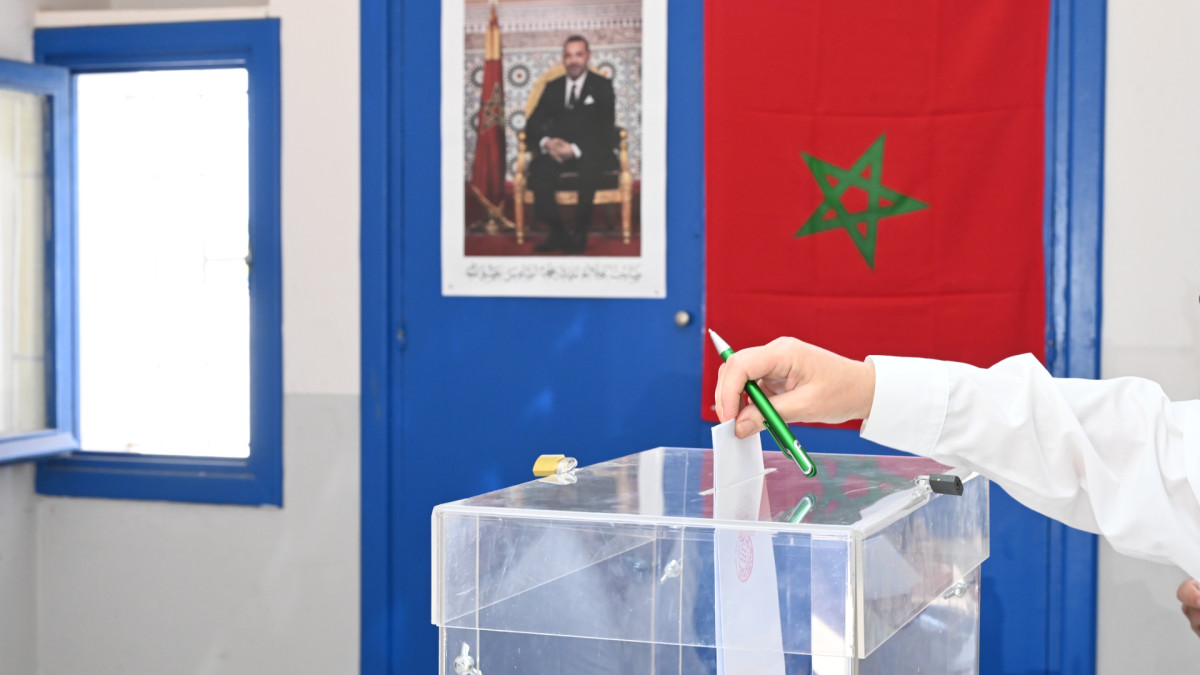
The elections held on September 23 have altered the balance between the parties that were governing Morocco. The Authenticity and Modernity Party (PAM) holds first place with 97 seats. The National Rally of Independents (RNI), which headed the government, falls from 102 to 66 and Istiqlal rises from 81 to 65. The Justice and Development Party (PJD), reduced to 13 deputies in 2021, now climbs to 54. These are still provisional results.
The result changes the hierarchy, but the coalition can continue to be the same. PAM, RNI, and Istiqlal, the three partners of the outgoing government, together tally 228 of the 395 seats and retain a sufficient majority to govern again together. If the alliance were to be remade, however, leadership would shift: PAM would move to head a coalition that it has already been part of during Aziz Akhannouch’s five-year government.
The ideological differences, though significant, explain only part of Moroccan politics. PAM has a modernist profile and has maintained since its inception a close relationship with the royal circle. RNI, for its part, belongs to the liberal space; Istiqlal comes from historic nationalism, and PJD is Islamist. Alongside these differences, local networks and the ability of certain candidates to mobilize support in their territories matter.
“The result changes the hierarchy, but the coalition can continue to be the same”
The main question, therefore, is not only who will lead the next Executive. The ballots have changed the starting positions from which negotiations to distribute ministries and draft the budget will begin.
Winning the elections and negotiating power
The PAM has won after five years of sharing a government whose main party, the RNI, has suffered a sharp setback. It can claim a change of leadership, but it will be hard to disentangle itself from the balance of a legislature in which it has also governed.
Its rise cannot be read as a simple ideological shift. The party was created in 2008 around several figures close to Mohammed VI, including Fouad Ali El Himma, today a royal adviser. In addition to that origin, it has a strong territorial presence.
Political scientist Nadia Hachimi Alaoui, a professor at Rabat International University, distinguishes between the political vote and another more tied to local leaders with their own networks, the so-called notables. This second type of vote weighs especially in rural areas, where certain candidates act as intermediaries capable of mobilizing support and negotiating resources for their territories. Before the elections, around a dozen RNI lawmakers joined the PAM. This transfer requires nuance in any purely ideological reading of the result.
“Before the elections, around a dozen RNI MPs joined the PAM. That transfer requires nuance in any purely ideological reading of the result”
The Constitution stipulates that the king will appoint the head of government from the members of the party that finished first. At the time of writing this article, the designation remained pending. Fatima Zahra El Mansouri, mayor of Marrakech, minister of Urban Planning and Housing, and coordinator of the PAM’s collegiate leadership, appeared after the results as one of the party’s principal voices. Fouzi Lekjaa, minister delegated for the Budget and president of the Moroccan Football Federation, joined the PAM before the elections and had a visible presence during the campaign.
Nor is the coalition settled yet. El Mansouri stated on September 24 that the PAM does not at the moment set any “red line” and that alliances will be discussed after the appointment of the head of government. Abdelilah Benkirane, former head of government and current secretary-general of the PJD, has, by contrast, rejected participating in an executive headed by the PAM.
Who decides where investment goes
The main parties ran with programs that were highly focused on employment and purchasing power. The Moroccan economy grew about 5% in 2025, but net job creation during the legislature fell short of 100,000 positions, far from the one million Akhannouch had set as a target. That gap helps explain why employment and purchasing power dominated much of the campaign.
The PAM estimates the additional cost of its commitments at around 350,000 million dirhams for the next five years, roughly 32,000 million euros. Its program again calls for the creation of one million jobs and expands measures on social protection and housing.
The Istiqlal blends this agenda with a greater concern for economic dependencies and national productive capacity. The PJD has not built its campaign solely around religion or identity. In recent weeks it has given more space to the cost of living, employment and corruption, alongside its positions on Palestine.
Differences in programs matter, but a nationwide promise does not have the same effects everywhere. An employment policy encounters very different conditions in the Tangier-Kenitra industrial corridor with European markets and in an interior province with few formal job opportunities. The question is not only how much is invested, but also where investment goes and which actors have room to steer it.
“The question is not only how much is invested. It also matters where investment goes and which actors have room to steer it”
New territorial development programs show how much the implementation of these policies also depends on the Administration. Abderrafie Zaanoun, a researcher at the Moroccan Institute for Policy Analysis, warns of the risk that the new architecture reinforces administrative structures parallel to elected bodies. The Integrated Territorial Development Fund has in 2026 around 20,000 million dirhams, about 1,840 million euros, placing the Interior Ministry in a prominent position in its management.
The overall framework is more complex. The programs planned for the coming years are organized at several levels. At the provincial level, committees chaired by governors intervene, and regionally, coordination falls to the walis, state representatives. At the national level, a committee chaired by the head of government validates the programs and coordinates their financing. Collectively they would mobilize around 210,000 million dirhams over eight years, close to 19,000 million euros. Winning a constituency and deciding how to execute an investment are not exactly the same thing.
What grievances do the parties manage to represent
The PJD’s results also vary greatly by territory. In Casablanca-Anfa, one of the constituencies of the country’s main economic metropolis, the party finished first with 33.45% of the votes. The PAM obtained 28.5% and the Left Alliance, led there by Nabila Mounib, one of the best-known figures of Morocco’s left, reached 22.88%.
The PJD also finished first in Tangier-Tetouan-Al Hoceima. In Marrakech-Ménara, however, the PAM prevailed with 12,107 votes against 9,678 for the PJD. These are still provisional local results, but they show that the Islamist revival is not distributed evenly and that the 54 national seats hide different political geographies.
We still do not know exactly where these new supports come from. Returns may involve former voters, new entrants, or the wear from adversaries weighing in. Without consolidated results and post-election studies, venturing beyond would be speculative.
It is also prudent when comparing participation. The Interior Ministry finally put turnout at 38.08% of registered voters, with about six million voters. In 2021 it exceeded 50%, although then the legislative, municipal and regional elections took place on the same day.
Territorial differences are substantial. The Interior Ministry announced a 77% turnout in El Aaiún-Saguia el-Hamra and 61% in Dajla-Ued Edahab, two regions that include Western Sahara territories administered by Morocco and whose sovereignty remains disputed. The minister presented these figures as evidence of the territory’s Moroccan character. That is the political reading of Moroccan authorities, not something that can be automatically inferred from the electoral data.
Across the country, turnout remains high. That does not turn non-voters into a political bloc nor does it allow attributing a common motivation to them. The mobilizations of recent years also remind us that part of the social discontent circulates outside the parties. Achieving a parliamentary majority and representing that discontent are two different things.
The World Cup and the priorities of the next government
The 2030 World Cup concentrates many of these tensions, even if it does not create them. Morocco has spent years strengthening its port, rail and industrial infrastructures and linking its major economic hubs with Europe and with African markets. The tournament could accelerate that trajectory and, above all, make it much more visible.
The question of legacy also goes beyond the stadiums. Istiqlal has proposed mechanisms to increase the participation of national companies in major projects. PAM ties a significant portion of its employment program to the economic activity associated with 2030. The question will be how much of that investment effort remains in the Moroccan economy once the works are completed.
“The PAM ties a significant portion of its employment program to the economic activity associated with 2030. How much of that investment effort remains in the Moroccan economy?”
Here, Lekjaa’s role becomes especially relevant. In addition to budget responsibilities, he also presides over the Football Federation. That dual role places him close to economic decisions and to one of the projects that will attract the most political attention during the next legislature.
The final has also introduced a competitive element in the relationship with Spain. Leaders from both countries have publicly defended hosting the tournament on their soil, and FIFA has left the decision open. At the same time, Spain, Portugal, and Morocco will have to coordinate for years to organize the tournament.
For the next Moroccan government, however, the more delicate issue will be internal. Large-scale projects allow showcasing a country capable of implementing international-scale ventures. The contrast appears when that capacity is far less evident in the services used daily by a portion of the population.
Foreign policy and its internal effects
The World Cup is not the only arena in which external relations have internal consequences. In his first appearance after the elections, El Mansouri defended the need to maintain a close relationship with Spain. That cooperation does not eliminate divergent interests or produce identical effects across all territories.
Castillejos (Fnideq), facing Ceuta, allows this to be seen on a local scale. The end of informal border trade altered activities that many families depended on. Moroccan authorities presented the measure as a matter of economic sovereignty and anti-smuggling. For those who lived off those exchanges, the problem was more immediate and tied to income and the lack of other job opportunities.
Morocco’s policy toward Israel offers another example. The principal foreign policy decisions depend largely on the monarchy, but their consequences also enter internal political competition. The normalization of diplomatic relations with Israel and the Gaza wars have widened the spaces for mobilization of their detractors. The recovery of the PJD will give greater parliamentary presence to those positions, though the party cannot unilaterally modify foreign policy.
“The recovery of the PJD will give greater parliamentary presence to those positions, although the party cannot modify foreign policy on its own”
El Mansouri announced on September 24 that the PAM intends to give the 2027 budget project a more pronounced social orientation while preserving investors’ confidence. The budget will provide a first test of how far that shift goes.
Afterwards, there is the need to look at the territory.
