
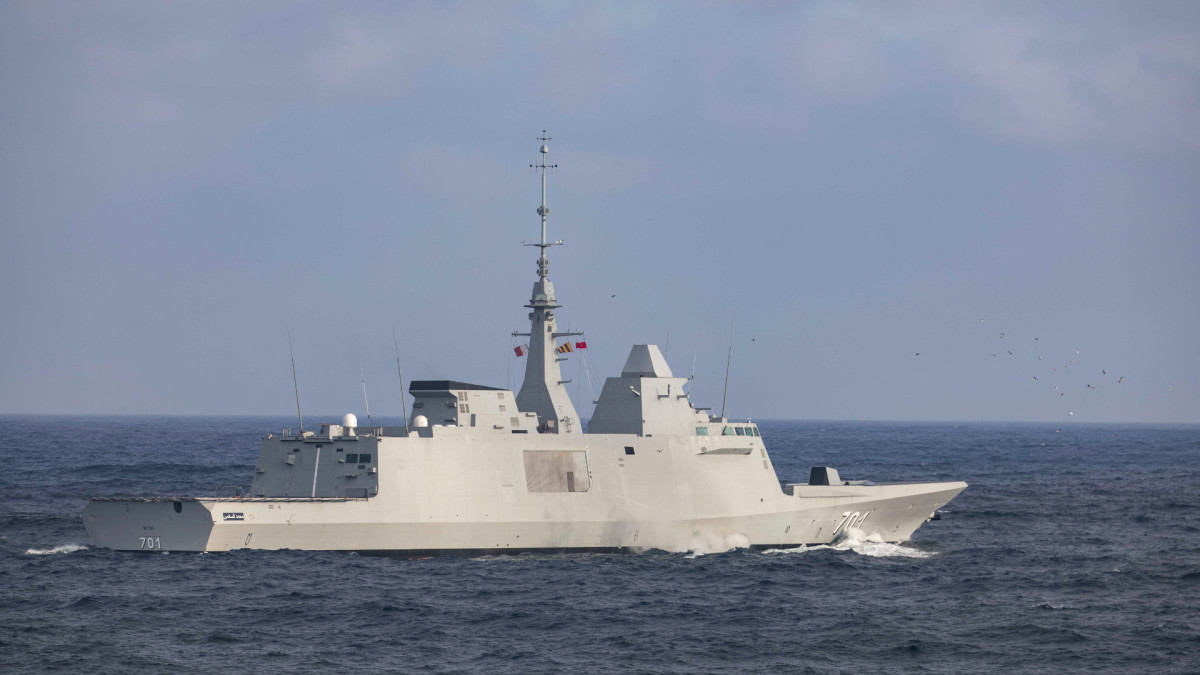
This week it became public that the entry of tens of thousands of people into Ceuta at the end of July 2026 coincided with the incursion of ships from the Royal Moroccan Navy into Spanish territorial waters. Each episode admits a separate explanation: overwhelmed migratory pressure on one hand, and a maritime incident or miscalculation on the other. But when considered together, both are better understood as a hybrid strategy; that is, the orchestrated use of different tools of power to exert pressure and wear down a rival. As I noted in a previous article, the first step in confronting this type of strategy is to identify them, and that requires an integral perspective. If examined separately, only disjoint actions are apparent, without perceiving the pattern or how the different instruments are modulated, as illustrated by the following graphic.
Multinational Capability Development Campaign (MCDC). 2019. ‘Countering hybrid warfare’. MCDC Countering Hybrid Warfare Project.
Detecting hybrid strategies is difficult because the other party’s decision-making process functions like a black box, inaccessible unless penetrated by intelligence services. Something particularly difficult in the Moroccan case because decisions are taken within a very restricted circle. Consequently, the orchestration can only be inferred, either from the existence of precedents that sketch a pattern, or from coincidences that are hard to attribute to mere chance. As is logical, there is always the risk of identifying false positives when analyzing a specific case. That is why ambiguity and plausible deniability are two of the characteristic elements—and two of the advantages—of the conflict in the gray zone. They keep open an innocuous explanation that raises the political costs of a firm response.
With that caution in mind, the intrusion of Moroccan warships at the onset of the crisis can be interpreted as the use of the military instrument in combination with the instrumentalization of migratory pressure, which was its most visible facet. And it is reasonable to suppose that it served a double purpose.
“The intrusion of Moroccan warships at the onset of the crisis can be interpreted as the use of the military instrument in combination with the instrumentalization of migratory pressure”
The former was to erode an even more central focal point. Focal points, also called Schelling points, are places where the expectations of the actors converge spontaneously, without explicit negotiation. Imagine we are visiting Rome. We have arranged to meet someone at St. Peter’s Square and the mobile battery has run out. It is very likely that we will head to the obelisk: it sits at the center of the square, is visible from any angle, and, above all, we assume that the other person will think the same. A border between two neighbors with a territorial dispute operates in a similar way. It is recognizable and, even without an explicit threat, it is presumed that crossing it will provoke a significant response, because the other party cannot simply leave it be.
What happened in Ceuta during the first days of the crisis, both at the land border and in the territorial waters, has blurred that clarity in a basic focal point tied to Spain’s territorial integrity. It is not a minor matter. The erosion of a focal point is cumulative if it follows a “salami tactic,” where no single episode suffices to justify a decisive response, but each one nudges the threshold of what the other side deems intolerable a little further. That is why it is wise to assess the Ceuta crisis by the state in which that focal point is left and by the effects it will have on future strategic interactions.
“No single episode is enough to justify a forceful response, but each one pushes a little further the threshold of what the other side regards as intolerable”
The second reason is closely linked to the first. By activating the military instrument, it is highly likely that Morocco would have taken the opportunity to test Spain’s deterrence, analyzing how quickly and to what extent the Government and, in this specific case, the Armed Forces reacted. Hence the relevance of reports about the attention paid to the area by Morocco’s two terrestrial observation satellites. The deployment of naval action ships and a couple of Navy frigates in the following days was, among other things, a message (signalling).
Nevertheless, the credibility of deterrence depends on three elements: capability, communication and resolve. The naval deployment supplied the first two. The resolve, however, is judged by political behavior. And there, the government’s response undermines credibility. Striving to exonerate Morocco, managing the crisis poorly, and downplaying the intrusion of the ships sends a message that contradicts the one sent by the Navy’s deployment. At the same time, calling it a “one-off event,” as the government spokesperson did just a few days ago, amounts to adopting the fragmented reading that precisely those who employ hybrid strategies pursue. Restoring the clarity of the focal point (“borders must be respected”) requires an analysis that can identify patterns and allow deterrence and an appropriately calibrated response.
