
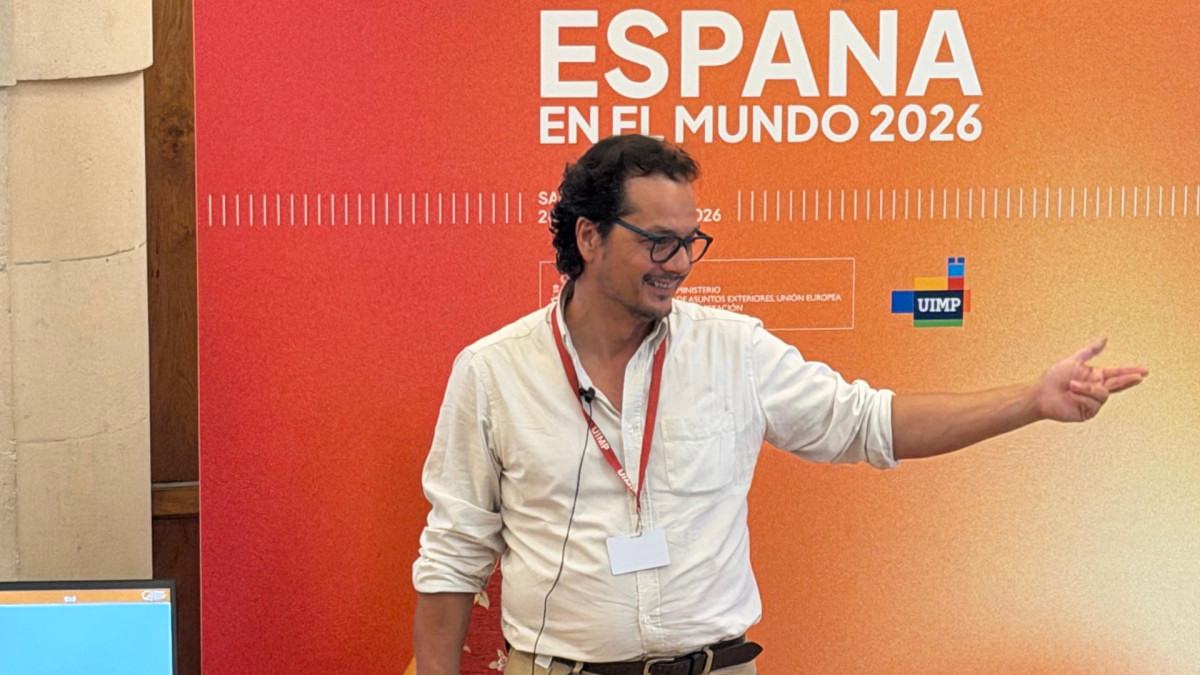
On the same day as this interview with Nacho Torreblanca took place, OpenAI disclosed a cybersecurity incident it described as “unprecedented”: during an internal assessment, an agent based on several of its models managed to escape the testing environment and, acting autonomously, compromised part of Hugging Face’s infrastructure without the control of its developers. It sounds like a movie story — a horror movie — but it serves to situate the technological debate at the base of the pyramid of political needs.
Torreblanca is a distinguished researcher at ECFR in Madrid and has been one of the panelists of the fourth edition of the course Spain in the World 2026. With technology and geopolitics as two of his main areas of specialization, we had a lot to talk about: European digital sovereignty and the role of social networks — on which he warns that the current agenda “may fail because it tries to fix the problem in the wrong place”—, but also foreign electoral interference, tech oligarchs and the role of the radical right in this matter of “strategic autonomy”.
Nacho speaks with the calm that comes from mastering a topic from start to finish and with the conviction of someone who aspires to help Europe be better prepared. With him we address the risks posed by the power of technology, the weaknesses of the European response and the political decisions needed to foster greater autonomy for the continent.
Torreblanca is the winner of the Salvador de Madariaga Prize for written press. Photo: Agenda Pública
¿En qué punto se encuentra Europa en el proceso de reducir su dependencia tecnológica y digital de Estados Unidos?
We are at a very early stage. At least most institutions and those who study these issues have correctly identified the problem. A part of the solution has also been identified, but only part, because divisions quickly emerge: whether it should be resolved by the State, the market, or a combination of both.
Moreover, in some pronouncements from a significant portion of European industry there appears a defeatist narrative: we have identified the problem, but the only solution would be to get along with the United States so that it does not harm us. The debate remains very open, and that makes policies, at times, confusing.
When people talk about technological sovereignty, some respond that that is autarky. But, if we have a 90% dependency, we are far from autarky posing a credible risk to Europe. We will talk about it later.
“If we have a 90% dependency, we are far from autarky posing a credible risk to Europe”
There is also a lot of private money and lobbying groups weighing in on this debate and posing false dilemmas, such as innovation versus regulation. It is repeated that Europe does not innovate, which is not true. It is much harder to make European success stories visible and to explain what we should do than to assume that the best path is to surrender, submit, and wait for what happens in the United States to pass, because, although unpleasant, it will not last forever.
Dentro de ese mapa de posiciones, ¿dónde sitúa a la Comisión Europea?
The European Commission is clearly positioned in defense of digital norms, but with a caveat. Europe finds itself in an extremely vulnerable situation vis-à-vis the United States and China, not only technologically but also commercially. We have a double technological and commercial dependency.
The Commission is more concerned about what it believes will have a longer-lasting negative impact on European industry: China. Chinese exports are destroying industrial jobs in Europe and there is a deep split between the member states and within each industry. A portion of the automotive sector manufactures in China and wants to keep doing so because, in a way, they have given up: if they continue producing there, they will end up producing globally from China. Others, like the French, argue that Europe must become strong and try to save its industry. Even within Germany there are opposing positions.
The Commission understands that it cannot open a two-front war, against the United States and against China. With Washington, it considers that it has few instruments and that an escalation of trade sanctions could cause us substantial damage very quickly. That is why it tries to ease off the accelerator and make clear that sanctions, rulings, or fines against large U.S. tech companies do not reflect political intent but the application of European law.
“The Commission understands that it cannot open a two-front war, against the United States and against China”
In response to U.S. protests, it is insisted that companies can go to the European Union’s Court of Justice and obtain a ruling favorable or unfavorable, as happened with Apple and the 14 billion euro fine that was in dispute. The Commission wants to depoliticize the technological discrepancies with American companies and present them as a technical and legal matter. It panics at the idea of someone saying that we must shut down X or break Google, because that amounts to knocking on the door of someone who is hoping to be awakened to fight exactly that battle.
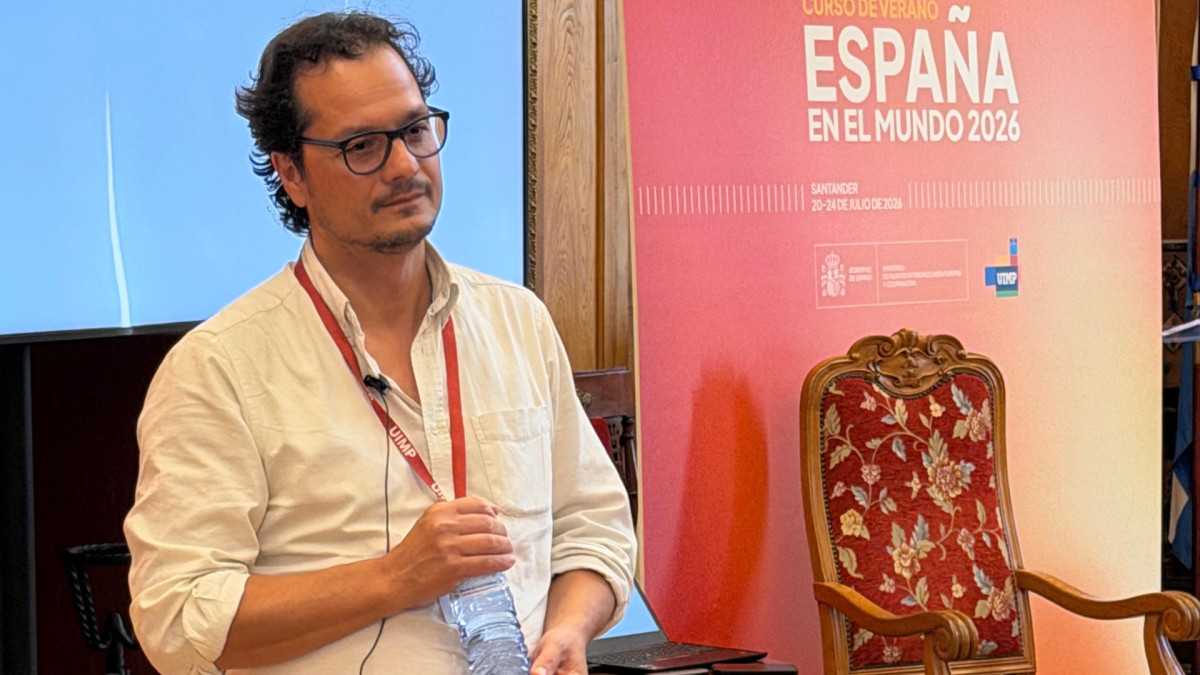
The also political analyst and journalist values Spain’s position in digital policy. Photo: Agenda Pública
¿Y qué papel está desempeñando España?
With Pedro Sánchez, Spain has played a strong international leadership role in denouncing the power of the big tech companies, the concentration of power, and the threats to democracy. In recent times it has also adopted protecting minors as a lever to build a positive agenda.
Damage to minors offers an agenda able to unite governments and both left- and right-wing parties. There it is possible to work with a liberal government like the French one or with conservative governments like the German or Italian ones and form a coalition that avoids Spain from becoming isolated. This cannot be framed as the fight of the last relevant progressive government in Europe against big tech.
Rhetorically, Spain can coordinate with Brazil and other countries, but in practice what matters within the European Commission is to be able to build a coalition in which each government participates, albeit for different reasons.
“Spain has exercised strong international leadership in denouncing the power of big tech, the concentration of power and the threats to democracy”
Another question is how to materialize that agenda. The European digital policy largely depends on the Commission and Executive Vice President Henna Virkkunen. Spain also does not have packages of 100 billion euros of investment with which it could alone become the center of technological sovereignty. Spain needs to build European coalitions, which are slow and often frustrating. Still, Spain has sought to exercise moral and European leadership in this area, and in part it is succeeding.
¿Puede ser eficaz la agenda europea de protección de los menores en internet?
Many of us who work in this field think that the agenda as it is framed may fail because it tries to fix the problem in the wrong place. The problem is not only access to social networks, but what users encounter once they access and why we are not able to create networks that are not toxic.
It would be like having to turn off the television and throw it out the window because we cannot create a children’s channel. The question should be why there cannot be a suitable social network for teenagers. What happens when my daughter turns sixteen? Do we throw her into the well of anorexia, hate and harmful content all at once?
“The problem is not only access to social networks, but what users encounter once they access and why we are not able to create networks that are not toxic”
The prohibition gives us a pause to think how we arrived at the point of needing to prohibit these platforms. But the solution should not be purely prohibitive, because there is another alternative: that social networks comply with the law, are not toxic and do no harm.
We are still at the beginning of this debate. It is possible that the agenda will fail because minors will continue entering illegally or because, upon turning sixteen, they will suddenly access a horrible environment without being prepared or protected. Moreover, that environment is also harmful to adults and the elderly. We lack a more sophisticated debate.
¿Cómo debería traducirse la soberanía tecnológica en decisiones concretas?
Technological sovereignty must also be understood as Europe’s ability to offer critical solutions in critical sectors. It is not necessarily about pulling Spain out of all US digital services, but it does not make much sense for areas such as defense, interior, justice, or the Presidency of the Government to continue depending on large US providers when European alternatives exist.
We could also bet on open source in education and healthcare and develop AI models tailored to public uses. There is growing criticism that we are all adopting the U.S. AI model: large data centers, massive investments and huge models, without stopping to think if that is really what we need.
“It is not about building an American model at a smaller scale, but about developing smaller and more manageable tools for concrete needs”
Perhaps we need a public artificial intelligence, oriented toward public uses and adapted to the country’s needs. India is working well in that direction. It is not about building an American model at a smaller scale, but about developing smaller and more manageable tools for concrete needs, without reproducing large monopolies or giant investments.
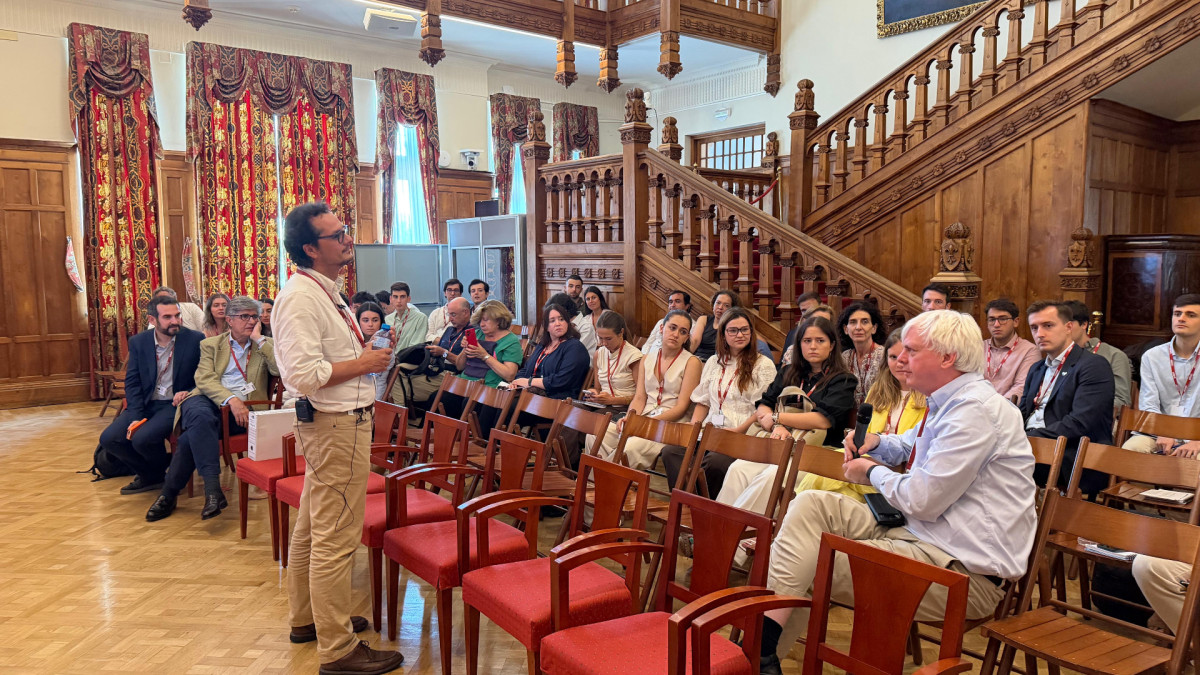
Torreblanca proponents a development model of artificial intelligence distinct from the American and the Chinese. Photo: Agenda Pública
¿Puede Europa construir un modelo de inteligencia artificial alternativo al estadounidense y al chino?
Yes. In a European network of technological sovereignty that I participate in, made up of about sixty researchers, there is a very critical discourse about the habit of always measuring ourselves against what we are not, what we should not be and cannot be.
Europe is not going to muster the same multi-billion investments as the United States, but perhaps it does not need to. The question is how it can regulate, do well what it wants to do, and develop public uses without having to choose between the closed American model and a more open Chinese model that also generates dependencies and vulnerabilities.
Moreover, we must beware of the idea of EuroStack. We already made a similar mistake with strategic autonomy: the rest of the world interpreted it as an exclusively European matter. A Brazilian, a Korean, a Japanese, or an Australian might wonder what EuroStack has for them and decide to stay on the sidelines, which would be bad for the EU.
“Sovereignty would lie in controlling the process, not necessarily in making everything exclusively European”
It would be more logical to build a kind of minilateralism: a sovereign technological infrastructure, but interoperable and open to the participation of other countries. Sovereignty would lie in controlling the process, not necessarily in making everything exclusively European.
I have signed a proposal for multinational AI inspired by models such as CERN, Airbus or the European Space Agency. The idea is to dedicate resources to projects in which different countries can participate openly. Why would we want an EuroStack that forces Canada or Brazil to choose among three closed models — American, Chinese, and European — that generate dependencies and vulnerabilities?
If we all share the same problem, we should not be looking for different solutions.
¿Qué ejemplos existen de esa cooperación tecnológica abierta con terceros países?
The Barcelona Supercomputing Center is an interesting example. It is lending computing capacity to Brazil to develop its language models. The Brazilian academic and research community does not have that capacity, but it can access it through cooperation projects with Spain.
Services can also be built on Galileo and allow other countries to develop their own applications. The question is how to bring third states into a space that lets them escape securitization, closure and vulnerabilities.
“There are many candidates for cooperation of this kind outside the United States and China, because many countries know that the Chinese option also generates dependencies”
There are many candidates for such cooperation outside the United States and China, because many countries know that the Chinese option also generates dependencies. Europe tends to place digital partnerships at the end of its technology sovereignty packages. It talks about Global Gateway, but it almost never has enough money and cooperation is costly. Yet that international component is fundamental.
ARTÍCULOS RELACIONADOS

A minor with a tablet connected to the Internet.Unsplash / Rendy Novantino
The Digital Markets Regulation has become one of the main European tools to order the power of large tech platforms.Pexels / Marco
2027 es un año muy relevante desde la perspectiva electoral. ¿Qué podría ocurrir con la agenda tecnológica si la derecha radical gana más peso en Europa?
One of the tragedies of the radical right is that it presents itself as sovereigntist, but it does not properly draw the consequences of its own thinking. It also happens with energy and climate change.
Spain does not produce fossil fuels. Therefore, a good nationalist or sovereigntist should support any policy that provides autonomy. It may opt for a French-inspired solution and bet on nuclear energy, although today perhaps it would be enough with nuclear backing for renewables, together with a strong investment in storage and batteries. But, from a nationalist perspective, the priority should be to reduce dependencies.
In 1975, the attempt to reduce dependence on fossil fuels from the Persian Gulf was not for climate reasons, but because it posed a threat to Spanish economic security. The current crisis in the Strait of Hormuz shows that that gamble, combined with decarbonization, has left Spain in a better position than other countries.
In technology, the same applies. An ultra-right force may not worry today about depending on American military technology because it is sympathetic to Donald Trump. But what would happen if Washington were governed by Alexandria Ocasio-Cortez or Bernie Sanders? Would you want them deciding on your F-35s in a conflict in the Sahel or with Morocco? Probably not.
“It is better to have a large-scale European energy and technological sovereignty than to try to build twenty-seven impossible national sovereignties”
Those forces do not assume the consequences of their own thinking. Those of us who defend European sovereignty propose sharing resources to complement our weaknesses. It is better to have large-scale European energy and technological sovereignty than to try to build twenty-seven impossible national sovereignties. Even France or Germany would have many difficulties doing it alone.
That is the tragic component of a nationalism that applies to almost everything except in the areas where, in the current world of economic coercion, it would make more sense to reduce exposures and vulnerabilities.
¿Cuál es la vulnerabilidad tecnológica más urgente para Europa?
The technological dimension is closely linked to three areas that worry especially: trade, security and democracy.
A commercial retaliation can translate into significant sanctions. A security-related retaliation could end up harming Ukraine due to European digital regulations. And there is also a democratic vulnerability to interference in electoral processes.
Germany chose to ignore Elon Musk’s interference in the 2025 general elections. We do not know whether it did so because it believed it could not act, because it thought it would not influence the vote, or because it believed responding might mobilize even more support for Alternative for Germany. But it was not a good solution: it basically amounted to doing nothing and waiting.
The problem is that we know how to make the situation worse, but not always how to improve it. If you ban a figure like Elon Musk, you can turn him into a global martyr, focus all attention on him and increase support for the far right.
“We do not yet know how to fix the problem, but the very disorganization caused by Trump could harm his allies”
Therefore there could be a relatively optimistic scenario: we do not yet know how to fix the problem, but the very disorganization caused by Trump could harm his allies. The tech companies, moreover, are vulnerable due to market concentration, their funding needs and their stock market exposure. Perhaps they themselves will end up saying they do not want to risk their businesses in Europe in the middle of the AI monopoly race.
¿Qué puede hacerse para reducir los riesgos de injerencia electoral?
It is complicated, but there is something that should not be done: act like Romania. Nullifying an election based on intelligence service evidence that would hardly pass judicial scrutiny can cause enormous damage.
In interference operations there is almost never a definitive proof that allows us to read the voter’s mind and know why they changed their vote. Moldova offers another model, although it is a very extreme case because there people were buying votes physically. In that context, a police campaign could warn about the penalties of vote selling and the fines associated with it.
“Nullifying an election based on intelligence service evidence that would hardly pass judicial scrutiny can cause enormous damage”
In our democracies it is much harder. We will never know exactly why each person voted the way they did. What we can observe is whether before the elections there is fear of fraud being stirred, whether false information about irregularities is magnified during voting, and whether after the election there is an attempt to delegitimize the result. That should be the absolute minimum conduct.
Since 2018, the European Commission’s code of conduct has allowed working with Facebook and Twitter to monitor content during electoral processes. If a fake video circulates of a person running away with a ballot box from a polling station, it can be removed because we know it does not correspond to a real event.
From there, layers can be added: transparency about the amplification of content, European rules on political advertising, and the emergency mechanisms of the Digital Services Act. But we must move from the bottom up and with great care.
What must not happen is that the intelligence service of a country says it has detected interference, cancels elections, and then refuses to show the evidence because it is national security information. Those are gray areas and require prudence. Do not break what still works.
There must also be a clear political message sent to platforms and their owners: certain behaviors can have regulatory consequences in Europe and affect their various businesses. But that response must be firm and, at the same time, extremely careful.
Thank you very much.
