
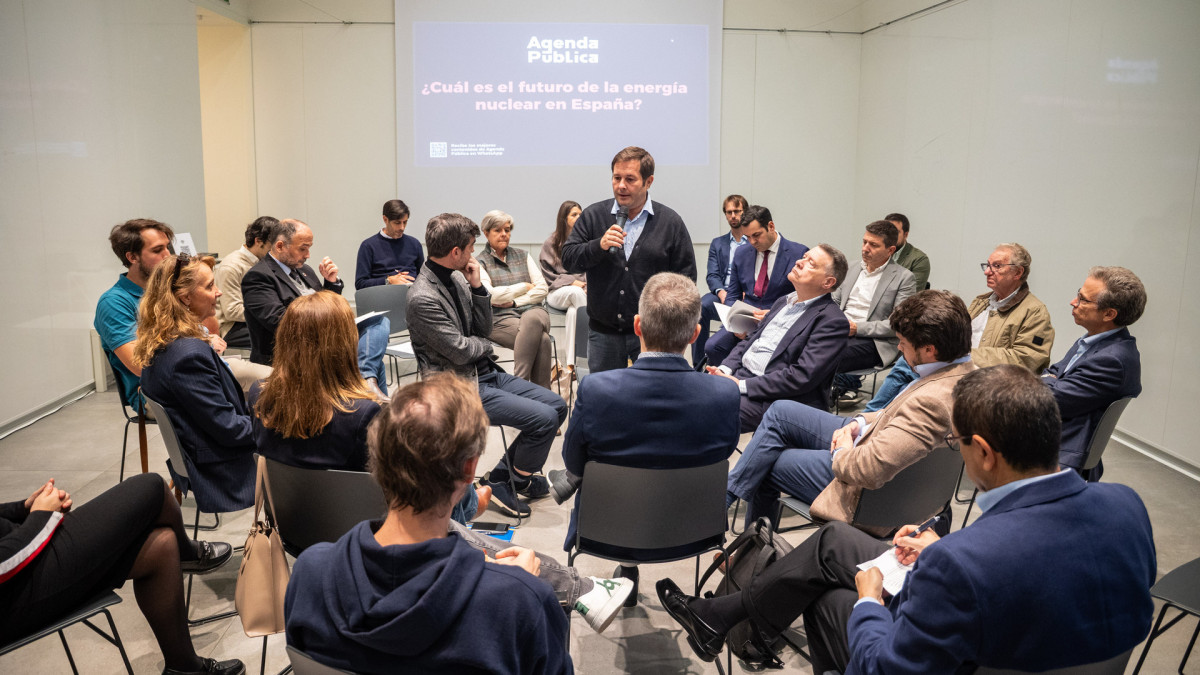
“Why is Spain the only country in the world that, despite having nuclear power plants, wants to shut them down, even disregarding the Draghi report that we all praise?” This is how Jordi Sevilla opened his intervention in the micro-space What is the future of nuclear energy in Spain?, organized by Agenda Pública in Madrid this Monday, with experts and institutional leaders participating. By contrast, energy regulation and transition specialist Pedro Fresco urged “not to change energy policy” because “there is no demand that justifies it.”
Jordi Sevilla, former Minister of Public Administrations and former president of Red Eléctrica. Photo: Agenda Pública / Tania Sieira
El también consejero de Agenda Pública Jordi Sevilla recordó que, en el pasado, él mismo defendió el cierre de las centrales e incluso lo incluyó en el programa electoral del PSOE, pero también que, “aunque con la polarización los olvidemos”, todos “tenemos derecho a cambiar de opinión”. “Las circunstancias han cambiado, sobre todo las europeas, y la nuclear vuelve a estar de moda”, afirmó.
“Las circunstancias han cambiado, especialmente las europeas, y la nuclear vuelve a estar de moda”
En este sentido, detalló que ha habido “mejoras tecnológicas”, que llevamos “años sin desastres” y que, además, ha “pasado el miedo de la Guerra Fría”. Pero, sobre todo, valoró que hoy “la lucha contra el cambio climático es una prioridad” y es clave “reducir emisiones”, algo en lo que la nuclear no tiene problema y que, además, es “compatible con las renovables”. “Hoy ser nuclear es ser ecológico, dicho de forma provocadora” y, asimismo, es una forma de avanzar hacia “la autonomía estratégica”, añadió.
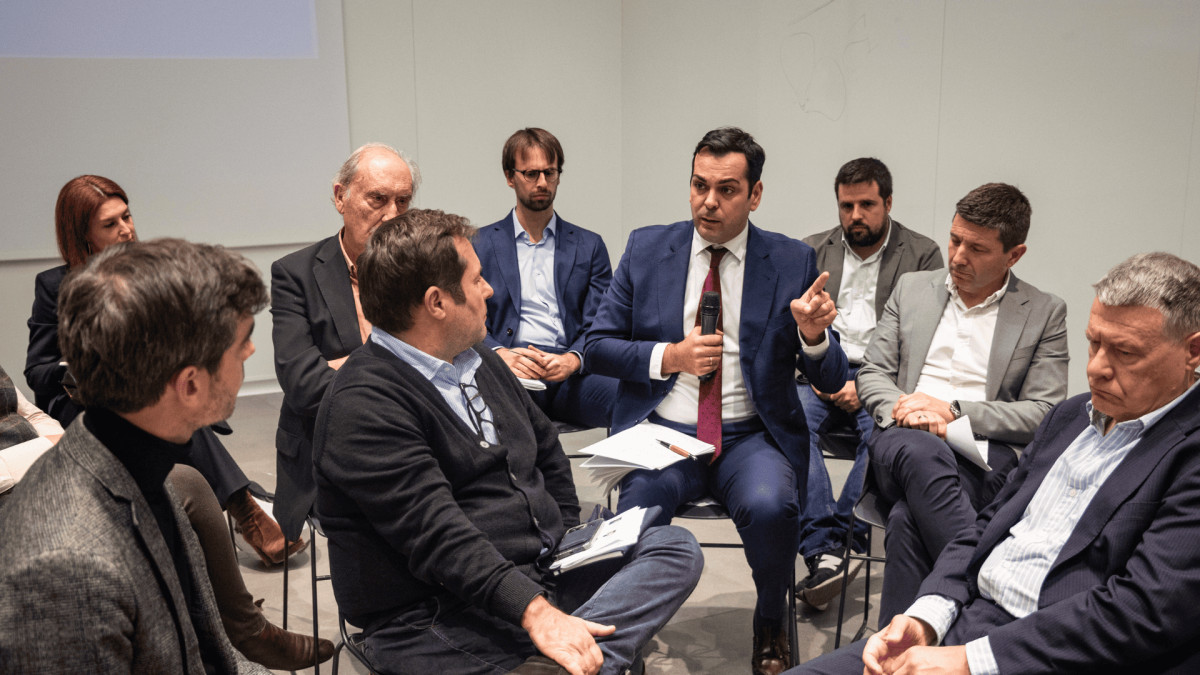
The Energy spokesperson in the Congress (People’s Party), Juan Diego Requena, during his remarks. Photo: Agenda Pública / Tania Sieira
A Varied Mix
The Energy spokesperson for the PP in Congress, Juan Diego Requena, stated that his party is “in favor of nuclear for technical criteria” and places “technology above ideology.” In his view, we “need a robust electricity system” with a “diverse mix” that includes nuclear energy because it is “safe and stable.” And this is crucial, he emphasized, in a context where “the energy paradigm has changed” due to Russia’s invasion of Ukraine and rising prices, as well as due to blackouts.
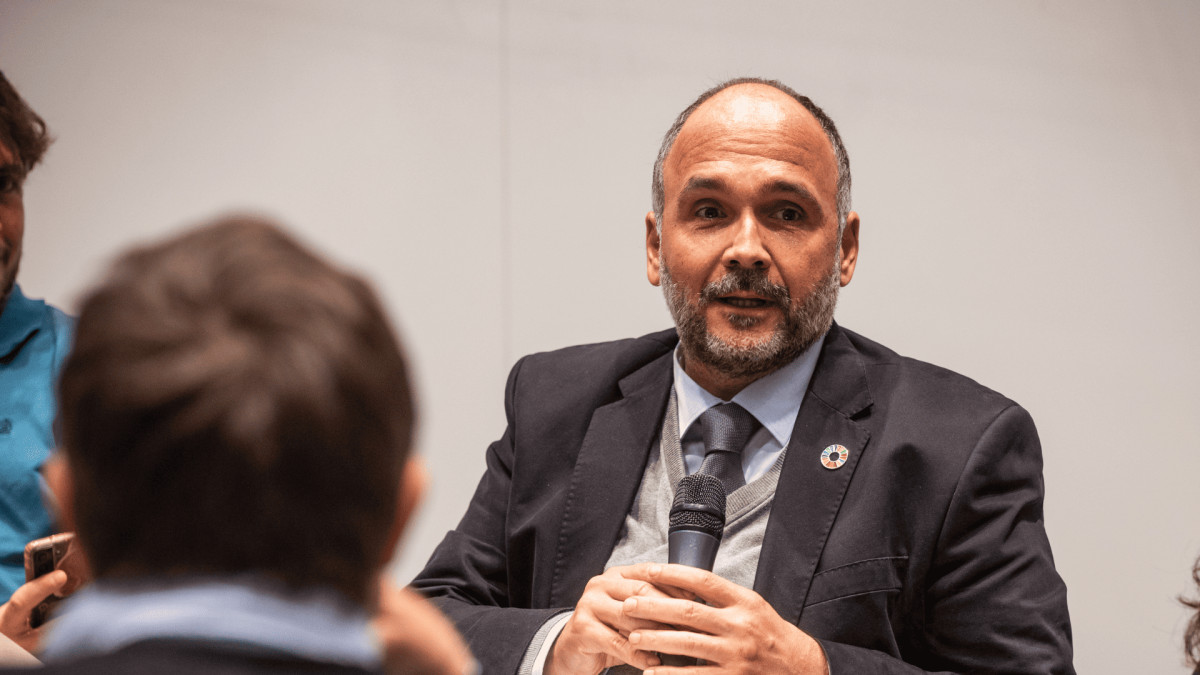
José Antonio Valbuena (PSOE) is the spokesperson for the Energy Commission in the Senate. Photo: Agenda Pública / Tania Sieira
Similarly, the Energy spokesperson for PSOE in the Senate, José Antonio Valbuena, shared the view that “there are elements from 2020 onwards that are leading to a global review of energy policies,” and therefore, he pressed for a “single European policy” to help move toward energy self-sufficiency. “From an energy perspective, the EU does not have a clear and binding common policy. With different energy policies and divergent interests, it is very hard to ensure interconnections,” lamented. The socialist senator emphasized that his party and the Government do not say that nuclear energy is unsafe and tied the decision on extending the life of plants to the “mandatory report” of the National Security Council (CSN): “Just as in 2019 the Government and the operators of the various plants agreed on a calendar for closures, that could be reviewed if the CSN deems it opportune and appropriate.”
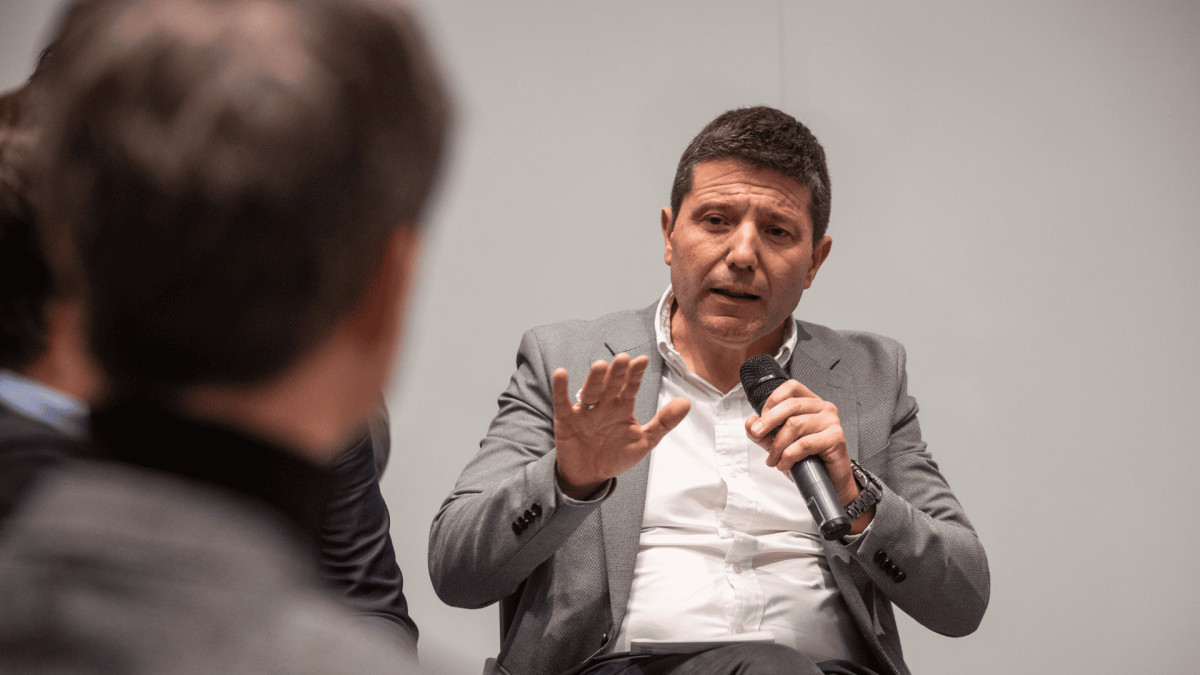
The nuclear educator and regulator Alfredo García, known on social networks as @OperadorNuclear. Photo: Agenda Pública / Tania Sieira
Goal: 100% Decarbonized
Beyond institutional profiles, other experts and scholars participated in the micro-space. The nuclear professional Alfredo García —known on Twitter as @OperadorNuclear— asserted that “a mix of renewable energy and nuclear is the best option for humanity.” “The goal for humanity is not 100% renewables, nor 100% nuclear. The goal is 100% decarbonized. Everything else are tools,” he reiterated.
The communicator stressed that what Spain is doing is “an international experiment,” as it seeks to be “100% renewable with variable renewables, in addition.” In his view, this is mistaken, not least because of the risk of blackouts, as it could “leave some countries behind” and, in the case of Spain, it would also mean the loss of “30,000 highly qualified jobs.”
However, Pedro Fresco urged “not to change energy policy.” As he anticipated, by 2026 there will be a need for 55 terawatt-hours (TWh) of renewables and, “if the nuclear option is reopened, the necessary renewable projects will probably not be built.” If extensions occur, he pointed out, “in 2030 we will be faced with four plants to close in the same year, undermining any criterion of phased and progressive closure.” He also defended that distributed renewables across the territory are better positioned to maintain effective grid voltage control.
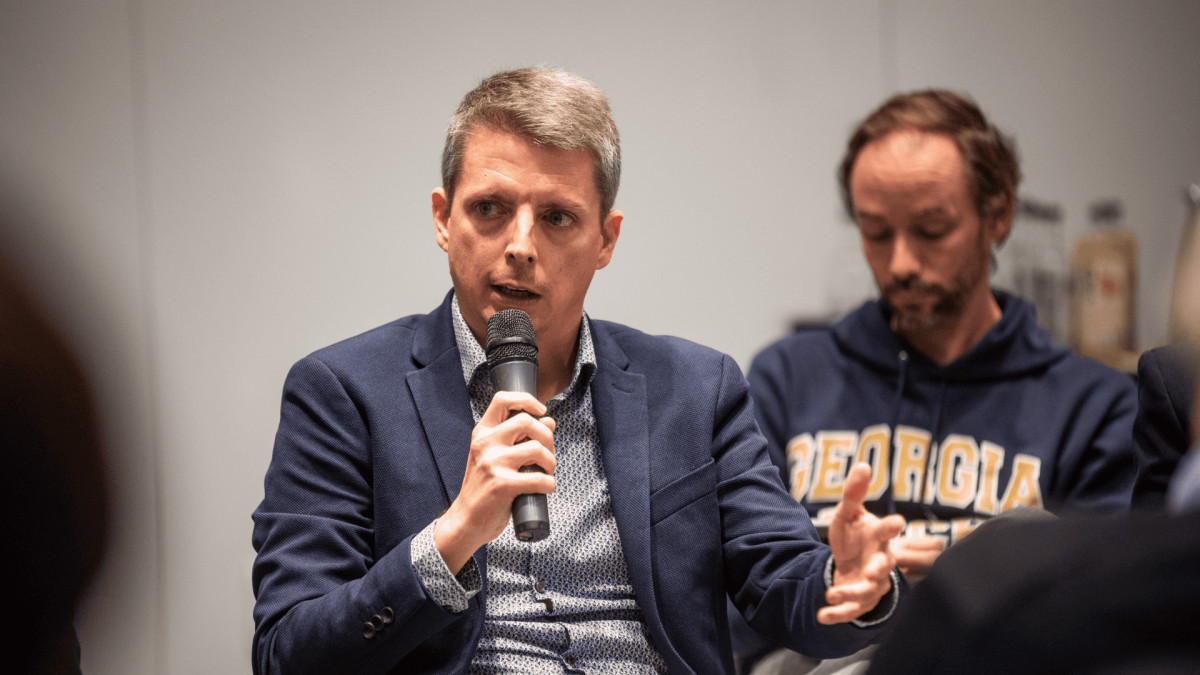
Pedro Fresco, general director of AVAESEN and collaborator at ‘Agenda Pública’. Photo: Agenda Pública / Tania Sieira
A Debate More Ideological than Scientific
The geopolitical developments of the past years, along with the recent blackout experienced by Spain, seem to have altered the Spanish public’s perception of this issue. The political scientist Pablo Simón highlighted that the nuclear matter “is highly technical” and cited data from the recent Cluster17 report seen by Agenda Pública, which states that nearly 80% of Spaniards view the nuclear debate as “an ideologized debate” rather than a scientific one. Specifically, he noted that “the more complex a debate is, the more likely party shortcuts will weigh in,” and, therein, many consider that “the ideological is always the other side.”
The Price Impact
The Madrid CaixaForum session brought together academics such as engineer Eloi Sanz or researcher Ana Díez; experts like Tirso Virgós, from Legados, or Valentina Martínez Ferro, from OIKOS, and consultants like Nacho Corredor, partner and vice-president of beBartlet. Corredor referred to a recent analysis by The Economist highlighting that “thanks to renewable energies” Spain’s electricity price “was 40% lower in 2024” than it would have been had the 2019 mix continued. He warned that “the price is now rising due to greater use of gas plants” after the blackout, and that, if the dichotomy is between “gas or nuclear,” the European Commission “has made its position clear”.
In order to keep the debate alive, with arguments for and against a crucial issue for our energy and industrial policy, Agenda Pública will share the views of the various experts in the coming weeks in the new Energy and Industry section. Nuclear energy is not explicitly integrated into the national energy planning, a matter that has sparked intense debate in recent months.
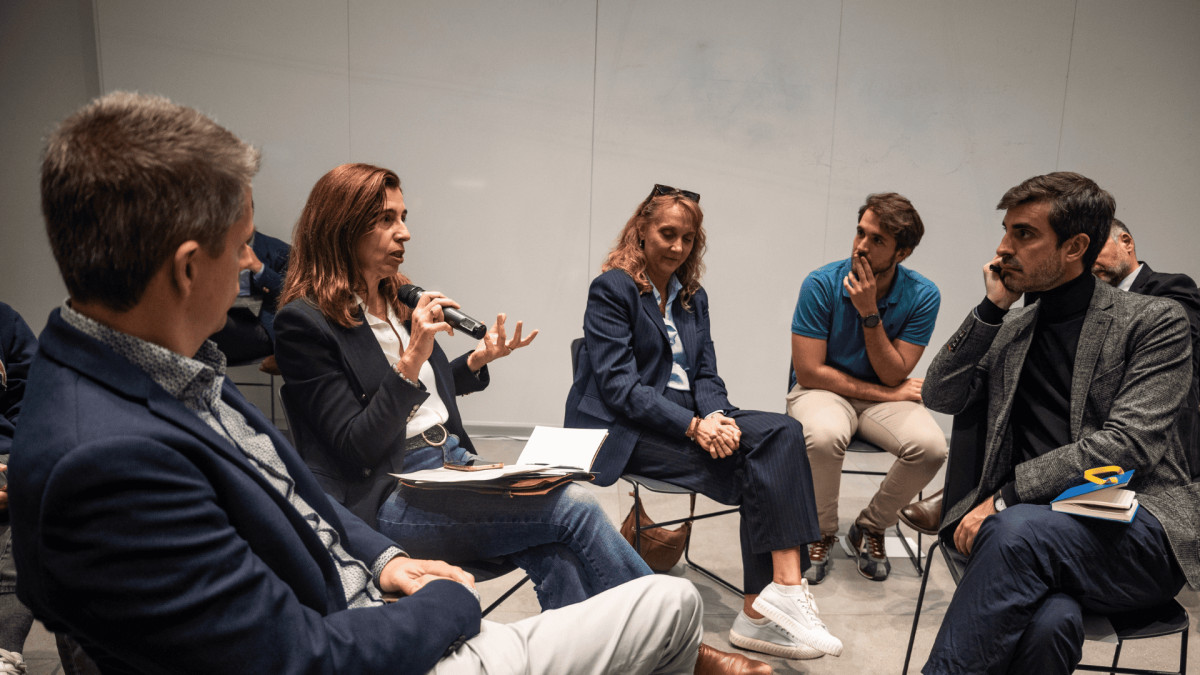
Ana Barreira, Director of the International Institute of Law and Environment. Photo: Agenda Pública / Tania Sieira
El director y editor de Agenda Pública, Marc López Plana, concluyó pidiendo “un pacto de Estado y pensar a medio y largo plazo, contando con la comunidad científica”. También celebró que la jornada hubiera servido para “construir una comunidad estratégica e inteligente, que puede seguir aportando” en el contexto actual, y confirmó el ánimo del medio de “contribuir a un debate fuera del ruido habitual” con la nueva sección de Energía e industria.
