
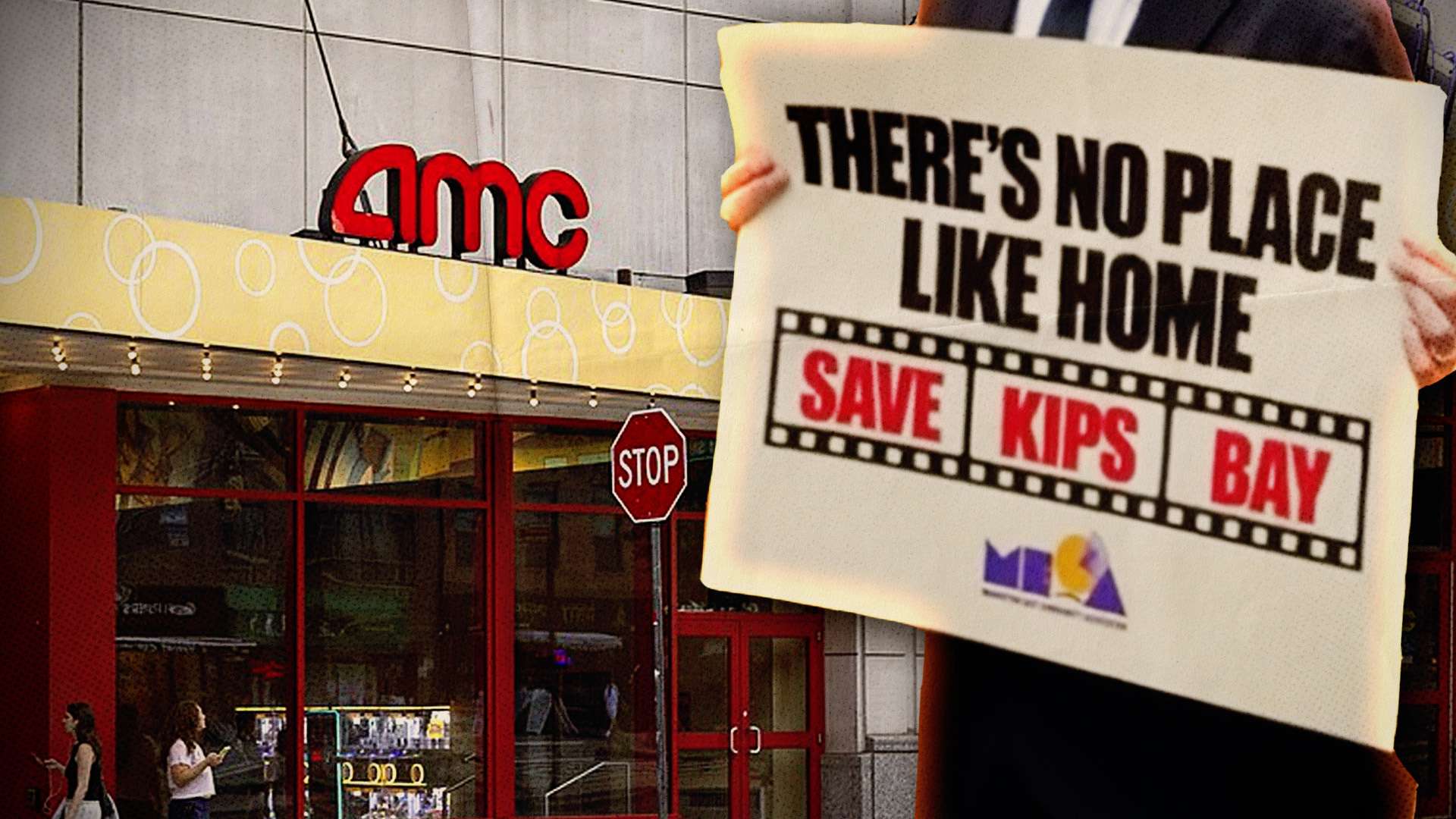
The past weeks have seen New York City officials rallying their influence to defend a beloved local fixture. They aren’t mobilizing to protect a modest, family-owned pizzeria started by immigrants who crossed the Atlantic to seek opportunity, nor to preserve a peaceful park where Manhattan youngsters can enjoy the outdoors. Their united effort has instead focused on safeguarding the AMC movie theater in the Kips Bay area.
Given the fervor of the elected leaders for saving this AMC, one could imagine the cinema facing a replacement by a drone factory or a slaughterhouse. Yet the issue at hand centers on resisting a hospital expansion, not a wholesale relocation of a business. In September, New York Assembly Member Keith Powers (D–Manhattan) disclosed that NYU Langone Health intends to acquire the property by early 2027, and an NYU spokesperson later told The Real Deal that “the deal is under contract and not expected to close until early 2027.” The spokesperson added that the site is anticipated to be repurposed for “clinical space for patient care.”
In August, Powers joined forces with several other officials, including Manhattan Borough President Brad Hoylman-Sigal, in sending a letter to NYU Langone Health voicing concerns about the potential eviction of the cherished AMC Kips Bay theater, as well as the nearby Fairway supermarket. The message urged that a plan be devised so that these establishments could “coexist with medical uses.”
Although Manhattan is home to a large number of cinemas, including one that is a short walk of about 23 minutes away, residents of Kips Bay seem resolute in their mission to preserve the theater. A grassroots “Save Kips Bay” coalition emerged, and its website argues that “NYU Langone already dominates extensive stretches of Kips Bay” and that the hospital system has “bought the block that holds our only movie theater and our biggest grocery store: AMC Kips Bay 15, with the only IMAX on Manhattan’s East Side, and Fairway.”
In September, the Eleanor Roosevelt Independent Democrats organized a “Save the Kips Bay AMC Theater Rally.” Local business owners joined the demonstration, including a nearby Irish pub operator, according to Variety. The proprietor told the outlet that preserving the cinema was crucial because many young people in the neighborhood genuinely enjoy visiting the theater. Elected officials also addressed the crowd, including Hoylman-Sigal, who vividly quoted Nicole Kidman’s AMC monologue during the event.
Hoylman-Sigal’s push intensified on Monday when the Manhattan borough president posted on X that he would “not approve any prospective rezoning of the Kips Bay AMC 15 site without the inclusion of a cinema.”
The stance of Hoylman-Sigal against NYU Langone’s plan appears not simply to hinge on a principle about large versus small businesses. While he has previously criticized sizable corporations (notably Shake Shack, which had to return COVID-era small-business loans), he is now actively defending one of the world’s largest movie-theater chains. It is evident that Hoylman-Sigal and other New York City leaders are choosing which enterprises to back, and in this case the favored beneficiary is an AMC cinema.
One observer on X highlighted the incongruity of the situation, writing, “Never did I imagine progressive leaders in my city opposing a hospital to defend a movie theater.”
Fortunately, Hoylman-Sigal does not wield the final authority on zoning decisions (and, according to The Real Deal, a rezoning may not even be required). Nevertheless, the episode stands as a tense, uncomfortable demonstration of political theater and a reflection of some New York City officials’ priorities. Even if the Kips Bay AMC remains a unique case capable of influencing the trajectory of a hospital expansion (which is unlikely), it is not up to city leaders to make that determination.
