
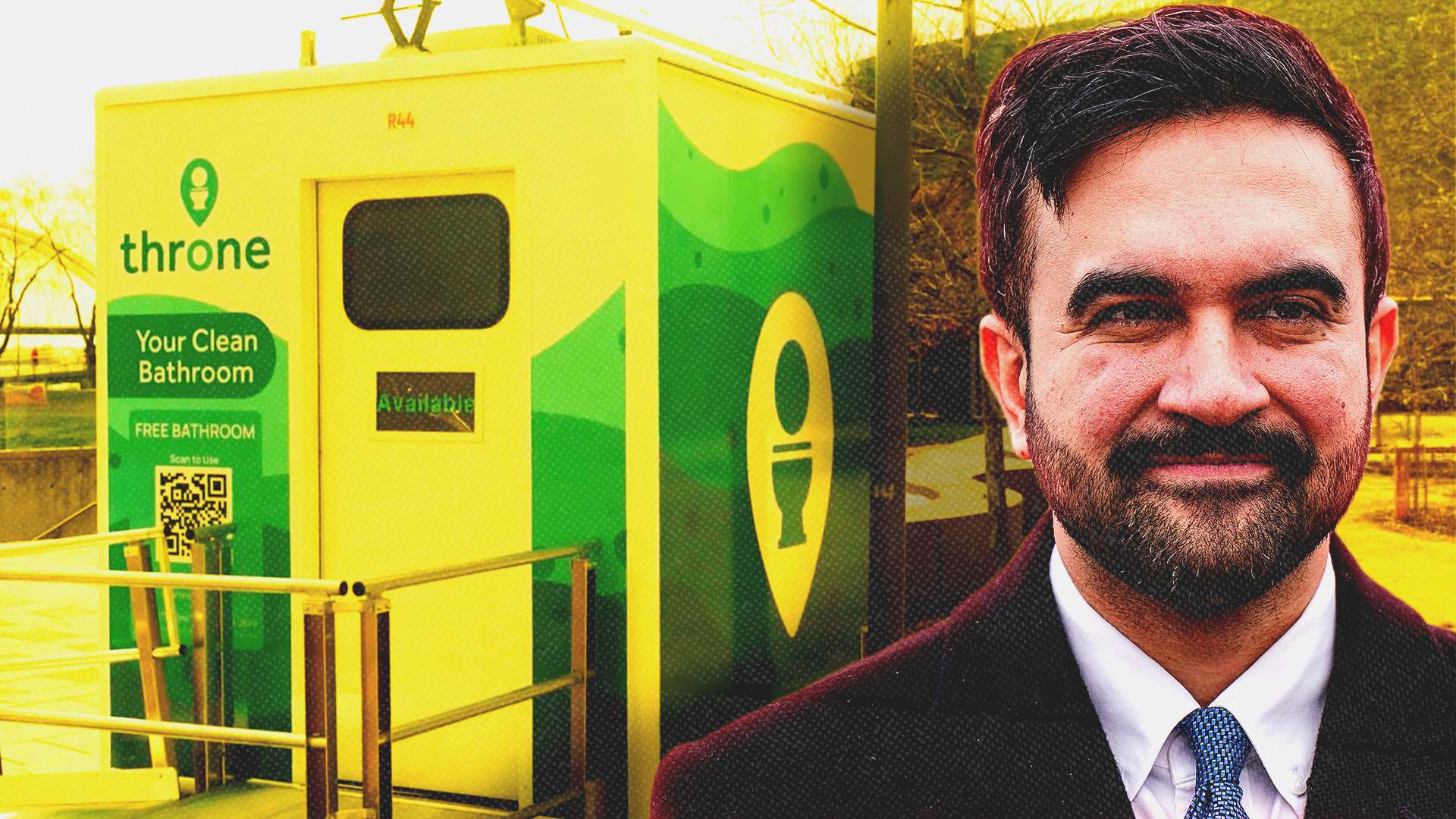
Throne Labs secured a $4 million contract to install 17 new restrooms across New York City.
Over the years, the leaders of New York City have wrestled with the public restroom dilemma. Now, Mayor Zohran Mamdani is stepping up to tackle it.
On Wednesday, the New York City Economic Development Corporation (NYCEDC) announced that Throne Labs Inc. secured the city’s $4 million contract to deploy and maintain 17 restrooms around the city. If the project stays within budget, this price tag is relatively modest when compared to the costs of earlier municipal bathroom ventures in the city.
In 2019, The City Reporter observed that the average expense for a city Parks and Recreation Department bathroom had “nearly tripled to $3.6 million since 2011.” One $4.7 million restroom facility at Ferry Point Park reportedly took 12 years to complete, the outlet noted. And parkgoers told the Reporter that the bathroom was “typically inaccessible in the winter.”
Adrian Benepe, the former Parks Department commissioner, told The Reporter at the time that comfort stations, a term now deemed politically incorrect for the city’s park bathrooms, were the “bane of [his] existence.”
“There’s a built-in inefficiency at every level and too many reviews,” he said.
John Stossel visited a New York City park bathroom in 2017 that cost the city $2 million to build, a price Mitchell Silver, then the New York City Parks commissioner, said was “a good deal” because New York City is “the most expensive market in the world.” The final product, however, was far from luxe.
“There were no gold-plated fixtures. It’s just a little building with four toilets and four sinks,” Stossel wrote at the time.
Stossel has juxtaposed the costly NYC Parks restroom with the crown jewel of Midtown Manhattan restrooms: the privately owned and managed Bryant Park bathroom. The bathroom, which often has a long line, is guarded by private security, cleaned regularly, and has flowers and artwork inside.
The Throne units are not as glamorous as the Bryant Park restrooms, but they may prove to be cleaner and better maintained than other public restrooms. The units will be solar-powered, “odor-managed, and use 21 sensors and ratings from users to monitor real-time data on the restroom’s status, cleanliness, and usage,” according to NYCEDC. According to an Axios reporter who used Throne’s toilets in downtown Detroit, the “facilities were spotless and easy to use.”
The most encouraging part of the Throne rollout is the design. Unlike past public bathroom rollouts, Throne units do not “need to be hooked up to sewers or other utilities,” according to Gothamist. This way, the installation process will not be bogged down by as much red tape as previous projects.
Mamdani is clearly no cost-cutting mayor, but he has said he wants New Yorkers to get more for their taxpayer dollars. Given the countless past failures of city bathroom rollouts, the bar for a successful public bathroom project is extremely low (in the toilet?), so hopefully this plan can provide New Yorkers some relief without flushing away too many public funds. Installation is expected to begin later this summer, and if all goes well, New Yorkers should be able to test the toilets by the fall.
