
There are numerous flaws in both sweeping claims—and a shared flaw that unites them.
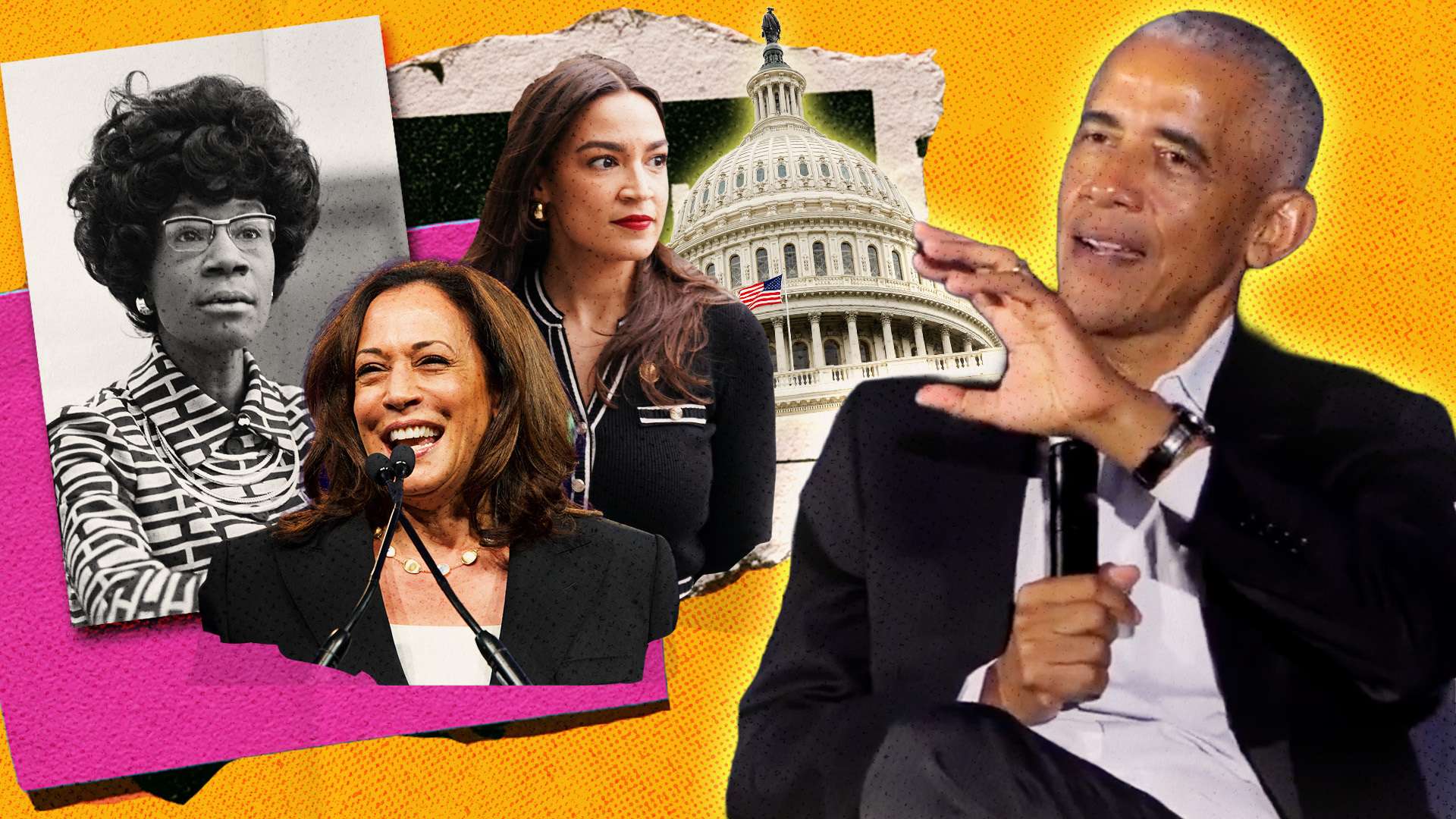
In a preview clip from his new podcast, A Great Book with Barack Obama, former President Obama said, “The federal government is so much less corrupt than probably it’s ever been, in terms of just pure bribes, or patronage or favors.” And in a recent onstage appearance, he said that he “fantasized” about having “women in charge of every government for like two years.” The two seemingly unrelated statements reveal Obama’s superficial view of what makes good government.
The argument that we have less corruption is politically odd, given that Democrats constantly accuse President Donald Trump’s administration of misconduct. But is it right?
It’s true that the federal government was much more openly patronage-based in the past. Patronage was a primary contributing factor in political organization, with party leaders awarding public-sector jobs, contracts, and other benefits to those who were loyal.
But what’s done openly isn’t the end of the story. Research published in 2020 by the National Institute of Justice found nearly 57,000 federal-court public-corruption convictions from 1985 through 2015, with fraud and bribery accounting for 76 percent of the lead charges that resulted in convictions.
Some of those cases have been high-profile stories. Rep. William Jefferson (D–La.) was famously caught with $90,000 in cash stuffed in his freezer in 2005. That same year, Rep. Duke Cunningham (R–Calif.) admitted taking at least $2.4 million in bribes from military contractors. Sen. Bob Menendez (D–N.J.) was convicted just two years ago of accepting cash, gold bars, and a Mercedes-Benz in exchange for political favors.
The Obama administration faced accusations of misconduct too. His White House pressed federal reviewers in 2009 to quickly reach a decision on a $535 million federal loan guarantee for Solyndra, a solar company whose largest investors were funds operated on behalf of Obama fundraiser George Kaiser’s family foundation. The company later collapsed into bankruptcy, leaving American taxpayers to foot the bill.
And the Trump administration, of course, has given us one corruption charge after another. Fifteen companies backed by investment firms affiliated with the president’s sons Donald Trump Jr. and Eric Trump have received about $3.2 billion in federal contracts, loans, and investments, most after Trump returned to office. In 2024, House Oversight Committee Democrats issued a staff report claiming that Trump’s businesses received millions of dollars from foreign governments and government-backed entities.
As the size of the federal government has grown, so have the opportunities for rent-seeking and impropriety. Just because there has been a decline in overt patronage does not mean the government is cleaner than ever.
In a separate incident, Obama argued onstage at Salem State University that women should be in charge of “every government.” Unsurprisingly, Obama received a long round of applause from the audience. Of course, Obama did not exclusively put women in positions of power while he was in office. He also did run against a woman for the presidency, defeating Hillary Clinton for the Democratic presidential race in 2008.
Setting Obama’s personal history aside, countless studies have attempted to isolate the effects of politicians’ sex. A 2026 National Bureau of Economic Research working paper of Brazilian mayoral elections found “no evidence that electing a woman mayor affects corruption.” A study of international disputes found that, partly due to gender perceptions and stereotypes, “female-led states are more likely to have their disputes reciprocated and are consequently more likely to forcefully escalate a dispute than male-led governments.”
Fundamentally, Obama’s argument rests on judging an individual’s governing quality based on their sex. Even giving the argument any credence requires accepting the idea that sex is a meaningful proxy for political judgment. It is a strange principle to embrace. Margaret Thatcher, Angela Merkel, Giorgia Meloni, Hillary Clinton, and Alexandria Ocasio-Cortez hardly represent a single governing philosophy because they happen to have the same gender.
Comments like that are nothing new for the former president, who tends to frame issues in broad terms. Both of these examples rely on crude proxies for much more complex ideas. Fewer envelopes of cash do not necessarily tell us whether government is free from favoritism, conflicts of interest, or rent-seeking, and a politician’s sex tells us very little about how that individual would govern.
A larger state creates more opportunities for rent-seeking and corruption. And none of Obama’s tidy theories of good government offered last week really grapple with that fact.
