
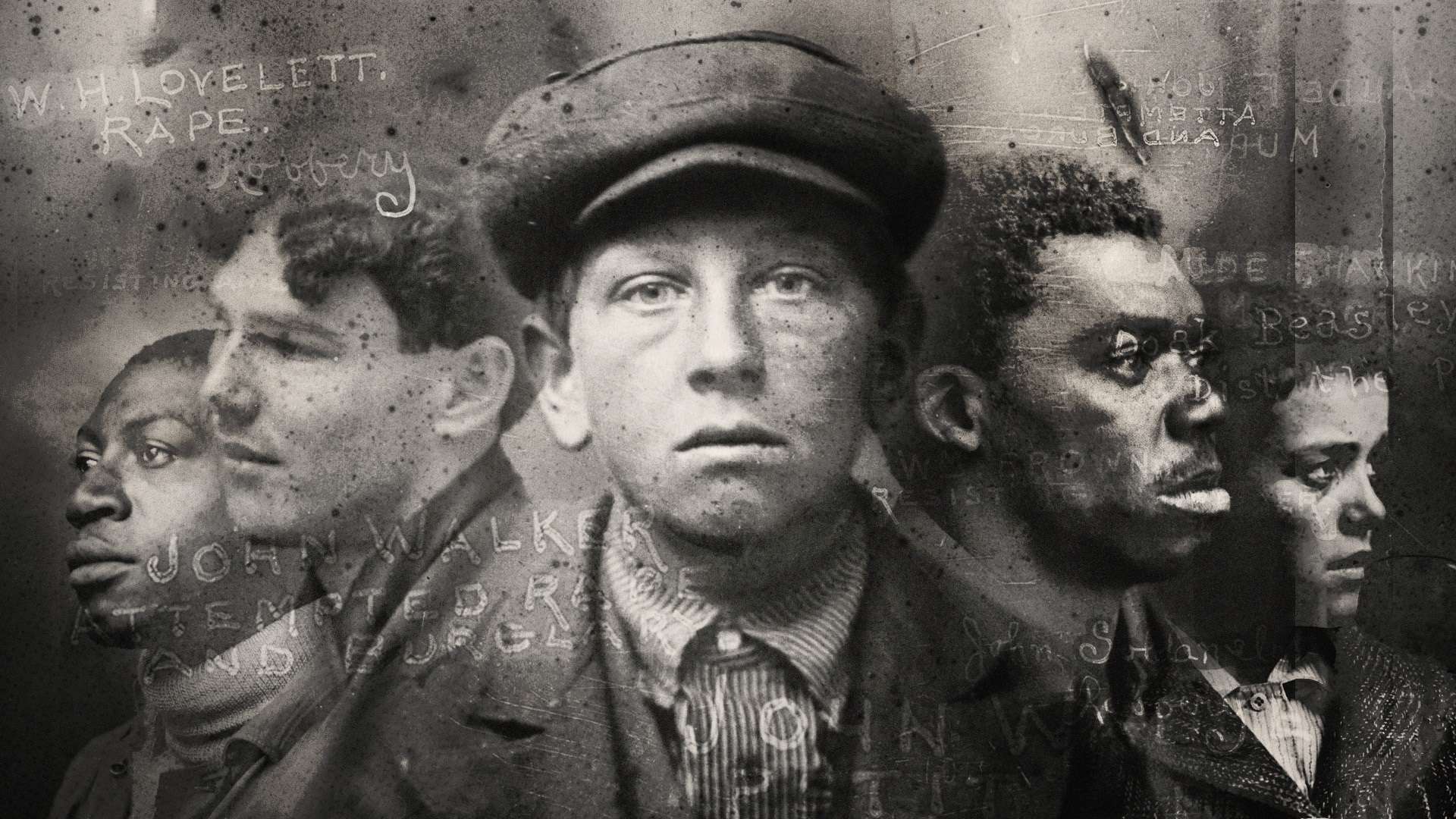
Crime and Punishment in America chronicles the emergence of the modern prison in the United States and reveals the ongoing struggle to discipline its entire justice system.
A new four-episode PBS documentary series, Crime and Punishment in America debuts tonight and offers a thoroughly researched and engaging history of the country’s efforts to establish a fair and humane justice system.
The program is crafted, directed, and produced by a noted documentary filmmaker with executive producers guiding the project, and it probes one of the most compelling yet underexamined facets of American history. In a nod to a recent magazine feature on the history of American prisons, the documentary acknowledges that the core question of what incarceration should look like in a constitutional republic, apart from racial dynamics, may be the most consequential and persistent debate in the United States over the past two and a half centuries.
In fact, it was on American soil that the modern penitentiary first took shape in the early nineteenth century, driven by a desire to replace the public chastisements and regular executions imported from English law. In an interview with the magazine, the researcher notes that the penitentiary’s status as a relatively new invention was among the most astonishing discoveries encountered in her study.
“It was almost unbelievable to me that something so familiar and seemingly permanent—prison as a place to detain offenders for a set period—was not a feature of the early republic,” the filmmaker remarks.
The initial wave of prison reformers entered with high-minded aims, yet they carried an excessive confidence in their doctrines, leading to grim, deadly experiments with extreme solitary confinement. A historian quoted in the program describes the Founding Fathers as possessing “a narcissistic self-regard that they could perform surgery on the souls of men.”
The early ventures into American corrections collapsed in spectacular fashion, and later waves repeated similar missteps roughly every four to five decades, as public sentiment swung between revulsion at prison abuses and concern and anger about crime.
The program adopts PBS’s instantly recognizable documentary approach, blending extensive archival sources, high-profile narration, immersive sound design, and conversations with historians and primary witnesses to guide audiences through the sweeping arc of a major issue. It assembles a roster of prominent criminal-justice voices from the last half-century, including civil rights advocates, district attorneys, former governors, and perspectives from former corrections staff and inmates.
A preview installment provided to the magazine, titled “Episode IV: Getting Tough on Crime,” opens with the notorious Attica uprising of 1971 and traces the enactment of the Rockefeller drug laws and other stringent mandatory minimum sentences, the surge in prison-building in the 1980s, the emergence of the victims’ rights movement, and the hardline crime policy of the 1990s.
The visual storytelling proves especially potent when addressing more recent episodes, such as the Attica uprising and the subsequent retaking of the facility by state authorities, which resulted in the deaths of 30 inmates and nine hostages. A negotiator from Attica recounts to the filmmakers that, as the negotiating team was withdrawn, many prisoners, aware that the standoff seemed doomed to conclude in one outcome, began passing him scraps bearing contact numbers for relatives to call should they perish.
The principal challenge lies in the sheer breadth of how closely criminal justice intersects with U.S. history, producing more material than can be feasibly addressed. At moments the film races through topics that could merit full episodes of their own, including prohibition’s collapse, the WWII-era Japanese internment, and the criminalization of abortion before Roe v. Wade.
Nevertheless, the filmmaker behind the project demonstrates a confident touch, backed by rigorous research and strong conversations, keeping the narrative engaging even for those already acquainted with many of the events. The tale of how the United States shaped the modern prison system, sustained it through recurrent failures, and disseminated it globally is a narrative that has rarely been explored in depth. For many viewers, Crime and Punishment in America promises to illuminate some of the darker corners of American history.
