
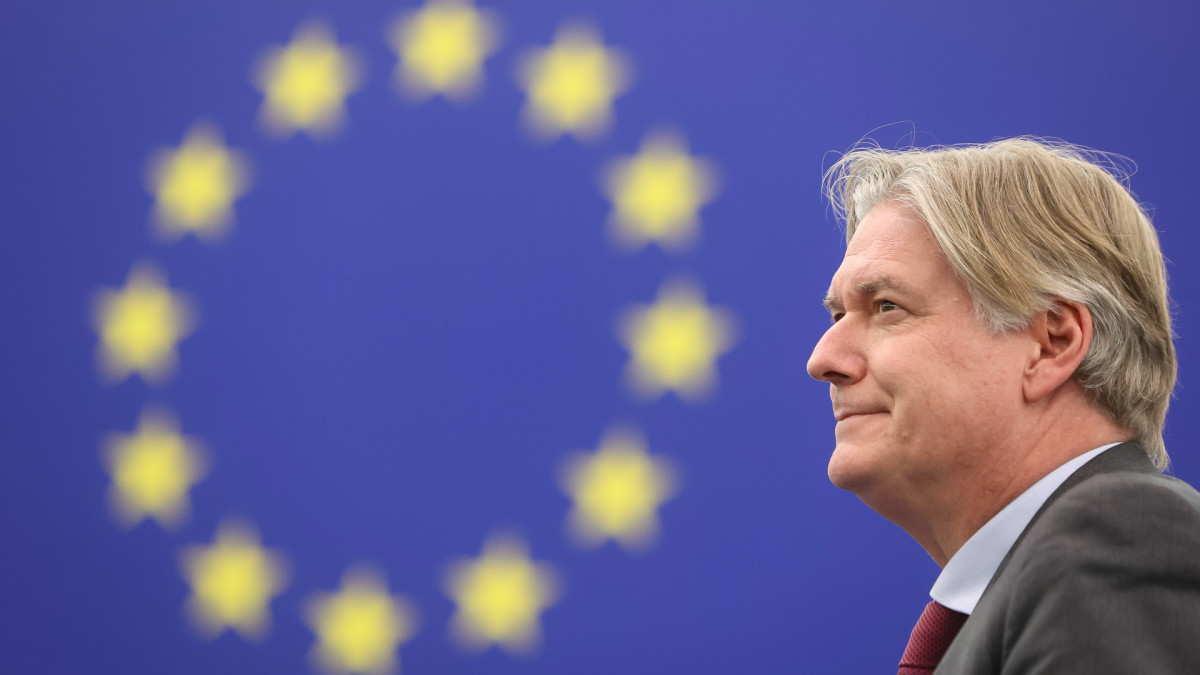
This year he will have spent twenty-two years as a Member of the European Parliament. And in 2022 he reached two decades as secretary-general of the European People’s Party. Antonio López-Istúriz White is, therefore, one of the Spanish politicians with the most experience on the European stage, but also a deep connoisseur of American culture. In particular, the “logics” of “doing business in New York” are familiar to him, precisely the tactics that, in his view, the President Donald Trump employs when negotiating, among others, with the European Union.
With respect, because he has been “elected democratically by the American people”, he believes Europe would do well to avoid “getting drawn into every threatening statement” from Trump. In this sense, he laments the position adopted by the Government of Spain, which “says one thing in Madrid, another in Brussels and another in Washington”. Although he shares some concern about the international context, he thinks the Executive should not “send messages from Madrid” without coordinating them with its partners.
In his review of the political agenda, he defends moving forward with the Mercosur agreement, but he says he understands the concerns of the agricultural sector. On security, he welcomes that “Europe is moving toward greater defensive coordination within NATO”, although he insists that it would be wise to explore forms other than unanimity. And, finally, when asked for an optimistic message about Europe, he maintains that “we have faced many crises and this one will pass too”.
The Atlantic relationship has changed a lot in recent months. Now, the European Parliament seems willing to ratify the trade agreement with the United States, while some countries, including Spain, take a different stance on issues such as Iran. How do you interpret this duality in Europe?
It is logical. There is no need to alarm ourselves when European countries react in different ways to international circumstances. It is not the first time. Some of us have long argued that in foreign and defense policy we should move toward more agile formulas than unanimity, because the times require faster decision-making.
“I would prefer fewer statements made in advance and for positions to be defended where appropriate: in the European Council”
The European Union has always progressed through crises, and this one again demonstrates the need for greater coordination in foreign policy and defense. Meanwhile, member states react in different ways. I would prefer fewer premature statements and for positions to be defended where appropriate: in the European Council, with everyone seated, trying to convince the partners.
Instead, at times we see loud declarations, with a dose of self-importance or electoral calculation, that contribute nothing to a coordinated European solution. The reality is that the Union remains a very successful economic and financial construct, but not a political one. That is why the member states continue to pull in their own directions whenever they can. The northern countries’ priority toward Ukraine is not the same as ours, which is more oriented toward the south. Precisely for that reason we all sit in Brussels: to coordinate those efforts.
Continuing with Washington, has the perception of Donald Trump and the position of the parties changed since his arrival?
First, we must acknowledge the character of the person. He has been elected democratically by the American people, not by a white, foolish minority from the Midwest, but by a majority. And one must also face that the Democratic Party’s offer did not appeal to many people. I even have relatives who changed their vote for that reason: not because Trump excited them, but due to the absence of a convincing alternative.
The United States remains a democracy, love it or not, and I am very uncomfortable when it is compared to Russia, China, or Iran. We must be careful with that. Its ruler has been democratically elected and acts as someone who has spent a lifetime negotiating from a position of strength. He comes from the New York business world and applies those logics.
“The best thing is to keep one’s composure, remain patient, and think strategically about what Europe can contribute next”
What Europe must do is not to fall for every threatening statement. Often they are negotiating techniques to bring them to the table from a position of dominance, whether with Venezuela, Iran, or the Europeans. In the face of that, we should maintain patience and act at our own pace, at the European pace, which can be tiring and difficult, but includes all the sensitivities of the Union and that also forms part of defending our values.
Trying to respond to Trump on his own terms is a losing proposition, because he will always go a step further, with a tougher statement. The best is to keep one’s composure, maintain patience, and think strategically about what Europe can contribute next, for example in the reconstruction of Gaza, in the stability of the Middle East, or in energy matters such as the Strait of Hormuz. There Europe does have capacity, even if it is not a leading military power.
RELATED ARTICLES
Antonio López-Istúriz White is an MEP for the Partido Popular and former secretary general of the European People’s Party.European Parliament, 2025
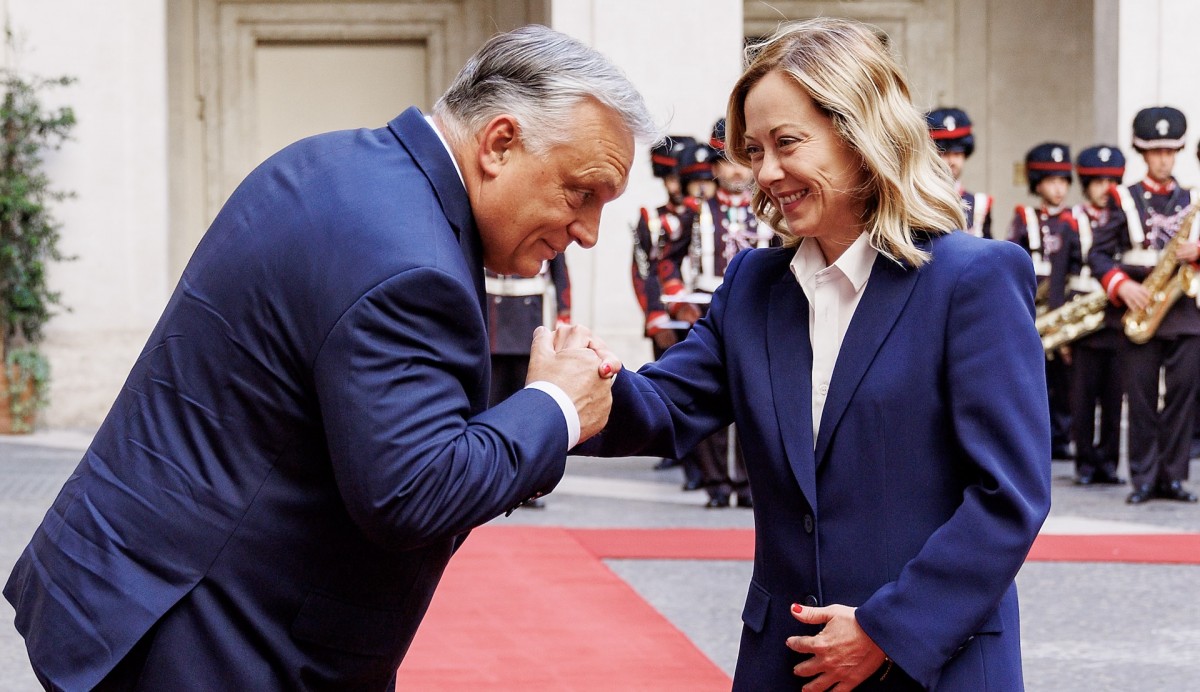
The two leaders meet during the Hungarian’s visit to Rome last summer.Roberto Monaldo / Zuma Press / ContactoPhoto
You have spoken elsewhere about Trump’s negotiating profile. Do you think the Greenland example helps to understand his way of acting?
Yes, because it shows very clearly. At a certain moment he took the threat to Greenland seriously, markets reacted and collapsed, and Trump backed off. Four or five months later, no one talks about it anymore.
That is why I ask for patience and not to respond to the first declarations of someone who may wake up every morning with a different idea. We must maintain the utmost respect, of course, but also act in our own way and not let ourselves be dragged by every initial gesture.
Trump’s arrival has reinforced in Europe the idea of seeking new partners. In that debate Mercosur has come to the fore. Your party, the European People’s Party, has long supported the agreement, but in recent months there has been discussion about its entry into force. What has happened?
The European Commission, led by Ursula von der Leyen, has propelled a policy of trade agreements with potential partners in our vicinity. There are India, Australia, Mexico, and, of course, Mercosur. It is a fundamental agreement.
Experience shows that these agreements end up working. I recall the problems years ago with the Canada deal [CETA], even with regional parliaments that refused to ratify it. However, when it was provisionally applied and began to generate prosperity and jobs, protests disappeared. That tends to happen.
With Mercosur something similar happens. It has been portrayed as a threat, but in reality it introduces rules where there were very few before. That is a key point. Previously agricultural products entered the European Union with little control. Mercosur, conversely, introduces guarantees and safeguard clauses that allow suspending the agreement if frontier rules are not met.
“I understand the farmers’ anger, because they face unfair competition from products that do not meet the same sanitary standards, but Mercosur precisely introduces guarantees that did not exist before”
That is why I say the problem is not Mercosur. The problem is the pre-existing disorder and the lack of control over products that were already entering from various places. I understand the farmers’ anger, because they face unfair competition from products that do not meet the same sanitary standards, but Mercosur precisely introduces guarantees that did not exist before. What is needed is more information and less misinformation. The agreement can be very beneficial for Europe and, in particular, for Spain.
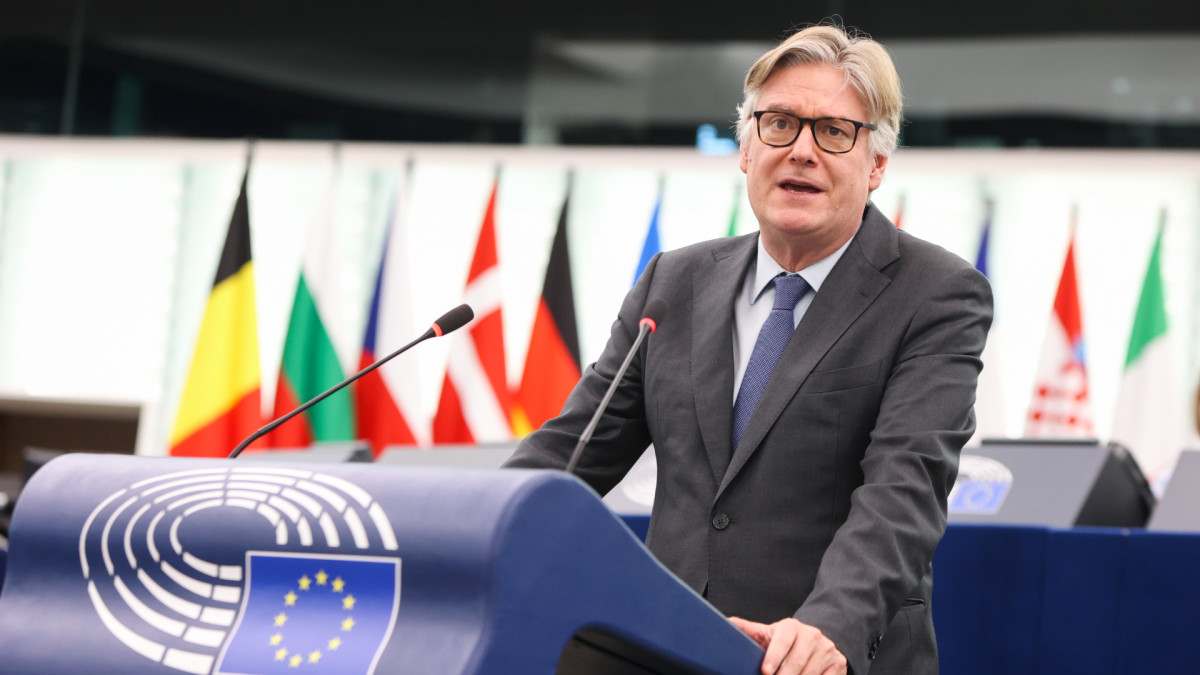
López-Istúriz during a plenary session in the European Parliament. Photo: European Parliament, 2026.
And those who defend the agreement, have they explained sufficiently well why it is positive?
Without a doubt, it can be communicated better. But today the more reasonable parties compete against a very aggressive misinformation environment, especially from the extremes, which works very easily on social networks. That is the great communicative disadvantage today.
I do not want the parties I belong to to become that. I do not want to defend positions based on half-truths or messages designed to manipulate public opinion. I prefer to maintain a calm and stable line, even if it is less attractive than the big headlines spread by the extremes and that go viral easily.
I wouldn’t say it’s all a communication problem, though there may be some of that. The European Union itself should also make a greater pedagogical effort with these agreements. But the information competition today is very tough.
Only in the last few weeks, Donald Trump, Marco Rubio, or Scott Bessent have pointed directly at Spain. Are we facing the risk of a real rupture between Washington and Spain (or Europe) or, more likely, a matter of political narrative?
We have a government that says one thing in Madrid, another in Brussels, and another in Washington. It speaks of “no to war,” but there are actions pointing in another direction, such as the use of bases or the hundreds of military flights that have landed at Rota. That creates a great inconsistency.
This is being understood as a pre-electoral period and past arguments are being used that no longer attract attention. The problem is that those national or electoral desires can end up hurting the country, because the real negotiation takes place in the meantime between the European Union and the United States, in trade, in NATO, and in other international institutions.
If a government has a certain position, it should defend it in NATO or in the European Union, not launch messages from Madrid without coordinating them with its partners. That does not work and creates discomfort, not only with Trump, but also among other European governments who observe with concern how Spain goes its own way. There may be prime ministers who align with that line and others, no doubt, who do not, but the discomfort exists due to the attitude of announcing positions outside the channels of European consensus.
When we talk about Iran or other conflicts, there is often talk that the European Union does not have a clear voice in foreign policy. Do you share that assessment?
We have a high representative, Kaja Kallas, who is doing her job, and also a Commission president, Ursula von der Leyen, who is very visible in these matters. The problem is not so much the absolute absence of voices as the nature of the European Union itself.
As Jean Monnet said, Europe advances through crises. It already happened in monetary and financial matters after the 2008 crisis, which strengthened European cohesion and the role of the European Central Bank. In foreign policy and defense we are now in a similar phase: crises are proving the need to move forward, but solutions do not come overnight.
“Twenty-seven member states have their own opinions and, from the balance between north, south, east and west, a common foreign policy is built”
I prefer this system, which can be slower, but is also safer and more democratic. Twenty-seven member states have their own opinions and, from the balance between north, south, east and west, a common foreign policy is built. If it could be faster using formulas like qualified majority, better, but that is for the member states to decide.
In defense, moreover, the leap has been enormous in a few short years. There was not even a defense committee in the European Parliament nor a commissioner dedicated to this field. Today there are both. Europe is moving toward greater defensive organization within NATO and in line with the so-called strategic autonomy. Not at the behest of a single person, but because the states have come to understand that this is the necessary direction.
You chaired the delegation for relations with Israel in the European Parliament. Today you remain in it as a member. I ask you about the law approved by the Israeli Knesset that makes the death penalty by hanging the default penalty for Palestinians convicted of “terrorist acts” who intend to “deny the existence of the State of Israel.” What position do you think the European Union should adopt? And what do you think personally?
I know Israel well, and one basic thing should be remembered: Israel is a democratic state. You may like or dislike its prime minister, just as in other democratic countries, but you must start from that fact.
That said, when we talk about the death penalty, regardless of its form, the European position is clear: we do not share it. The European Union cannot directly interfere in the domestic politics of a democratic country, but it can issue resolutions or statements, and it is logical that it should do so if it considers it appropriate.
“If the European Union speaks out on the death penalty in Israel, it will be coherent with its overall position. The important thing is that it does so with a universal criterion, not selective”
My only objection is that this sensitivity should be applied with the same intensity in all cases. I would like to see the same level of denunciation for executions in China, Iran, Russia, or Venezuela. In these matters we must be even-handed and speak with the same standard about all countries. Therefore, if the European Union speaks out on the death penalty in Israel, it will be coherent with its general position. The important thing is that it does so with a universal and not selective criterion.
To finish: up to now we have touched on very negative topics, which certainly do not invite optimism on almost any front. Do you see any reason for a more hopeful message?
It is difficult to compete with the noise and with the increasingly absurd headlines circulating on social networks. However, from the experience of someone who has spent more than twenty years in international politics, I would say one thing: we are not at the end of the world.
Not long ago we celebrated the 50th anniversary of the European People’s Party and I thought about all that Europe has gone through since the 1970s: much more serious energy crises, enormous social instability, racial conflicts, the Cold War. We have faced many crises and this one will pass too.
“The EU has an extraordinary welfare system and must also learn to defend it against powers that do not tolerate democracy or freedoms”
The European Union has shown that it knows how to strengthen itself in difficult times. It has an extraordinary welfare system and must also learn to defend it against powers that do not tolerate democracy or freedoms. In this regard, I am very concerned that the question I was most asked during the 2024 campaign was whether there would be a Third World War. That reveals a serious public communication problem. I do not offer false hopes: of course there will be crises, as there have always been. But there will not be a Third World War. It did not occur during the Cold War and it will not occur now. In the end human reason prevails.
Crises do not always close completely and sometimes reopen old wounds. A clear and recent example is Northern Ireland, where, after Brexit, the historic tensions between Catholics and Protestants have resurfaced. But there too the European Union has played a decisive role with programs aimed at rapprochement and stability. That is a role Europe must not abandon. That would be my most positive message: despite everything, we keep moving forward and Europe remains part of the solution.
Thank you very much.
