
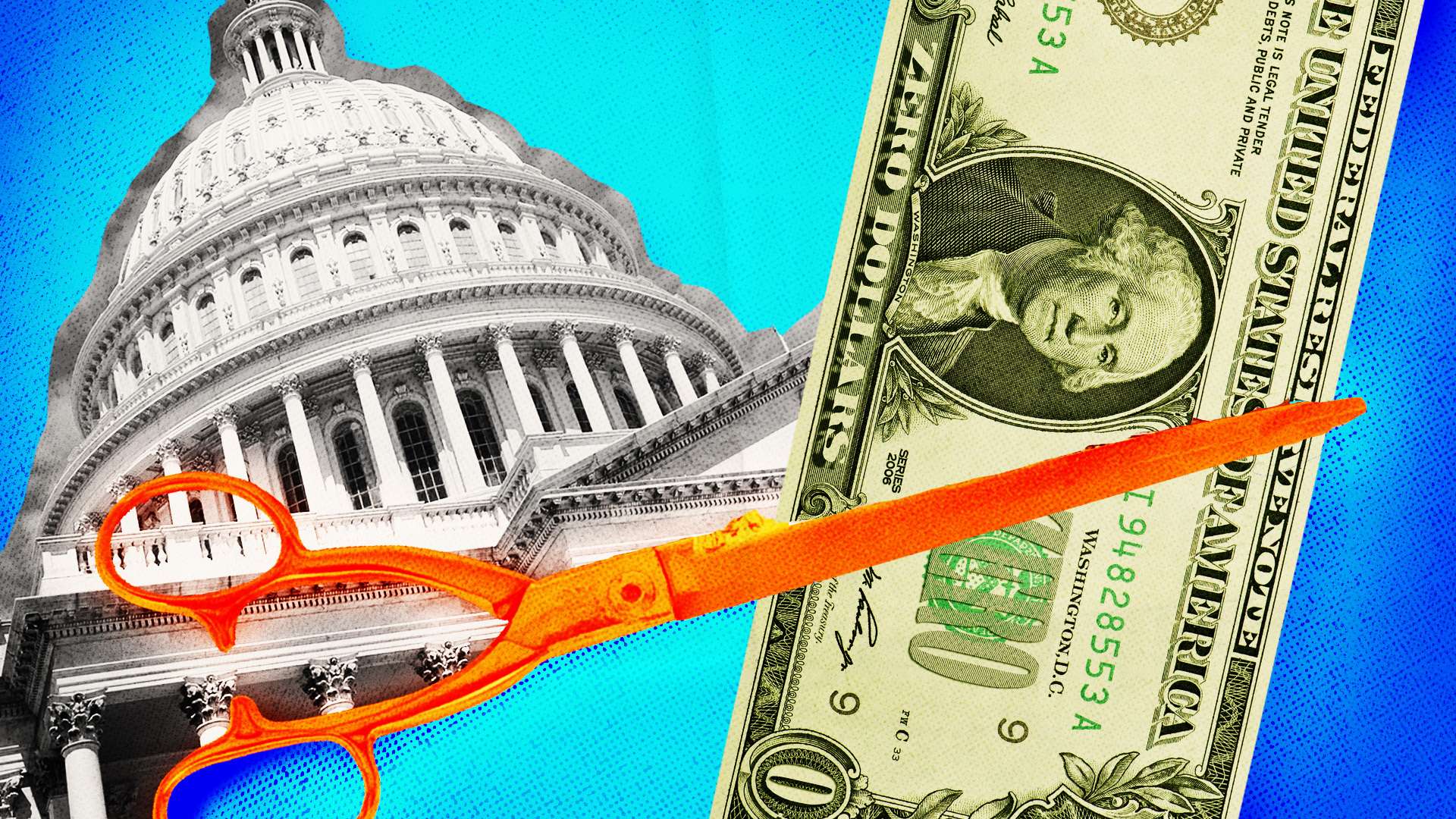
Price controls have an enticing appeal: their benefits appear instantly and clearly, while their more consequential costs often remain hidden until it’s too late.
Most Americans seem to share at least one belief, and unfortunately it’s a risky one: government-imposed price ceilings.
A fresh poll from the Wall Street Journal reveals striking bipartisan backing for price caps imposed by the state, with 93 percent of Democrats and 83 percent of Republicans in favor of limiting what prescription drugs can cost. Nearly four in five voters back a ceiling of 10 percent on credit card interest, and a broad majority support boundaries on childcare charges for working families.
The Journal characterizes these policies as “populist.” That label is fair enough, though populism denotes more than just popular appeal or consumer sentiment. Political scientists typically define populism as a tactic that pits everyday people against an elite viewed as serving its own interests. Because it can arise on both the left and the right, it helps explain today’s unusual alliances.
Sen. Bernie Sanders, a Democratic socialist from Vermont, and Sen. Josh Hawley, a Republican from Missouri, both back a 10 percent cap on credit card interest. Sen. Elizabeth Warren, a Democrat from Massachusetts, can champion limits on childcare costs while President Donald Trump launches a government portal guiding consumers to cheaper prescription drugs. Various political factions are embracing the notion that if something costs more than most people think it should, the government ought to reduce it.
Yet if the goal is to defend ordinary people against powerful interests, an irony sits beneath the surface.
First, few actors are more powerful or more self-serving than government officials. As a former president famously warned, the idea that “help is coming from the government” can come with strings and incentives that complicate real outcomes. It’s not just the coercive power to seize resources; it’s the temptation to promise freebies that cannot be fulfilled. The point is that government intervention and bureaucracy can complicate economic realities and end up harming the very people it claims to help.
Price controls that many Americans now advocate for may be the sharpest illustration of this dynamic. Behind broad support lies a simplifying assumption—that prices merely reflect the whims of ruthless sellers. In truth, prices crystallize countless decisions by buyers and sellers, each armed with private information that no one else possesses. No single buyer’s budget or need, and no seller’s costs or offerings, are identical. Only a free market can aggregate this dispersed information and determine which prices endure. When lawmakers set price ceilings, scarcity does not disappear; it simply shows up as empty shelves rather than as a price that the market would have settled on.
Take credit cards as an example. A cap of 10 percent may sound appealing; many households already pay substantially more. Why not impose the limit? Because an interest rate is not an arbitrary figure. It reflects the cost of funds, administrative overhead, and, importantly, the risk of default.
Congress can impose a cap, but it cannot regulate risk. When the maximum rate falls below the true cost of risk, lending dries up. Lenders turn away applicants, trim available credit, or close accounts. The very borrowers the cap is meant to protect still require financing, and they may end up relying on payday lenders or pawnshops. In short, interest-rate caps end up hurting the economically vulnerable as much as they aim to aid them.
The same logic applies even more starkly to childcare. The service commands high prices because caring for young children demands substantial labor and there is strong demand, particularly where governments subsidize it through vouchers and credits. At the same time, state and local governments constrain supply through strict staffing ratios, credential requirements, zoning barriers on home-based providers, and costly building rules. It’s hardly surprising that prices are steep.
Setting price ceilings in childcare won’t fix the problem. If providers cannot cover their costs at the mandated price, some will reduce capacity, others will exit the field altogether. Parents who manage to secure a slot may pay less, but many will face longer waits or no availability at all. The government cannot conjure the extra workers and facilities needed to fill the gap created by its own price ceilings.
Prescription drugs present a somewhat more complicated balance, but the core trade-off remains. Lower drug prices can help patients immediately on paper, but drug development is extraordinarily costly and risky. Anticipated future revenues drive how much firms invest in research. Therefore, price controls, over time, tend to curb the introduction of new therapies. Fewer innovations mean fewer cures and lifesaving treatments in the years ahead.
That example also demonstrates why price controls are such an alluring political instrument. The benefits appear large and immediate, while the costs remain hidden or delayed.
Politicians can legislate to reduce prices; they cannot legislate away scarcity, additional costs, or risk. If populism truly means standing up for ordinary people, its measures ought to be judged not by how widely they are supported but by their real effect on everyday lives. And for the typical American, price controls end up causing harm.
COPYRIGHT 2026 CREATORS.COM
