
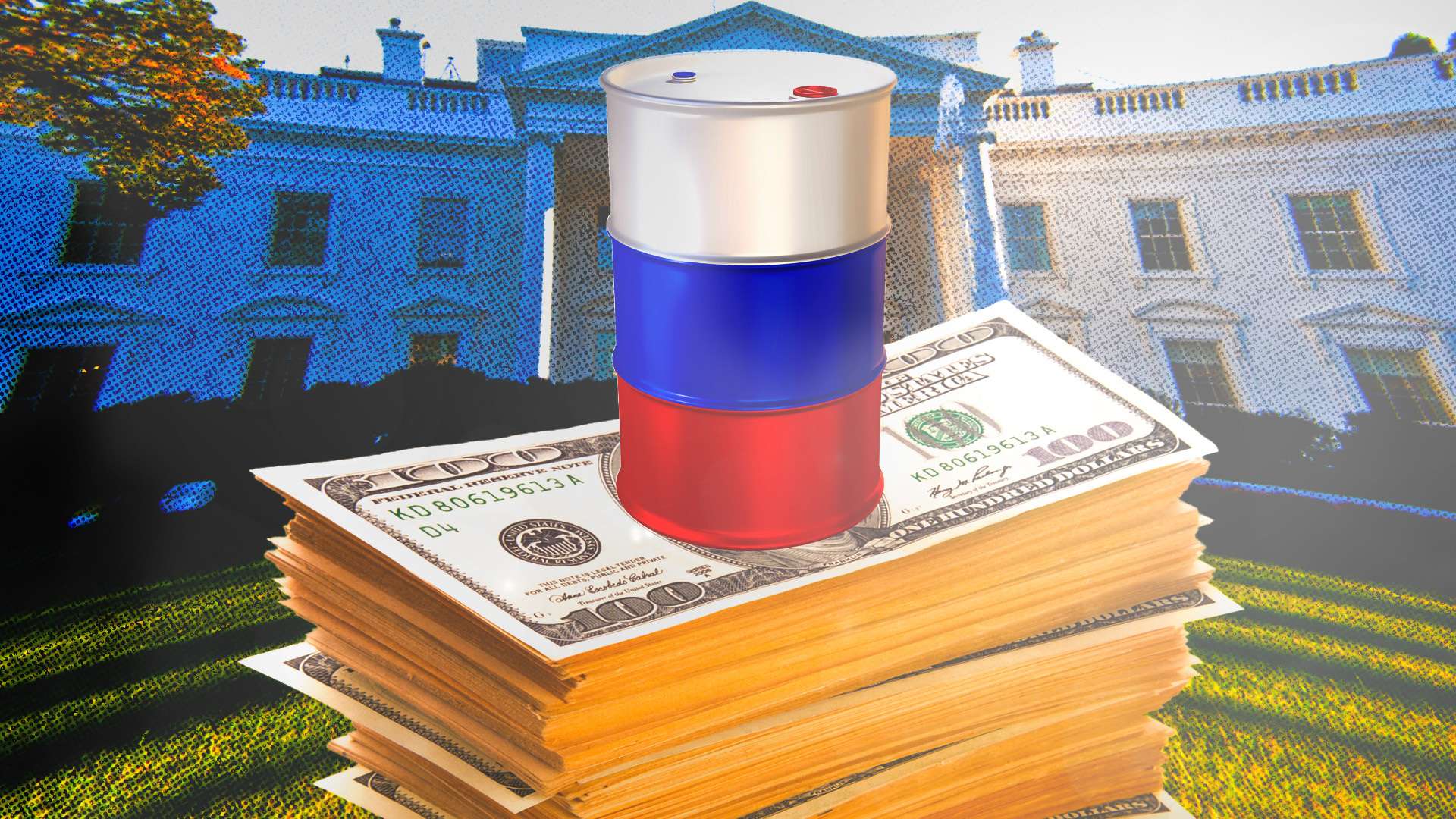
The legislation, approved by both chambers, would empower the President to place tariffs as high as 100 percent on certain nations, yet it lacks a clear definition of which ones would be targeted.
Earlier this week, the House advanced the Lindsey O. Graham Sanctioning Russia and Iran Act of 2026, a tribute named for the late senator. The Senate had already cleared its own version in August, and the measure is now on President Donald Trump’s desk awaiting his signature into law.
In a gesture honoring Graham, the bill would widen the powers of the executive branch at the expense of Congress.
The measure targets Russia and Iran, a long-standing objective of Graham. It also requires the president to impose tariffs “of up to 100 percent” on all goods from any countries that, in the preceding year, were “among the 5 largest importers, by total volume, of crude oil or natural gas that originated in the Russian Federation” or “among the top 5 countries facilitating Russian oil sanctions evasion.”
As of the end of August, China, India, and Turkey were the largest purchasers of Russian crude oil, while the European Union imported the greatest volume of pipeline gas and liquefied natural gas. (The measure exempts any nation that imported “less than 15 percent” of Russia’s total natural gas exports and “has taken significant steps to reduce its imports of natural gas that originated in the Russian Federation.”)
“This makes little sense,” Reason’s Eric Boehm wrote after the Senate passed the bill. “Tariffs are tax increases paid by Americans. The objective is to punish Russian President Vladimir Putin for his war of aggression in Ukraine, but this tariff framework would allow the president to tax Americans who buy goods made in India or Belgium. Yes, the goal is to push those countries away from using Russian fossil fuels, but surely there are ways to accomplish that without raising taxes on Americans in the process.”
The proposal is drafted so broadly that Trump could apply it in several other ways. Catherine Rampell of The Bulwark described it as “potentially the nuclear bomb of tariff power.”
Trump has long favored tariffs. At the start of his second term, he imposed duties on dozens of countries.
The Constitution assigns this authority to Congress, not the president. To justify his move, Trump cited the International Emergency Economic Powers Act (IEEPA), a decades-old statute granting the president certain powers during national emergencies but notably never uses the word tariff. The Supreme Court struck down those tariffs in February, ruling that IEEPA did not confer that authority, and that even if it did, Congress could not abdicate such power so broadly.
“When Congress has delegated its tariff powers, it does so in explicit terms, and subject to strict limits,” Chief Justice John Roberts wrote for the majority. “Where Congress has reason to worry about its powers ‘slipping through its fingers,’ we in turn have every reason to expect Congress to use clear language to effectuate unbounded delegations—particularly of its ‘one great power,'” the power to tax. (Trump has since invoked tariffs under other laws, but those are likely also unlawful.)
This new law represents an attempt to hand more of Congress’ prerogatives to the presidency. While it might withstand constitutional scrutiny better than Trump’s other tariff attempts, it remains a problematic concept.
“The bill does not specify where the data identifying the ‘top five’ purchasers come from,” wrote Clark Packard, a research fellow at the Cato Institute. “Russian energy flows are deliberately murky—through intermediaries, transshipment, blended cargoes—and different datasets yield different lists. A statute that hinges on a factual finding but declines to specify who makes it or what data are used is not a statute with guardrails. This is an invitation to pick the answer the president wants and dare someone to sue.”
By the same logic, deciding which five countries were the worst offenders “facilitating…sanctions evasion” could invite an even wider range of interpretation. The bill could conceivably apply to up to five importers and five evaders, enabling Trump to impose 100 percent tariffs on ten different countries.
“Count me deeply opposed to the tariff provisions of the new Russia sanctions bill,” added Peter Harrell of Georgetown University’s Institute of International Economic Law. “The reality is that Trump would wield the tariff tool not to target Russia, but as a legal basis for his ongoing trade wars over economic, geopolitical, and personal frictions.”
“On balance, this new proposal is a bad law. There are vastly better ways to help Ukraine resist Russia than these kinds of indirect sanctions,” George Mason University law professor Ilya Somin tells Reason. “And there is little if any reason to think Trump would use the discretionary authority in the proposed law to actually help Ukraine, as opposed [to] using it as a pretext for protectionism.”
“These provisions give the Administration significant leeway to determine which countries might be subject to tariffs along with the rate they would face. It’s possible the act could even be used to threaten new tariffs on countries in Europe or elsewhere that are working to deter Russian aggression,” adds Bryan Riley of the National Taxpayers Union. “Congress needs to reclaim its constitutional authority over tariffs, not give even more of its authority away.”
