
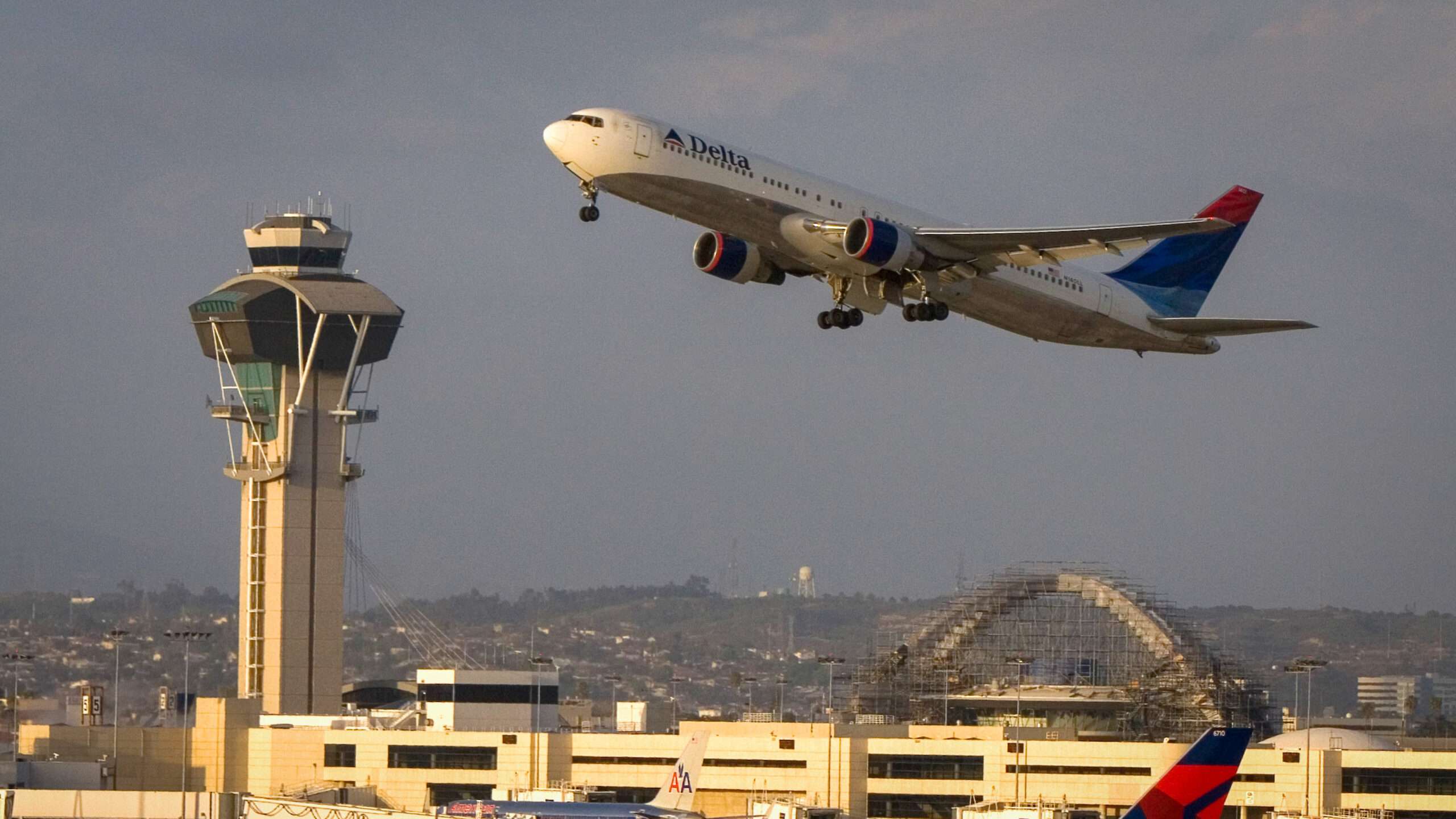
The U.S. government’s air traffic control infrastructure has long struggled to keep pace with modernization, and last week it again drew scrutiny when the FAA halted flights nationwide due to technical faults. Officials blame aging, government-operated equipment, a plausible explanation for a system that has been updated piecemeal rather than replaced outright. Forewarnings of potential disruptions had circulated in advance. Given years of outages, sometimes connected to funding gaps or government shutdowns, the case for removing political control from the operation of air traffic control—much like in other countries—appears increasingly persuasive.
The Technical Glitch That Grounded a Nation
The FAA described the incident as a failure of legacy hardware that buckled under a flood of data entering the agency’s Flight and Tech Interface network, occurring at a rate of about a thousand connection attempts every four to five seconds. This surge disrupted the system and destabilized the links that feed aircraft communications and radar data.
The agency insisted that its ongoing modernization efforts were not to blame, yet Transportation Secretary Sean Duffy noted that the issue happened while L3Harris, a government contractor, was replacing an old copper cable slated for retirement, and when a recently installed router was reactivated, it overwhelmed the system with data.
The ground stop did not come as a surprise. U.S. air traffic control has a history of stumbles, including the recent government shutdown that left many federal workers unpaid and some controllers calling in sick. A 2023 technical glitch led to thousands of flight delays and cancellations. The aging, compromised system has long been a source of concern, fueling modernization debates. Not long before the outage, Duffy boasted about the FAA finally retirements of 1980s-era floppy disks. Yet the upgrade program continues to raise concerns about risk and reliability.
Decades of Failed Modernization Efforts
“We share the goal of moving ATC modernization forward at a faster pace and commend FAA for early progress. However, for the sake of speed, FAA appears to be taking on extra risk,” warned the Government Accountability Office (GAO) just two months prior. “In essence, the agency is trading cost certainty and stability for speed, which could leave air traffic controllers relying on critically outdated systems that are prone to outages, ground holds, flight delays, or—worse—safety incidents.”
Regrettably, the government itself is not skilled at gradual, steady upgrades either. In 2005, the GAO cautioned that “the FAA’s multibillion-dollar modernization program has suffered from cost, schedule, and performance shortfalls in acquisitions for more than two decades and has been on our high-risk list since 1995.”
And here we stand. After decades of accumulating glitches, warnings, and ambitious modernization schemes, the air traffic control system remains on the brink, briefly tipping over but not collapsing completely. There is, in fact, a better path forward — one that exists in the proposals of those who advocate depoliticization and greater private-sector involvement.
Learn From Other Countries and Privatize Air Traffic Control
“Today, around 100 countries run their air traffic control services through user-funded utilities. Australia, Canada, Germany, and the U.K. all deploy newer, more advanced technology than the FAA and are financially autonomous from government budgets,” wrote Robert Poole of the Reason Foundation, which publishes Reason, last November.
Poole and colleagues have long studied ATC reform, repeatedly urging depoliticization and more private-sector participation. In July of this year, industry consultant John Kefaliotis argued in the Reason Foundation that “Canada offers a proven model of moving from a tax-funded, chronically under-resourced ATC system to a sustainable, nonprofit, commercially oriented structure capable of ongoing modernization.”
David R. Henderson, a Hoover Institution research fellow and former Reagan adviser, concurs with this line of thinking. He notes that the Canadian government, faced with fiscal strain in the 1990s, divested ATC responsibilities and transferred them to Nav Canada. “In 1996, partly to save money and partly to improve air navigation, the federal government sold the system to Nav Canada, a private nonprofit,” Henderson observed after the 2023 U.S. ATC outage. “And the results were immediate—the modernization pace picked up considerably. Nav Canada has performed exceptionally well.”
A Reason Foundation study cited by Henderson found that “Nav Canada accelerated modernization, substantially boosted efficiency and productivity, and reduced user fees by about one-third.”
Chris Edwards of the Cato Institute also endorses that model. In 2024, he highlighted that the privatized Canadian system has earned international awards and leads in several technologies, noting that Canada and Europe are ahead of the U.S. in areas such as remote or digital towers, which use cameras and sensors around runways to feed large displays in control centers.
A History of Frustrated Reform Efforts
Various privatization approaches to ATC have been floated over the years. The Reagan administration explored the idea, while the Clinton administration proposed spinning ATC off into a user-funded corporation. During the first Trump term, Bill Shuster, then-chair of the House Transportation and Infrastructure Committee, advocated for a Canadian-style ATC that would operate independently of the government. He abandoned the plan under pressure from entrenched interests.
“Even with unparalleled support for this legislation—from bipartisan lawmakers, industry, and labor and ideological groups alike—some of my colleagues refused to back shrinking the federal government by 35,000 employees, cutting taxes, and eliminating wasteful spending,” Shuster recalled at the time. He left Congress in 2019 but remains a privatization advocate.
Shuster’s effort marked the last major push to reform ATC rather than prop up the ailing public system. Following the most recent outage, Transportation Secretary Duffy requested an additional $50 billion in the hope of finally completing the long-delayed modernization program.
There is a real question as to whether the U.S. will ever entrust air traffic control to a model that other governments have found easier to manage. The more likely outcome is a cycle of delays, cancellations, and broad disruptions as the public ATC system worsens, forcing policymakers to confront change under pressure.
