
A shared sense of unease runs through Europe. Before the interviewer sat down with the European Commission’s executive vice-president, they spoke with a 30-year-old member of the European University Institute who lives in Florence. I was 25. Our discussion quickly gravitated toward one persistent hurdle: securing housing. If there is one matter that unites a young person in Berlin, Brussels, Florence or Madrid, it is this challenge, which I felt compelled to pose to Commissioner Roxana Mînzatu.
The moment felt right: we were at the 50th anniversary celebration of the EUI, and just two days earlier the European Commission had unveiled its first European-wide anti-poverty strategy, steered by Mînzatu herself. She is acutely aware of the parallel pressures —“Europe has to catch up in industry, the economy and technological sovereignty”, she notes—, but she sees them as channels toward a valid and essential aim: “a European social model that benefits people, and all people, not just an elite or certain parts of Europe”.
Mînzatu speaks with ease and genuineness, mindful that her portfolio is not a simple one: it touches highly sensitive issues, with ambitious objectives —“to reduce the number of people at risk of poverty and social exclusion by 15 million by 2030”—, yet one that, in terms of resources and competences, risks being relegated to the background. The conversation begins there: how Europe can discuss competitiveness or strategic autonomy without neglecting the social promise that has defined the European project.
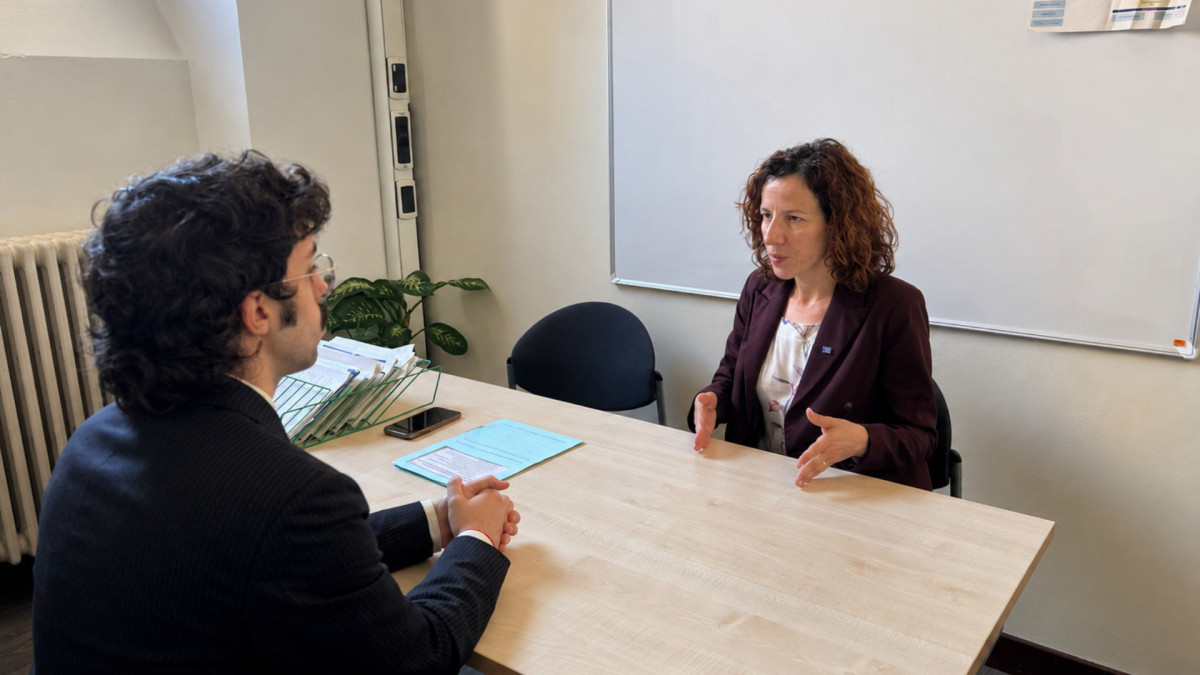
Mînzatu and de Diego discuss the EU Anti-Poverty Strategy. Photo: Agenda Pública. All images have been adjusted with AI to improve their lighting.
In Europe, we talk a lot about competitiveness, industry, defence and strategic autonomy. How does the social agenda fit into that conversation?
The European social model is an asset for our economic framework. In fact, it should be one of its unique selling points. After all, why pursue greater competitiveness and prosperity? To ensure people have opportunities, protection and a dignified life.
Europe has to catch up in industry, the economy and technological sovereignty. To achieve that, we must invest in technology and capital, create a more agile environment for industry, reduce the fragmentation of the single market, remove barriers and improve state-aid rules.
But within all this, we must ensure the ultimate goal is a European social model that benefits people, and all people, not just an elite or certain regions. For me, that is what a truly European economic model means: one that incorporates its social assets.
In that context, you have presented the European anti-poverty strategy. In concrete terms, what should change for a person in the European Union once this strategy is in place?
There are 93 million people at risk of poverty or social exclusion in Europe. And we do not know how that figure may evolve after the energy shocks and recent crises.
The anti-poverty strategy adopts a life-cycle approach and a multidimensional perspective. We ask what needs to be done for children in poverty, for young people at risk of exclusion, for those who work or are seeking work but remain in poverty, and also for those outside the labour market. That includes many women, older people and individuals in various vulnerable situations.
Income is important, but not the only factor. Someone may have a salary and still lack enough to cover living costs. They may lack access to adequate services, or their children may not receive the healthcare or education they require. We also confront energy poverty and transport poverty.
“What we propose is an integrated approach. We need to look at each person in a vulnerable situation, understand their different needs and offer support that combines several services”
There are three central elements in the strategy. The first is a potential legal tool to enhance the activation of people outside the labour market. We are not talking about unemployed people in the strict sense, but about those who are not looking for a job. About 50 million Europeans fall into this category. Some are studying, others consider themselves retired, but there are also many people, especially women or single parents, who cannot work because they do not have the right support.
Consider a woman who cannot take a job because there is no access to childcare or a safe environment for her children. Or perhaps she lacks the necessary skills, or she pays rent that exceeds her salary. She might receive some rent support, or in some countries have access to childcare facilities, but in a fragmented way.
What we propose is an integrated approach. We need to examine each vulnerable individual, understand their distinct needs and offer assistance that combines several services: income support, training to access employment, childcare or other resources. We are talking about personalised and integrated services.
The strategy does not lay out every detail, but it does mention a possible legal tool to improve activation of those outside the labour market. We will consult social partners on its content. For us, this is one of the strongest elements of the strategy, because we believe that access to quality jobs for everyone is the best path out of poverty and into a dignified life.
“We have to take collective responsibility in Europe for tens of millions of people who could be part of the labour market”
There will be debates with member states, and it also requires investment. But we cannot speak to people at risk of poverty solely in terms of benefits, or simply tell them to find a job. We must assume collective responsibility in Europe for tens of millions who could join the labour market.
Many of them are women. That is why they often encounter career gaps due to a lack of childcare, and later tend to have lower pensions. So this is also a matter of gender equality. In other cases, we are referring to people with disabilities who could work if they had tailored assistance or if employers adapted the workplace.
The tool could potentially take the form of a directive establishing minimum standards in member states for this type of service. The other two major components are addressing child poverty and housing exclusion, with different initiatives in each area.
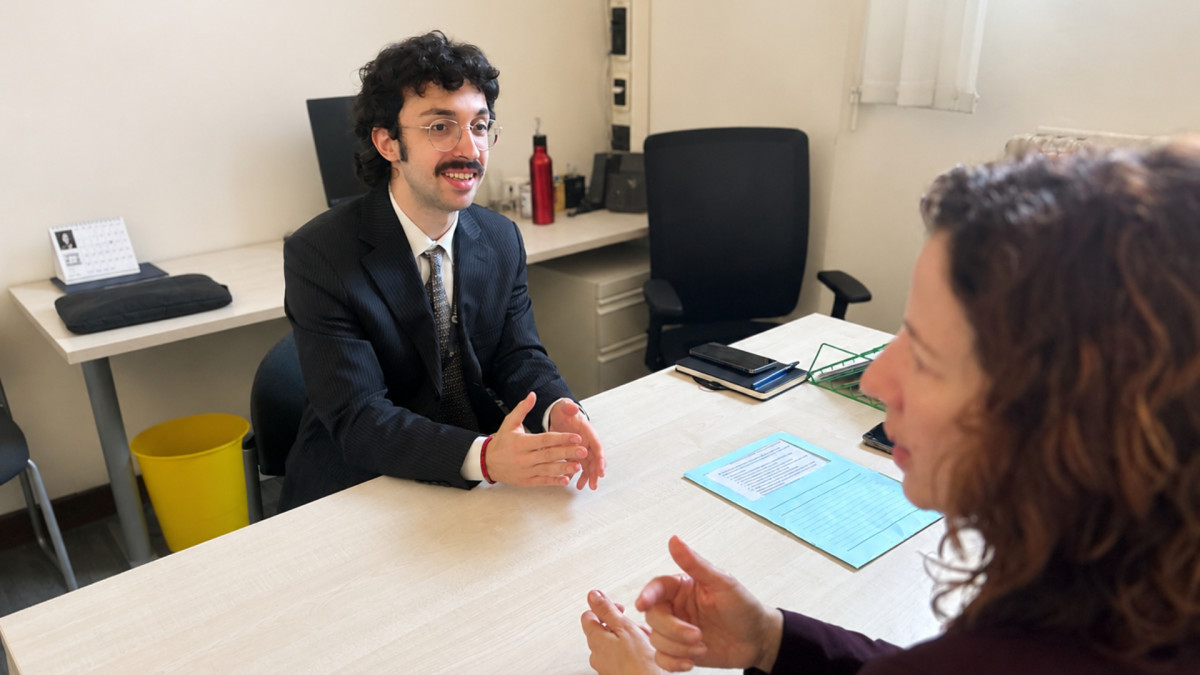
De Diego asks the European commissioner about the objectives of her new anti-poverty plan. Photo: Agenda Pública
Some people welcomed the plan, but expected more funding. Do you think these resources will be enough to reach the objectives?
There is already a commitment at both national and EU level to reduce the number of people at risk of poverty and social exclusion by 15 million by 2030. We also have a broader aim: to assist member states in eradicating poverty by 2050.
When we examine the 2030 targets, the reality is not favorable. Of the 15 million we set, we have managed to pull out of poverty around 3.7 million, nearly four million people. In the coming years, reaching 15 million will be extremely challenging.
Addressing poverty requires financial resources, and the European Union already invests, notably through the European Social Fund Plus. But money alone is not sufficient. The way you invest matters just as much as the amount.
If you hand out vouchers to cushion energy costs, but a single mother also needs a job, training and childcare support, that isolated approach will not lift her out of poverty. That is why we intend to pair European financial support with a new model of delivering services: integrated, personalised and more effective.
In the proposal for the next multiannual financial framework, member states will receive allocations via a national plan. At least 14% should be directed to social objectives, to investing in people. Is that enough? No. Yet each member state faces distinct challenges in skills, poverty or inclusion, and can allocate more resources in a flexible manner.
“Fighting poverty is a collective social responsibility. The business sector, philanthropic organisations and international financial institutions also need to join us”
The budget is currently the subject of intense negotiations between the European Parliament and the Council. We are facilitating those discussions and offering support. But the strategy also highlights a key point: fighting poverty is a collective social responsibility. The business sector, philanthropic organisations and international financial institutions must join us as well.
That is why we will launch a coalition against poverty. The idea is not to saddle the EU budget or national budgets with all expectations. The European budget can support member states in competitiveness, a social Europe, or technology-driven transformation, but eliminating poverty requires a whole-of-society commitment.
Member states have substantial competences in this area. How can the Commission help them steer their policies toward this objective?
Indeed, member states retain primary competence. The Commission offers several tools. The first is EU funding, cohesion policy and the European Social Fund. These instruments have often helped shape national policies.
For example, when the Child Guarantee was adopted, member states facing high child-poverty levels were urged to ensure every child could access basic services: housing, education, medical care, a daily meal and other supports. They were also offered funding from the European Social Fund Plus. That shifted national policies: governments became more active, more efficient, and invested their own resources. It did not solve the problem completely—child poverty remains prevalent—but it shows how the European Union can shape member states’ policies through funding and soft tools like recommendations.
The second tool is the European Semester. Traditionally known as a process to align member states’ fiscal and economic paths with the European Union, we have recently added a social dimension. Each year, every member state is also assessed from a social perspective.
Balancing budgets and avoiding excessive deficits matter, but not at the expense of our social fabric. Therefore we assess risks of social divergence: poverty, school-leaving rates, employment rates, gaps and unemployment. Then country-specific recommendations are issued.
“We also propose that each member state should have an anti-poverty strategy. If it already has one, it should update it; if not, it should design one”
Those recommendations carry real weight. The 2027 European Semester recommendations, should negotiations advance, will be used in discussions with each member state about their budget for 2028-2034. The way they craft their plans must reflect how they propose solutions and how they invest in addressing the challenges identified through the European Semester.
We also propose that each member state should have an anti-poverty strategy. If it already has one, it should update it; if not, it should design one. And we believe governance should be centralized in the hands of the government — with the president, the prime minister or the head of the Council — rather than left solely to the minister of labor or social affairs.
Poverty is not only an economic issue; it is a social one as well. It also means investing in vulnerable people so they can become economically autonomous and contribute to the economy. That, in turn, reduces future strain on the budget. And investing in children is among the best-returning investments there is.
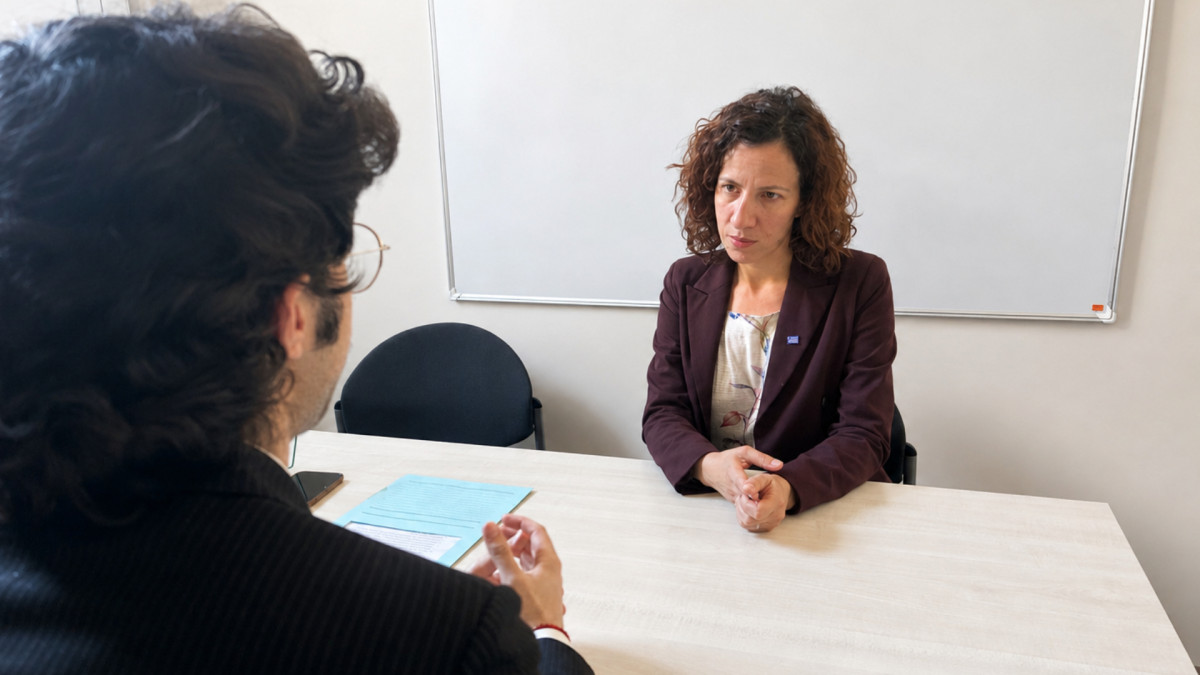
Mînzatu explains how housing and social policy are intertwined. Photo: Agenda Pública
Let’s talk about housing. It sits at the heart of the challenge in nearly every member state, and you’ve said that the anti-poverty strategy also tackles this issue. How does social policy connect with housing?
Housing is a highly intricate matter. In some states, including mine, the cost of mortgages and loans is a main obstacle. We operate within a property-based system, but young people or young couples struggle to buy homes in major cities, even when they earn good salaries.
Across Western Europe, rents in big cities are surging, causing exclusion especially among younger generations. That is why the Commission, led by Dan Jørgensen, the housing commissioner, introduced a European affordable housing plan with measures for different beneficiary groups. It is not solely about the most vulnerable.
Within the anti-poverty package, my focus is on those who are homeless or at risk of homelessness, at risk of eviction or facing eviction. In short, I look at the social dimension of housing and access to social housing, including for young people.
We have proposed a Council recommendation. It is a legal instrument, albeit a soft one. Yet it is the first of its kind to articulate in writing a political direction on how member states should align their efforts to combat housing exclusion.
“It is essential to identify as early as possible people affected by homelessness, at risk of homelessness, in emergency shelters or at risk of eviction”
The first element is data. It is crucial to identify as early as possible those affected by homelessness, at risk of homelessness, those in emergency shelters or facing eviction. Then we propose early-warning systems, debt counseling and mechanisms placed where they are most effective.
This can be integrated into social services, but it can extend beyond that. In universities, for instance, it may be possible to assess a student’s situation before it becomes too late, before they abandon studies or lose housing. We also need to support people at the outset or already in their working lives with effective debt counseling and financial education. This is the preventive side of the plan.
Then comes the housing first approach. If someone has no roof over their head, providing clothes or hot meals is not enough. First, they need shelter, and then the other services they may require. If they are already in a shelter, we should design a pathway to temporary housing and, eventually, a long-term solution. Housing should always be the first line of intervention, accompanied by the necessary services.
We also address high rents and evictions within the limits set by the Treaties. At the European level we cannot impose certain legal solutions because this is a matter of member-state competence. But we can urge member states, through incentives, to encourage owners toward long-term rentals rather than short-term arrangements.
We do not wish to distort the market, but we cannot ignore this debate. Many large cities are impacted by short-term rentals.
The recommendation also includes measures on evictions and relationships with banks to better protect tenants and achieve a more balanced approach. We also argue that public investment, whether through state aid or EU funds, should prioritize affordable and social housing projects. The sustainability of construction is important, but affordability should be part of the award criteria whenever public funds are involved.
“We need a protection mechanism that allows us to act as early as possible against different forms of housing exclusion”
For me, the key priority is prevention: early-warning capability, early detection and action before a situation worsens. It does not solve every problem, but it can be a decisive turning point. We need a protection mechanism that lets us respond as early as possible to different forms of housing exclusion.
Many thanks.
