
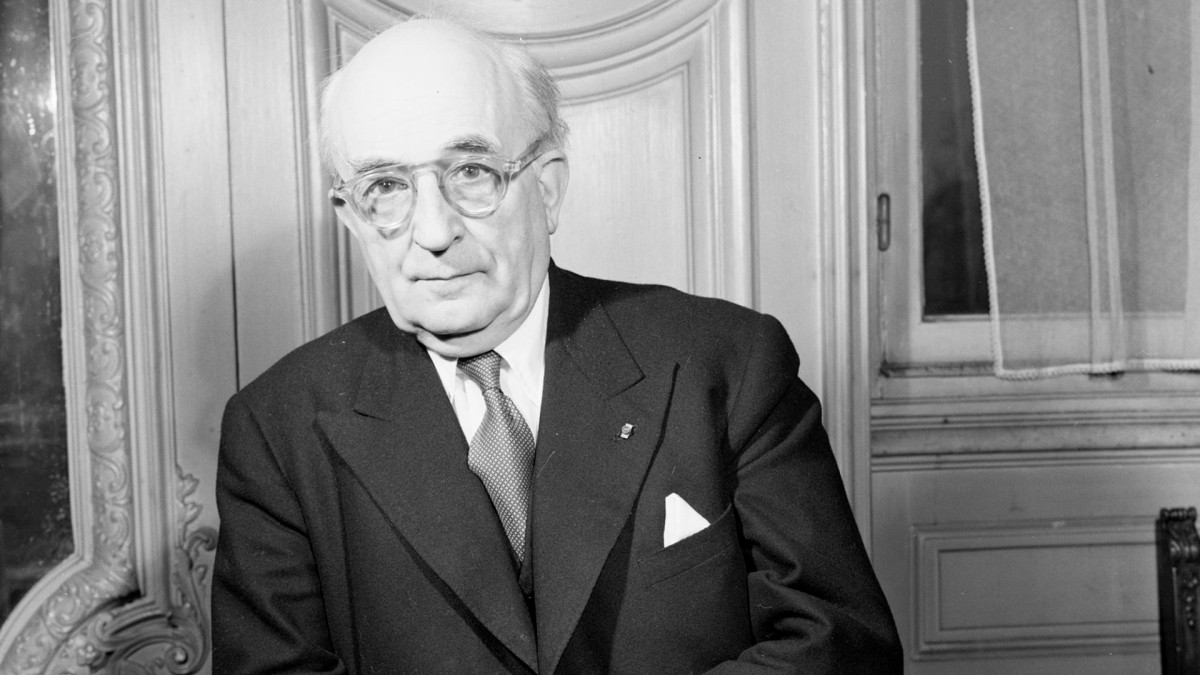
Salvador de Madariaga, one of the brightest Spanish intellectuals, diplomats and essayists of the 20th century, warned that “Europe is not merely a market, it is a will to destiny.” He was, above all, a pioneer of Europeanism who understood early on that a nation’s influence is not decreed, but built. His legacy remains alive today through the establishment of Club Madariaga in Brussels, a platform where Spaniards who work in and around European institutions drive informal activities to reflect on Spain’s role in the Union.
Madariaga, cofounder of the prestigious College of Europe, the main breeding ground for EU leaders and senior officials, naturally lends his name to this club. Propelled by profiles such as Mel Ravelo, Pol Afonso, Diego de Castro, Julia Fernández Arribas or Alex Boyo, the initiative is a sign of maturity: when Spain acts within the Union defending integration, strategic autonomy or multilateralism, it needs to follow the organizational and cross-cutting path that Madariaga laid down almost a century ago.
The deficit of the “Spain system”: economic weight versus real influence
The diagnosis among Spanish professionals in Brussels is unanimous. Despite being the fourth-largest economy in the eurozone and boasting top-tier figures in the EU leadership, Spain still lacks a strong capillary structure among its actors in the European capital.
Empirical evidence backs this feeling. While the corridors of power in the Commission or the Parliament are heavily influenced by consolidated national networks, the Spanish delegation has tended to operate in a more atomized fashion, fragmented by ideology and by sector.
“Spain still lacks a strong capillary network among its actors in the European capital”
To understand what Spain lacks, one only has to look at the mirror of our European partners, who have turned social capital among their nationals into a state instrument. For example, the système France dominates the art of the shared elite (pantouflage): alumni of institutions such as the former ENA (now INSP) or Sciences Po maintain a direct channel between major French companies (the CAC 40), europarliamentarians (regardless of political color) and the Élysée Palace to defend their “national champions”.
Similarly, the machinery of the German Stiftungen operates. Germany not only relies on its demographic and economic weight, but also adds the influence and capillary reach of its powerful political foundations (like Konrad Adenauer or Friedrich Ebert) and a very strong alliance with its industrial employers’ association (BDI) to permeate every legislative decision, functioning as a hermetic bloc where the federal government and the regions pull in the same technical direction.
The Italian paese system, perhaps the most replicable example for Spain, also points to other forms of influence. Despite its internal political instability, in Brussels the Italians close ranks: diplomats, European officials, journalists and businesspeople maintain dinners and constant debate forums where the message is clear: outside Rome, everyone is Italy.
“We have been working and promoting activities for more than four years with the aim of easing the landing in a city with its own codes and generating high-quality conversations with Spanish invited figures of reference“, say the founders.
A moment from the club’s latest meeting. Photo: Courtesy
The euro-native generation and the geopolitical moment
A few days ago, the Club Madariaga organized a weekend retreat with more than thirty participants with the aim of analyzing Spain’s situation within the European bubble, evaluating its institutions, companies or media and drawing foresight about the evolution of our country over the coming decades.
“Germany not only relies on its demographic and economic weight, but also adds the influence and reach of its powerful networks of political foundations”
To address this qualitative leap, they invited Nacho Corredor, partner and vice-president of beBartlet. The consultancy, in alliance with media such as El Periódico and Agenda Pública, promotes initiatives like “European Bridges”, informational tribunes to raise awareness among the Spanish public about European matters, or the “European Pulse Forum” in Barcelona, in alliance with POLITICO.
Corredor recalled that “we are the first generation of Spaniards born in the European Union.” This condition, he argues, “conditions our view”. Today “it’s no longer possible to understand local logic without embracing European logic and vice versa”.
The current moment could not be more opportune. After Brexit, the power realignment requires Spain to assume without hesitation its role in the new European engine. The deployment of NextGeneration funds and the debate on strategic and industrial autonomy have shown that whoever is not seated at the table where draft regulations are written ends up on the menu. “Spain’s evolution from all perspectives is conditioned by European evolution and leadership. To participate in the economy, politics or society without doing so from our European leadership is a waste of time“, says Corredor.
The audacity of taking it seriously
Facing a more discreet diplomacy or the peripheral inferiority complex of the past, the Club Madariaga proposes a different attitude. Its drivers start from a simple idea: the convenience of Spanish professionals in Brussels organizing themselves, reflecting and finding common ground.
“The evolution of Spain from all perspectives is conditioned by the evolution and leadership of Europe”
“We ask questions that perhaps aren’t raised elsewhere: does it make sense to coordinate to articulate Spain’s social capital in the European capital? We believe it is worth trying“, they say. With the consolidation of this network, the Club Madariaga aspires to be, above all, a meeting space for professionals: a support point, born from civil society, that helps foster reflection on Spain’s role in the Union.
