
The school’s role as a place of learning underscores that those running schools must refrain from siding with one faction in a debate about parental speech on a matter of widely public concern, particularly when parents frame the issue as a matter of safeguarding their children’s safety.
Several passages from the lengthy decision issued today in Fellers v. Kelley, crafted by First Circuit Judge Sandra Lynch and joined by Judges Jeffrey and Howard:
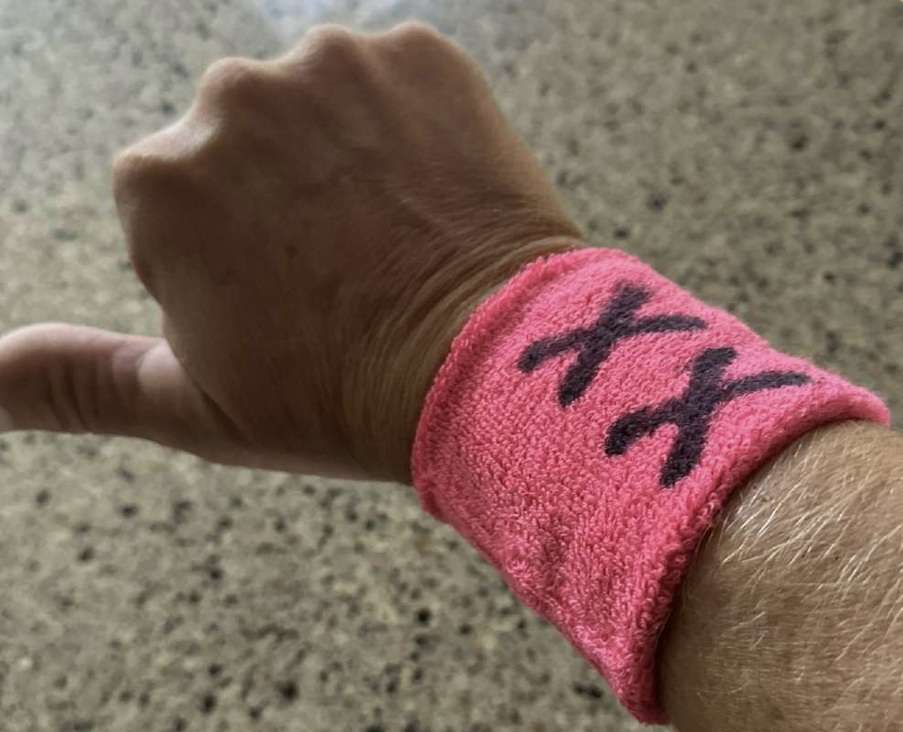
On September 17, 2024, the plaintiffs were directed by Bow High School administrators to remove pink “XX” wristbands they wore as a form of protest while watching their daughters (in one plaintiff’s case, granddaughter) compete in a girls’ soccer match against a team that included a transgender athlete. Further sanctions followed…. [W]e conclude that the appellants have shown a likelihood of success on their claim of viewpoint discrimination arising from the sanctions imposed for their passive speech in wearing these wristbands….
The district court assessed the playing field and nearby parking area, as the appellants requested, under the limited public forum framework applicable to viewpoint discrimination… The appellee school district argues that the case should be analyzed more in the manner of Tinker v. Des Moines Independent Community School District (1969) … [and other authorities recognizing the distinct interests present in public elementary and high school settings, and the discretion afforded to school administrators in running public schools]….
Neither of those two traditional modes of First Amendment analysis, urged by the opposing sides, fits perfectly with this high school speech dispute, and we note that the Supreme Court has not spoken directly to this precise question. We need not and do not determine which (if either) of these alternate frameworks should govern the analysis given the facts here. We conclude that, on these facts, choosing between these approaches would not change the outcome….
The school’s asserted interest in regulating certain forms of speech on the playing field is not demonstrated by the record. There is no evidence that the appellants’ protest caused a material disruption (a factor under Tinker). Disruption occurred only after the officials intervened, at which point the referee halted the game for roughly fifteen minutes and the administrators imposed speech restrictions and sanctions. The appellants did not stage pregame demonstrations; they did not march, shout, chant, or otherwise disrupt the game; they did not confront Tirrell or any other player. Instead, they waited until halftime to wear the “XX” wristbands as a quiet, passive protest. There is also no evidence of harassment, as no player is shown to have seen the wristbands.
The absence of harassment evidence also undermines the school district’s argument that Title IX imposes an affirmative duty to shield students from the speech in which the appellants engaged…. While the appellants chose to protest at the September 17 game because of Tirrell’s participation, the record does not show any harassment by the appellants before or during the game. Conversely, the appellants did not shout, chant, threaten, or display aggressive gestures toward Tirrell to express their views against her involvement. Nor is there evidence that Tirrell or any other player even noticed the wristbands or perceived the environment as hostile or abusive.
Principal Fisk acknowledged the broader challenges faced by transgender students. But Fisk did not explain how the display of the “XX” symbol constituted sufficiently severe or pervasive conduct to qualify as harassment under Title IX. And to the extent the district court concluded that merely wearing the silent “XX” wristbands on the sidelines of a school soccer field, without more, always amounts to harassing speech, we disagree.
The district’s argument that it may rely on “predictive judgments” to preemptively ban conduct it believes could eventually trigger a Title IX claim… We agree with the general proposition. But the facts here do not support that approach. We need not decide in this appeal whether, under different circumstances, passive speech—such as displaying the “XX” symbol on school property during school events—could reasonably be deemed harassing. Here, however, the silent display fell short of harassment or disruption, and we conclude that the district court erred in concluding that the school’s interest in preventing harassment justified the prohibition.
While the issue is closer, we conclude that the school district was likely not justified in sanctioning the appellants for their passive speech based on concerns stemming from earlier exchanges with the appellants and other parents. None of the described discussions, including possible alternate protest methods reported to Bow High School officials by other parents, led to any attempt to “heckle and intimidate” Tirrell. This was evident before and throughout the game.
It is true that Fellers initially sought to persuade his daughter to obtain the Bow High School players’ agreement to wear the wristbands, but his daughter told him that “she could not get full support from the team and was afraid that it would divide them.” Fellers’s Facebook post the night before the game urged spectators “to protect the integrity and safety of female athletics” and “come out to support our XX Lady Falcons and show your solidarity with our girls’ team.” Yet the record shows only that the appellants and others with similar views engaged in a passive protest and only began the protest at halftime. While the district may make predictive judgments about potential disruption and “need not be certain of its forecast,” it cannot use those projections to suppress a passive, silent protest that did not impair any legitimate school administration interests recognized by the Supreme Court.
This brings us to the school officials’ other stated bases for sanctioning the appellants. Superintendent Kelley stated that the “XX” symbol carried an “exclusionary” message about gender. Principal Fisk, who ordered the wristbands be removed, described the symbol as both “hateful” and “anti-trans.” Regarding these rationales, the record evidence shows a likelihood that the school district punished the appellants for wearing the wristbands largely because they disagreed with the protest message conveyed….
Although the leading Supreme Court case on viewpoint discrimination in academic limited public fora involved colleges rather than high schools, and dealt with a limited public forum, Rosenberger’s language on viewpoint discrimination remains pertinent. “The government must refrain from regulating speech when the speaker’s specific motivating ideology or viewpoint is the reason for the restriction.”
The school’s traits as a learning environment reinforce that administrators cannot tilt the balance in a debate over parental speech on a matter of public prominence, one that those parents view as tied to their children’s safety. As the Supreme Court stated in a high school football game context, “learning how to tolerate diverse expressive activities has always been ‘part of learning how to live in a pluralistic society.’”
Judge Julie Rikelman concurred in the judgment, suggesting that Tinker might not categorically prohibit restrictions on speech based on viewpoint, but that, in this instance, the school district had embraced the requirement of viewpoint neutrality:
The district accepted that the limited public forum framework applied here and repeatedly conceded, both in its brief and at oral argument, that it could restrict speech at the September 17 soccer match only for viewpoint-neutral reasons…. Although it urged us to apply Tinker principles, it did so only to argue that its actions were reasonable and thus satisfied the [reasonableness] prong of the limited public forum test….
With the district’s concession in mind, I agree that the record lacks evidence of actionable harassment or material disruption from the plaintiffs’ speech at the September 17 soccer match. The record also demonstrates that school officials likely restricted the XX symbol because they perceived it as “exclusionary” and demeaning to transgender students. That constitutes viewpoint discrimination under applicable precedent.
Del Kolde, Brett Nolan, and Nathan Ristuccia (Institute for Free Speech) and Richard Lehmann (Lehmann Major List, PLLC) represented the plaintiffs. were on brief, for appellants.
