
Criminalizing a hobby is morally indefensible and at odds with the way we treat wine and beer.
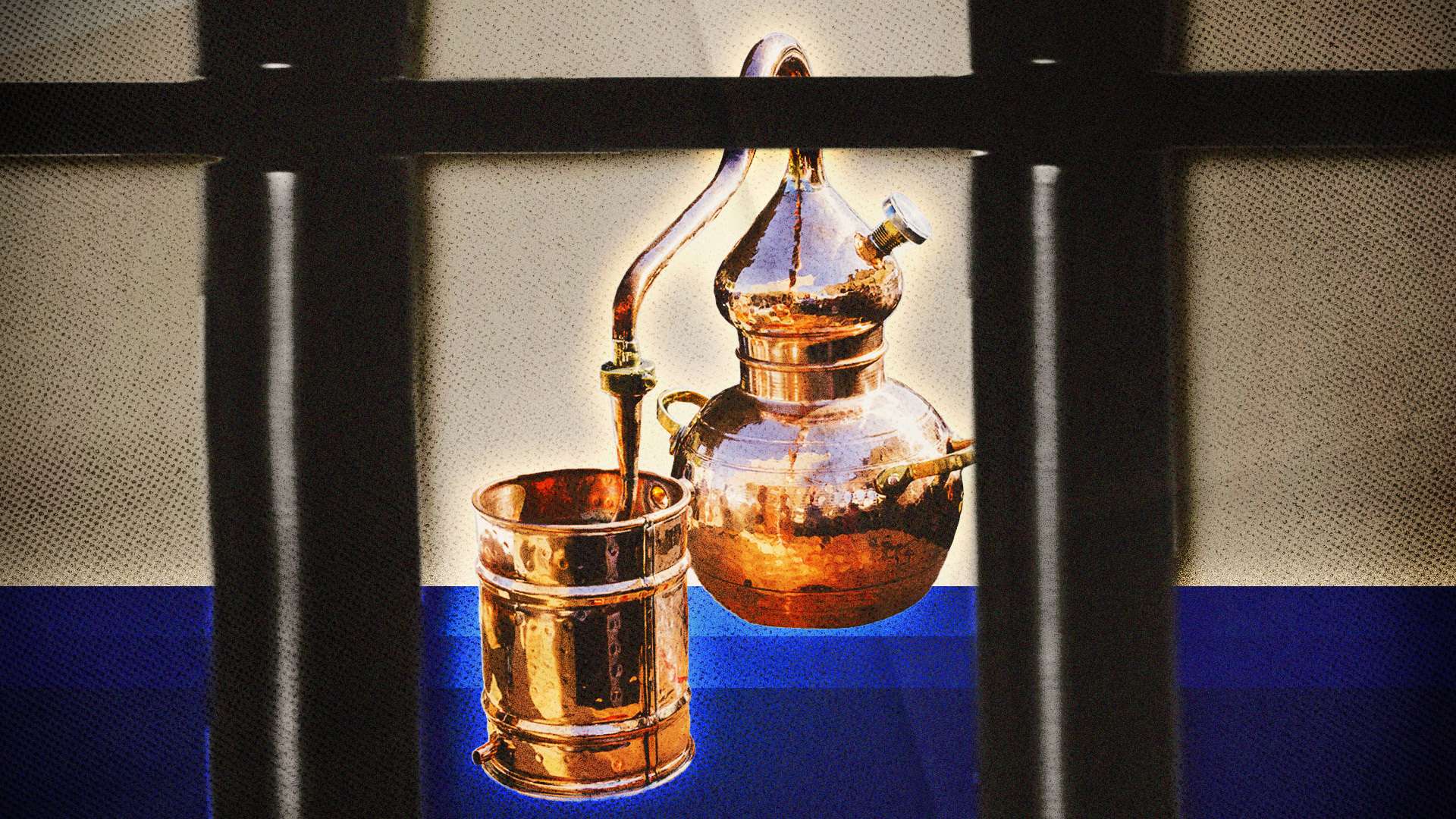
Many years ago I purchased a device intended to separate and concentrate the most volatile elements of a liquid mixture. I could explain how I used it, but I don’t want to implicate myself in a federal felony.
Since 1868 it has been illegal for Americans to establish a “distilled spirits plant” inside “any dwelling place,” a prohibition currently punishable by as much as $10,000 in fines and up to five years of imprisonment. The federal ban on home distilling sits at the center of a case the Supreme Court has agreed to hear, a dispute that raises a concrete constitutional question and also underscores how absurd it is to treat this pastime as a crime.
That policy, the 5th U.S. Circuit Court of Appeals concluded last April, cannot be justified as a matter of the federal government’s tax power. Rather, Judge Edith Jones wrote in the court’s opinion, the ban functions as “an anti-revenue provision that prevents distilled spirits from coming into existence,” effectively having the opposite effect of raising revenue.
Nor does the provision align with “the Supreme Court’s explanation of how the federal power of taxation works,” Jones noted. When Congress imposes a tax, the Court explained in 2012, it allows an individual to choose to undertake a certain act or not, as long as that person is willing to pay the tax tied to that choice. But in this instance, would-be home distillers “only have the option not to do as they wish or face fines and imprisonment.”
The government argued that the ban helps collect liquor taxes by banning a form of production that is difficult to detect. But “Congress cannot prohibit intrastate activity solely because it might produce products hard to tax,” Jones said. If that were the rule, she warned, there would be “no limit whatsoever” to the reach of its tax power.
Under the government’s reasoning, Jones observed, “Congress might criminalize nearly any at-home conduct simply because it could mask taxable activity. Home-based businesses could be barred. Remote work might be deemed a crime.”
The Trump administration, which is urging the Supreme Court to overturn the 5th Circuit’s decision, contends that threatening home distillers with imprisonment serves as a “necessary and proper” guard against tax evasion. But regardless of one’s view on the constitutional question, this policy is morally indefensible, inconsistently enforced, and out of step with how the federal government treats wine and beer.
The lead plaintiff in the case is Scott McNutt, a member of the Hobby Distillers Association. In 2014, McNutt received a “Notice of Potential Civil and Criminal Liability” from the Treasury Department, informing him that investigators believed he “may have purchased a still capable of producing alcohol and/or equipment and materials that may be used in the manufacture of a still.”
The notice warned that “federal law provides no exemptions for the production of distilled spirits for personal or family use,” and added that “unlawful production of distilled spirits is a criminal offense,” allegedly punishable by “a fine of up to $500,000” and “imprisonment for not more than 5 years.”
Meanwhile, online retailers such as Amazon list a wide array of home stills, many of which are explicitly marketed as devices designed to produce alcoholic beverages like vodka, gin, brandy, and whiskey. Consumers could be forgiven for assuming that practice is legal, especially since federal law has long permitted home wine and beer production “for personal or family use.”
McNutt’s lawyers say he “owns a still that he has used to lawfully distill fuel ethanol and wishes to ‘tinker around’ with beverage spirits.” Another plaintiff, Thomas Cowdrey, “also seeks to experiment in creating new beverage spirits, including ‘apple pie vodka,’ for which he has developed a recipe.”
Because of a statute passed 158 years ago, McNutt and Cowdrey would be felons if they acted on those impulses. It may indeed be time to reevaluate that policy.
© Copyright 2026 by Creators Syndicate Inc.
