
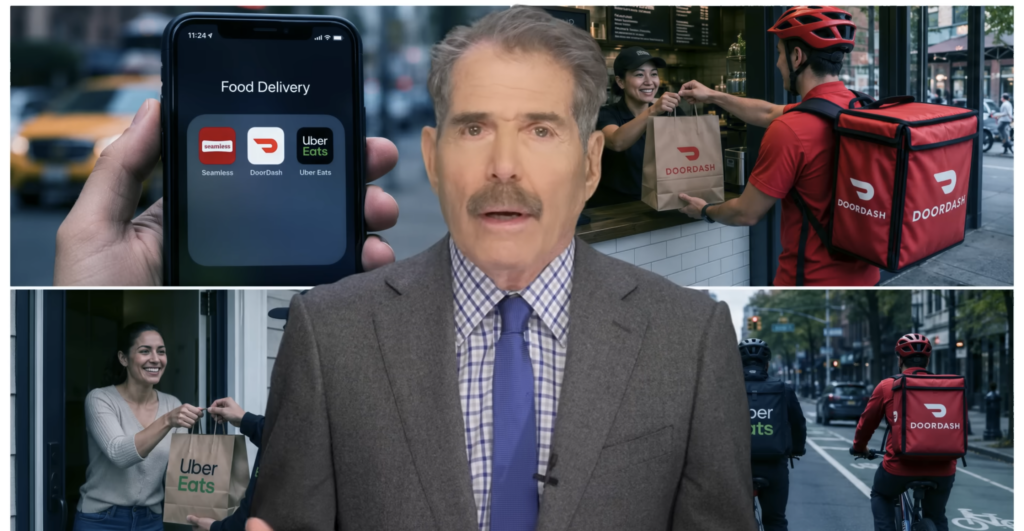
“We caused this problem, and it falls on us to rectify it,” admitted former Seattle City Council President Sara Nelson.
Not long ago, new types of jobs emerged: gig work powered by apps.
These include roles like walking dogs via Rover, completing tasks on TaskRabbit, delivering food with DoorDash, and driving for Uber and Lyft.
Many people enjoy gig work because it offers flexibility. You can decide when to work.
But “workers’ rights” activists and governing socialists dislike the arrangement. Gig workers seldom join unions and frequently lack a minimum wage.
“Uber and Lyft exploit their workers” is a headline at MS NOW. “We can’t ignore it.”
The Democratic Socialists claimed they had a remedy. Seattle’s city council enacted a $26 delivery driver minimum wage.
What could go wrong?
Two years later, we know the answer: Gig workers don’t earn more, but prices rise.
Apps like DoorDash and Uber Eats added a $5 fee for consumers “to help cover the costs of these…regulations.”
Now Seattle residents complain about prices. “I ordered a $12 sandwich…$12 grew to $32!” laments one in my new video. “I just deleted the app.”
“[Work] has become slow because of the new law,” complains an app driver. DoorDash says it got 1.7 million fewer Seattle orders in 2024.
This is what happens when politicians dictate wages.
“Obviously, when you’re increasing cost to businesses, you’re going to increase costs to customers,” says economics professor Judge Glock. “These are unimaginably complicated markets where the company’s main job is interfacing between restaurants and delivery workers and customers. Then you have an economically illiterate city council or mayor who thinks, basically by looking at an industry through reading the news, they can appropriately regulate the exact wage.”
Former Seattle City Council President Sara Nelson admits that the politicians made a mistake: “We created a problem and it’s our responsibility to fix it.”
They repealed the harmful law?
No.
Nelson said they just needed to adjust their numbers: “If we had gotten the minimum pay standard right, we would not see the decline in the revenue.”
Such conceit! Somehow, the political class knows exactly what every worker should be paid.
Price controls never work.
Flexible pricing does.
Competition forces businesses to constantly adjust pay and prices to attract workers and customers.
When smug politicians think they can set a price that’s “right,” “it’s just patently absurd,” says Glock. “You’re not going to have any improved well-being for people, and you’re not going to have increased wages for those workers.”
A similar minimum wage increase failed in New York City, after politicians guaranteed app-based drivers an hourly minimum of about $20.
“The decrease in tips and increased competition for jobs offset all of the gains from that imposed minimum wage,” says Glock. “It’s this continual whack-a-mole tendency. The market responds, [so politicians] pass a new regulation to try to prevent that response. They think the next regulation will somehow squelch the greed out of the system, but there’s simply no way to do that.”
Competition is the only good way to decide what people get paid.
“A lot of politicians believe there’s a free lunch or a fixed pot of money that they can give out to the neediest people.” says Glock. “The actual effect was not to improve the well-being of workers, but to increase costs for customers and sabotage one of the most successful businesses in the city.”
COPYRIGHT 2026 BY JFS PRODUCTIONS INC.
