
War-making under the notion of a single decision-maker is not what the Founders envisioned.
This week, the Senate briefly asserted its constitutional prerogative over matters of war and peace. In a 50–48 vote, with four Republicans breaking ranks to join the majority, lawmakers approved a measure urging President Donald Trump to withdraw U.S. Armed Forces from active hostilities with Iran.
Politico termed it a “surprising blow to Trump.” The New York Times described it as “the most consequential bipartisan rebuke of the conflict to date.”
But the moment proved fleeting. The following day, after Trump—”mad as a murder hornet”—berated the Republican defectors at lunch, he obtained another chance. Late Wednesday night, Senate Republicans pressed a vote on a companion War Powers Resolution introduced by Sen. Tim Kaine (D–Va.). With Sen. Bill Cassidy (R–La.) switching sides and Sen. Rand Paul (R–Ky.) voting “present,” the measure failed 47–50–1.
The episode underscored Trump’s enduring dominance over the GOP caucus. More importantly, it highlighted how little practical power Congress retains over the most fundamental decision the Constitution entrusts to it.
It’s been nearly four months since Trump launched Operation Epic Fury, demanding “UNCONDITIONAL SURRENDER” from Iran while denying that the United States was at war. Along the way, Trump has admitted he was “shocked Iran fired missiles at other Gulf states—”nobody expected that,” he said—and appeared surprised by how easily the Strait of Hormuz could be shut, though that scenario has long been a staple of Pentagon war games.
Now the administration is striving to sustain a face-saving settlement that leaves things worse than they were before the first Tomahawk flew. Whatever the multidimensional chess theory was meant to convey, the record reads more like improvised moves followed by damage control.
Despite the fragile “deal” the administration is trying to salvage, there is every chance Trump will lose patience and the United States will drift back into open conflict. Or perhaps the president will opt to stage his next foreign venture closer to home. Ultimately, it remains his call.
In May, Trump’s CIA director traveled to Havana to warn Cuban intelligence officials that they should “take a lesson from January’s regime-change strike in Venezuela. And in an interview last week, the president mused that Iran is “a very long trip,” while “Cuba is a hopscotch.” Moreover, he noted, Cuba has “nice property” with a “nice shoreline.”
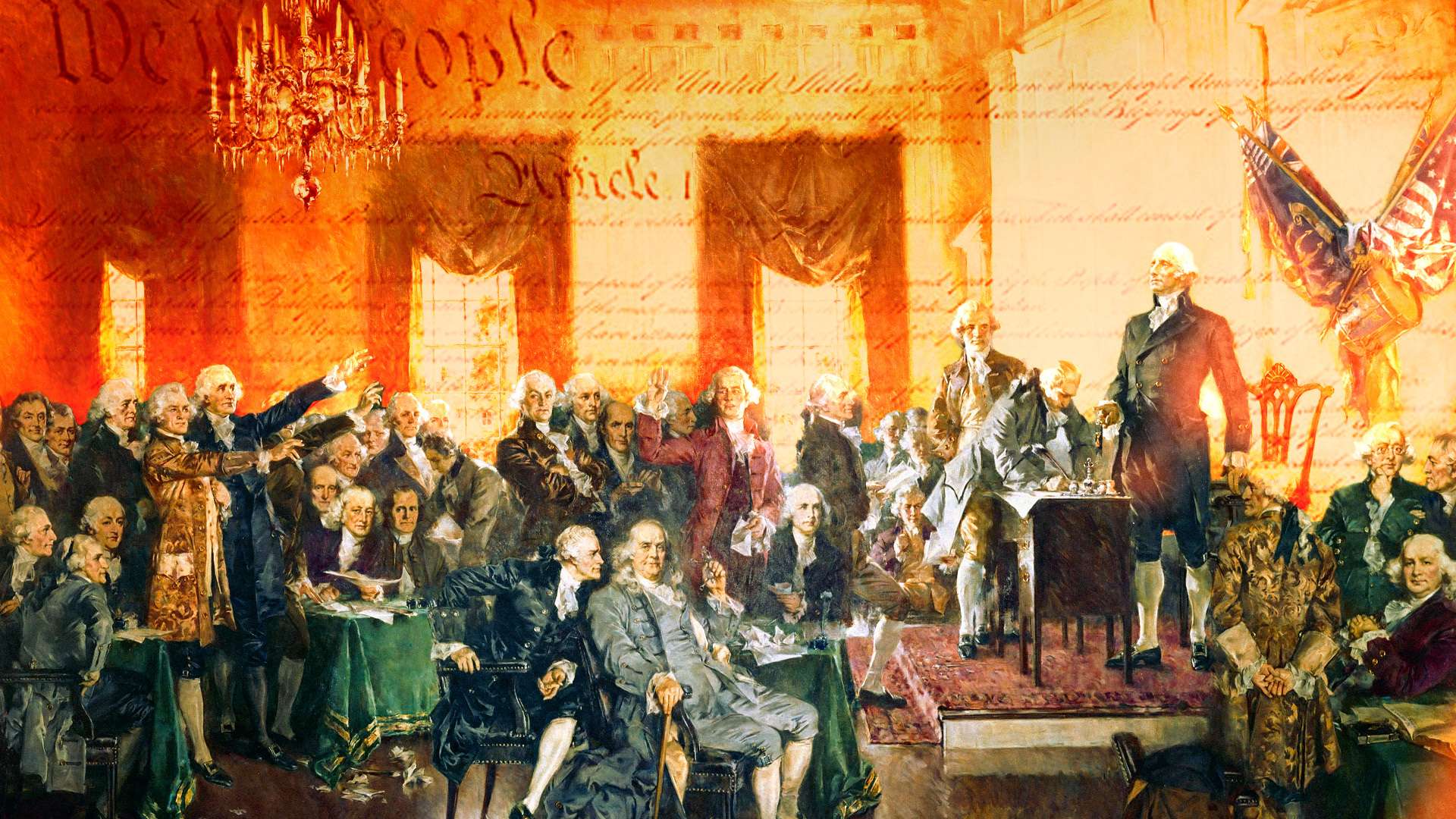
For the Framers, the aim of housing war powers in Congress was to shield the polity from being steered by the prudence or restraint of a single individual. This was not part of the original plan. “This system will not hurry us into war,” James Wilson assured delegates at Pennsylvania’s ratifying convention in 1787. “It will not be in the power of a single man … to involve us in such distress.”
After decades of drifting away from the original design, Congress attempted to reclaim ground in 1973. In the wake of Vietnam, despite President Richard Nixon’s veto, it enacted the War Powers Resolution. The stated purpose of the law was to “fulfill the intent of the framers of the Constitution of the United States and ensure that the collective judgment of both the Congress and the President applies to the introduction of United States Armed Forces into hostilities.”
It was a noble effort, but it proved ineffective. That has been evident nearly from the law’s five-decade history, yet the War Powers Resolution’s failure has never been more evident than it is today.
One of the law’s central provisions sought to terminate unauthorized wars automatically, even if Congress could not bring itself to vote. Section 5(b) of the statute requires the president to “terminate” military operations after 60 days absent congressional authorization or an attack on the United States that prevents Congress from meeting. Over the years, several presidents treated that limit as a 60-day “free pass” for military ventures, though most tried to conclude things before reaching the deadline. President Bill Clinton crossed the line during the 1999 Kosovo intervention. President Barack Obama exceeded it during the 2011 Libya campaign, arguing that, technically, it was not “hostilities” if U.S. forces were striking adversaries who could not retaliate. On May 1 of this year, Trump similarly dismissed that deadline without consequence.
Another key provision assumed that a congressional majority would suffice to halt unauthorized war-making. Under Section 5(c), Congress could reassert its constitutional authority at any time: U.S. forces “shall be removed by the President if the Congress so directs by concurrent resolution.”
Then, a decade after the War Powers Resolution passed, the Supreme Court struck down the “legislative veto,” effectively nullifying that check. A mere congressional majority is no longer enough; reversing presidential action now requires presenting a law to the president for signature or veto.
The war-powers measure that cleared the Senate on Tuesday was a concurrent resolution under Section 5(c). But, as the Senate’s own website notes, “do not have the force of law.” So Trump had a point when he called the vote “meaningless” in a Truth Social post on Tuesday; it carried roughly the same legal weight as Congress proclaiming “National Nurses’ Week.”
Even if Congress managed to pass a rebuke in a form that could endure, Trump would veto it, just as he vetoed war-powers measures regarding Iran and Yemen during his first term.
That is the situation now: a legal framework for waging war that inverts the original architecture. This system sends the country to war on a whim of one man, while simultaneously blocking the very constitutional safeguards designed to prevent reckless actions.
Yet there is a path forward: reformers have learned a great deal from the War Powers Resolution’s long record of shortcomings, and there is no shortage of serious legislative proposals to give the statute teeth. In theory, at least, the goal of ending unauthorized wars automatically, without a vote, could be achieved by tying funding to authorization.
In practice, though, no reform will pass without at least one difficult vote at the outset. The Senate’s failure to stay the course this week illustrates how much work remains for Congress to do.
