
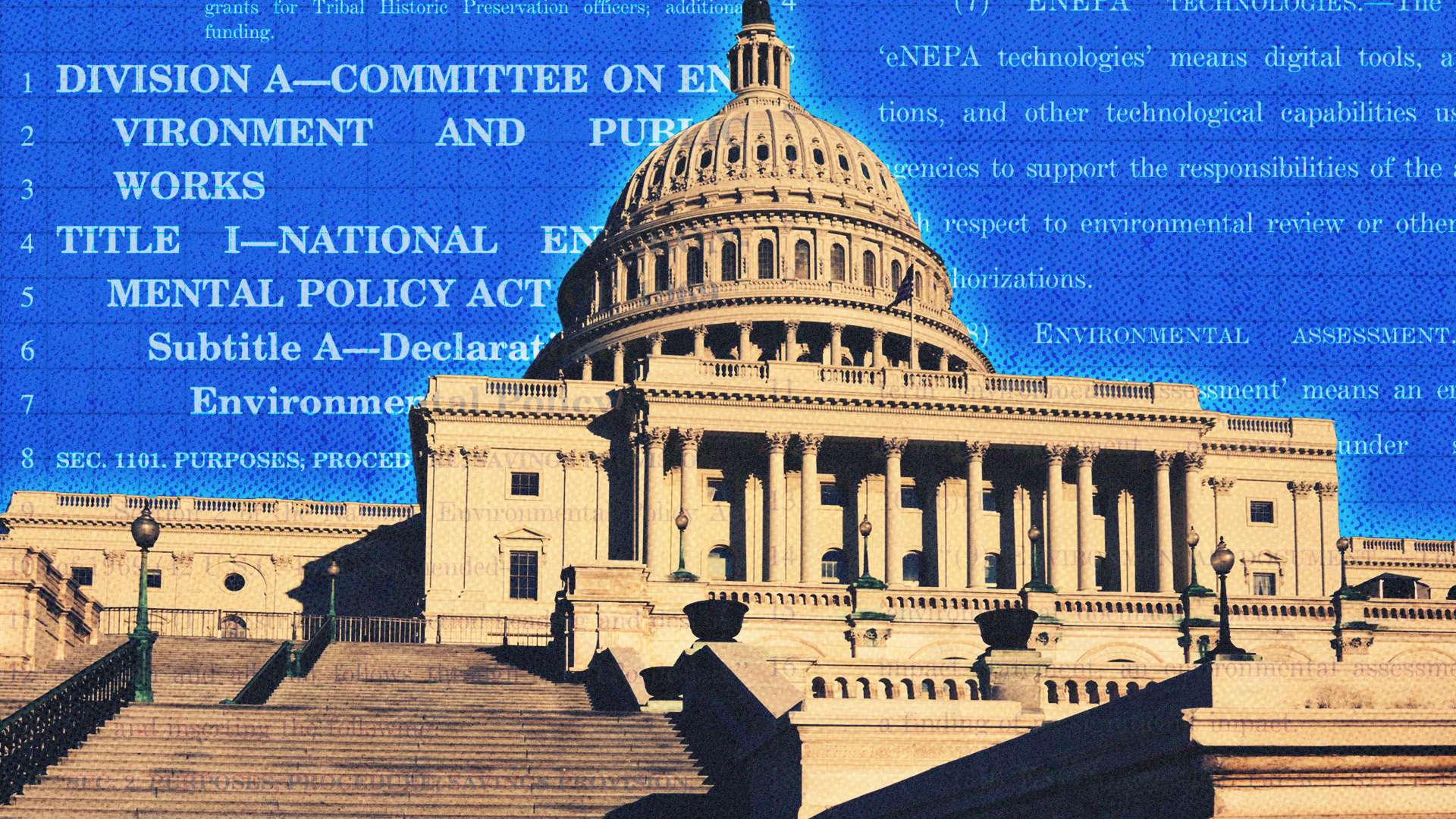
The proposed measure aims to curb environmental-review procedures and protect projects from political interference, while simultaneously enlarging federal oversight of the power grid.
On Monday evening, the Senate moved the Bipartisan American Affordability and Jobs Act (BAAJA) a step closer to passage with a 73–25 procedural vote, paving the way for it to be debated on the Senate floor.
Sponsored by Sen. Shelley Moore Capito (R–W.Va.), who chairs the Senate Environment and Public Works Committee, the 494-page measure would overhaul how federal permitting is handled by narrowing the scope of environmental reviews and accelerating the approval timeline for projects.
For decades, the federal permitting process has been cited as a bottleneck limiting growth in the United States’ energy, housing, and transportation sectors. A White House Council on Environmental Quality report from 2025 notes that the typical duration to complete an environmental impact statement—the NEPA process’s most stringent review—exceeds two years. According to the same report, this has been a persistent hurdle to development.
The bill seeks to tackle this challenge by widening the use of categorical exclusions—projects that do not require NEPA review—including certain transmission projects and repairs, upgrades, and expansions of interstate natural-gas pipelines. Under BAAJA, alterations to energy infrastructure along existing routes and projects already assessed by another agency would also be exempt from NEPA review. Additionally, a state or tribal environmental assessment could satisfy NEPA compliance.
BAAJA would eliminate permit requirements for onshore oil and gas drilling on nonfederal lands and would speed up approvals for renewable energy, geothermal, hydropower, and offshore energy ventures. For energy and critical minerals ventures, the bill sets a deadline for issuing permits that do not require environmental reviews—one year from the date the last complete application is submitted—and establishes a route to seek judicial relief if an agency fails to meet that deadline. The measure also creates time limits for federal agencies to issue permits once an environmental review is finished and tightens the review processes under the Clean Water Act, the National Historic Preservation Act, and the Endangered Species Act, which are frequently used to block projects.
A crucial aspect of BAAJA is its handling of NEPA-related litigation. The bill narrows who may bring NEPA lawsuits and reduces the statute of limitations to 150 days. Although the aim is to curtail federal involvement in large infrastructure projects, the proposal would grant regulators enhanced authority in the energy sector.
Reflecting public frustration with data centers, the bill directs the Federal Energy Regulatory Commission (FERC) to ensure that data centers or cryptocurrency-mining facilities “bear the full cost of the transmission service they require.” It would require utilities to provide financial assurances or contributions sufficient to cover the cost of any facility or upgrade before such improvements are made if they serve data centers. A manager’s amendment added last week would broaden FERC’s remit by allowing the agency to issue permits for project sites on state-owned land and to extend its oversight of regional grid operators.
The volume and scope of the bill have prompted a wide range of commentary: many groups across the political spectrum have reasons to cheer, and BAAJA has drawn backing from industry trade associations as well as environmental advocacy coalitions. Yet several controversial provisions could hinder its passage.
The transmission-related provisions, which grant the federal government a larger hand in upgrading and expanding the nation’s electric grid (a responsibility regulators have struggled to manage), could push some conservatives away and sink broader permitting reform, as happened previously. In addition, a coalition of tribal nations opposes the bill, arguing that it encroaches on their sovereignty over tribal lands and undermines their ability to safeguard their history and culture. Even prominent groups like the Sierra Club and the Natural Resources Defense Council—opposed on environmental grounds—acknowledge that the bill would likely accelerate the construction of more clean-energy projects nationwide.
President Donald Trump remains unpredictable. He called the measure a “BIG WIN for U.S. ENERGY INDEPENDENCE and DOMINANCE” on Sunday, though he has not endorsed every provision. One element he highlighted involves prohibiting federal agencies from revoking or rescinding projects that have already received full permits—a tactic the administration has used to delay offshore wind efforts. On Monday, Trump told reporters that the bill “hasn’t been fully negotiated,” and he would not “approve wind turbines” as part of a deal to advance the legislation, arguing that wind turbines are “a major loser.”
The procedural vote marks only the initial phase of a lengthy process to enact the measure before a new Democratic-controlled Congress convenes in January. Republican support was broad, with all members voting in favor except for Sen. Mike Rounds (R–S.D.). Democratic sentiment was less uniform, with 23 senators voting against, including Sens. Jeff Merkley (D–Ore.), Ed Markey (D–Mass.), and Bernie Sanders (I–Vt). Minority Leader Chuck Schumer (D–N.Y.), who voted in favor, said he maintained “outstanding concerns” that he would seek to address during the amendment process, Axios reported on Tuesday.
A passage of BAAJA during the lame-duck session would represent a major win for developers, energy producers, and businesses long hampered by regulatory inertia. Yet it could also set a precedent for broader federal management of the U.S. economy by the next Congress. After the vote, Sen. Sheldon Whitehouse (D–R.I.), a co-sponsor, asserted that the bill as filed is only the “floor, not the ceiling” for Democrats’ climate-and-environment goals.
