
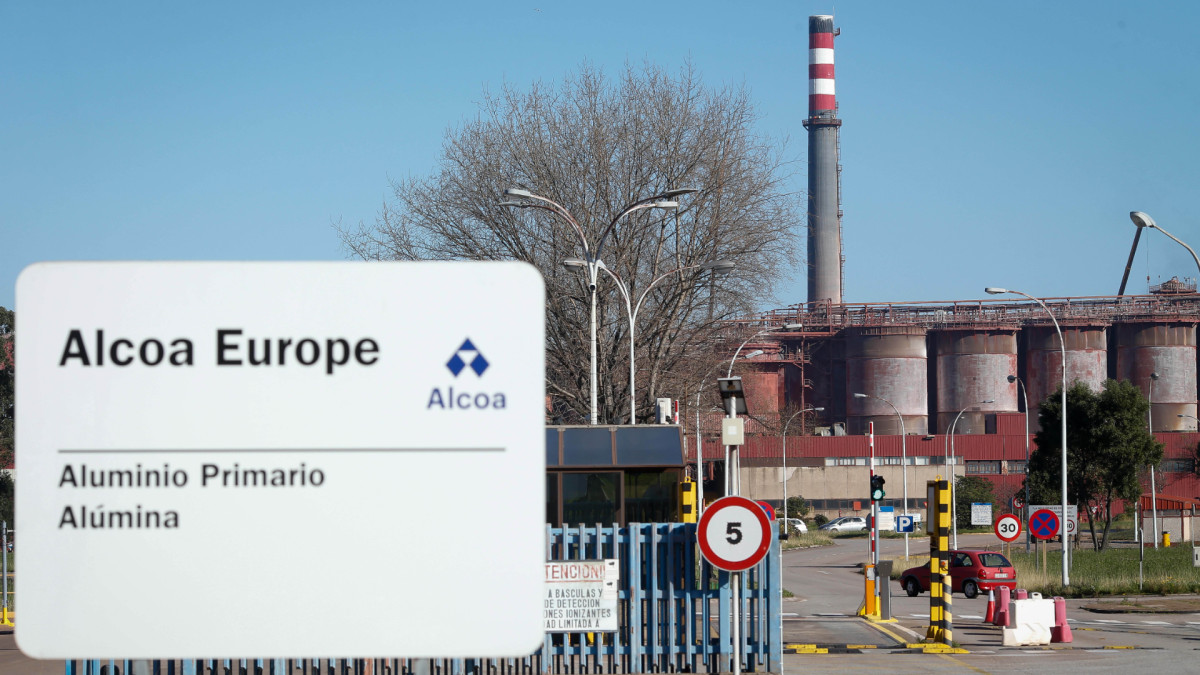
“Of the 93 chemical elements that make up the Earth, 92 belong to humanity. The remaining one, aluminum, is in the hands of a single man: Andrew W. Mellon.” Thus spoke the Milwaukee Journal in 1937, referring to the monopolistic control that the Alcoa company exercised over this product. The magnate Mellon’s company controlled both bauxite supplies and the main hydroelectric plants indispensable for the electrolysis that yields aluminum as the final product. Moreover, through the industrial and financial holding owned by Mellon, it limited financing for potential rivals trying to enter the market. It also wielded effective political power that, for example, convinced Congress to impose a tariff rendering imports of aluminum from abroad unviable. Just as Rockefeller did with oil, Mellon built and maintained a monopoly for several decades in the United States. However, unlike Standard Oil, Alcoa did not suffer from the antitrust developments of the Progressive Era in the early twentieth century and the threat of being broken up never materialized.
Complaints that the high price of aluminum could generate were answered by the fact that its production required a technology apparently very advanced and complex, accessible only to Alcoa. It wasn’t true, but since the company’s own strategy limited its output capacity, aluminum was relatively scarce and thus expensive.
This situation became a national security issue when, from about 1937 onwards, President Roosevelt accepted that the country must prepare for imminent war and understood that it was essential to develop a much larger air force than the one the US then possessed. In that frame, it was indispensable to have a supply of large quantities of aluminum and to do so at an affordable price.
Alcoa’s monopoly became a problem for national security, because the company was not willing to stop restricting its production capacity. The response was a set of policy choices that fall within what we would now call industrial policy: from the Administration funds supported the emergence of new aluminum producers that broke Alcoa’s monopoly and introduced competition into the market. In this way, production rose and prices fell both for defense production and other uses. Competition in the sector persisted in the postwar decades, with notable innovation processes from all companies, new entrants, and an expansion in aluminum use into fields such as architecture.
“Alcoa’s monopoly became a problem affecting national security, since the company was unwilling to stop limiting its production capacity”
This almost century-old tale is relevant because Spain, and indeed Europe as a whole, seems to find itself in a situation from which it could learn the Roosevelt Administration’s experience. Although there appears to be broad consensus on the need to increase defense spending, and that a substantial portion of that spending should go toward new and better equipment, it is far from clear that we can afford the high costs of such investments.
However, from most European governments there is another objective added to defense policies, namely developing domestic industrial capacities. It is common to use expressions such as “backbone” or “tractor effect” to convey this idea. Although there are differences in each case, the common pattern is to select a single national supplier and, in close cooperation with other companies in the same sector, create what has long been known as a national champion.
Adopting an economic perspective to assess cost and product quality, these kinds of decisions amount to the buyer (the public sector) promoting the market to take the form of a monopoly. Therefore, just as in the case of Alcoa and aluminum, the result is expected to be nothing other than paying high prices for a very limited supply, and presumably of low quality.
“These kinds of decisions mean that the buyer is fostering the market to take the form of a monopoly”
One could argue that fostering domestic industry yields some positive effects, but to do so one would have to evaluate what economies of scale exist in production for each case and what technological capabilities the companies possess. In addition, one must consider that the fact that the selected firm expects no competition could lead to perverse incentives in the form of lax effort and, as a consequence, poor-quality products, overruns, and/or delivery delays.
Against this, there is an alternative policy. It consists of the public sector limiting its role to specifying, as precisely as possible, which objectives it wants to achieve through the procurement of defense products and equipment. From there, it would be competition among different providers that presents alternatives. These will differ in price and quality, but it will be the public sector that evaluates and decides, possibly by negotiation, what to buy and from whom.
“Sourcing from companies in different countries seems to be the best and cheapest way to achieve it”
If this process leads to dependencies of any kind (proprietary technology, essential supplies, technical incompatibilities, etc.), these can be evaluated in the procurement process and lead to the exclusion of some bids. But to do that is very different from preliminarily limiting the offer to a single supplier, designating it as the guaranteed winner of all the contracts to be tendered. Even more so when another of the declared objectives of defense policies is to foster joint capacities and European-scale integration. Sourcing from companies in different countries seems to be the best and cheapest way to achieve it.
