
In Spain we tend to discuss the economy in binary terms. Either it’s going well or it’s not. Either we are in the miracle or in the disaster. And, almost always, the conversation ends up drifting toward the question of who is responsible for the outcome.
However, there is a different way to look at the economy that is less noisy and more useful: focusing on structural factors. Moving away from weekly price movements and quarterly data to concentrate on the elements that determine how the economic system works and what room there is to adapt or improve.
If we compare Spain in the early 2000s with 2024, the structural landscape is different. Not perfect nor free of tensions, but different.
From public data, five relevant transformations can be identified:
1. An economy less concentrated on construction
During the expansionary cycle preceding the financial crisis, construction occupied a central place in the Spanish economy. The sector’s weight in GDP and employment was exceptional compared with other European economies. Growth largely rested on residential investment and credit expansion.
“This change does not mean that the real estate sector has ceased to be important, nor that there are no tensions in the housing market”
The data from INE show that, after the post-2008 adjustment, the relative contribution of construction has steadily declined. The current economy is not articulated around that single engine. This change does not mean that the real estate sector has ceased to be important, nor that there are no tensions in the housing market. But it does mean that the whole economy is less dependent on a highly pro-cyclical sector.
That reduces a vulnerability we have known all too well: the possibility of a shock financially linked to mortgage credit dragging the entire productive system.
2. More companies looking outward, greater international competitiveness
One of the most important changes of the last decade, and also one of the most overlooked, has been corporate internationalization.
According to the Bank of Spain, Spanish outward direct investment rose from 321 million euros in 2013 to 1,078 million in 2024. That implies an average annual growth rate close to 11.6% (while GDP grew about 2.1% per year).
Beyond the growth rate, what matters is the economic significance. The outward expansion indicates that the Spanish business fabric has gained the ability to operate beyond its borders, diversify risks, and generate income in other markets.
“The change suggests that the Spanish economy can expand without automatically generating an unsustainable external imbalance”
This process is linked to another data point: since 2013, Spain has recurrently posted current account surpluses. It is an unusual fact in our recent economic history. In the past, the pattern was the opposite: growth meant increasing external deficits. The change suggests that the Spanish economy can expand without automatically generating an unsustainable external imbalance. It is not a permanent guarantee, but it does mark a difference compared with early-century Spain.
3. Energy transition and reduced strategic exposure
Energy dependence was for a long time one of the main weak points of the Spanish economy. The need to import fossil fuels created vulnerability to international shocks and weighed on the external balance.
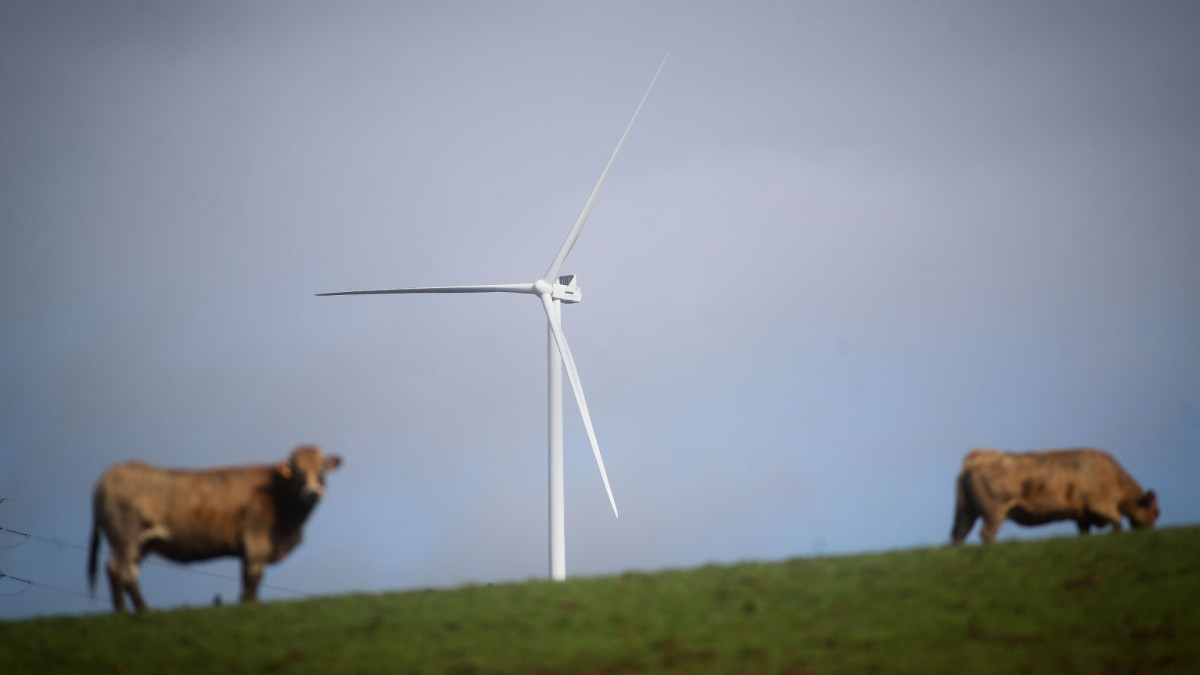
Eurostat data show that the share of renewable energies in final gross consumption has risen from around 14% in 2012 to more than 25% in 2024.
“The energy transition is, furthermore, a productive shift because it involves investment, new value chains, technological innovation, and industrial reconfiguration”
This progress does not make Spain energy self-sufficient. However, it does modify the structural balance. It increases domestic production capacity, reduces part of the exposure to volatile markets, and improves strategic positioning within the European context.The energy transition is, moreover, a productive shift because it involves investment, new value chains, technological innovation, and industrial reconfiguration.
4. Logistics: from the periphery to a competitive hub
The competitiveness of an open economy depends largely on its infrastructure and its logistical efficiency.
The World Bank’s Logistics Performance Index ranked Spain 26th in 2007 and 13th in 2023. We are not talking ideology or expectations: the index measures infrastructure, customs efficiency, quality of logistical services, and timeliness.
“The logistical position is a key variable that influences export competitiveness, investor attractiveness, and resilience”
The improvement in the ranking reflects a buildup of physical investments, port modernization, sector professionalization, and greater integration into global value chains. In a world where supply chains have become a strategic element, the logistical position is a key variable that influences export competitiveness, investor appeal, and resilience to international disruptions.
5. Digitalization: fewer frictions, new dependencies
Digitalization has probably been the most cross-cutting change.
At the beginning of the 2000s, e-commerce was marginal and digital administration was in its infancy. Today, more than 20% of European companies receive orders online and Spain ranks high in the EU for digital public services.
Digitalization reduces transaction costs, expands markets, facilitates internationalization and allows reorganizing production processes. It was key during the pandemic and remains a driver of business transformation.
At the same time, it creates new vulnerabilities: external technological dependence, concentration on global platforms, cybersecurity risks. The risks do not disappear, but they transform.
“Beyond good and evil”
These five changes do not solve all problems. Productivity remains an outstanding issue. Demographic aging shapes the labor market and public finances. Regional inequality and housing pressure generate real tensions.
But structural analysis requires recognizing that the Spanish economy in 2024 is not the one in 2004. It is less dependent on construction, more internationalized, has advanced in renewables, has improved its logistics position, and is clearly more digital. What this does not mean is that growth is sufficient or that welfare is guaranteed. It means that the debate about whether “Spain is doing well or poorly” loses depth when these fundamentals are ignored.
“Structural transformations are cumulative, cross political cycles, and respond to crises”
Economies do not change overnight, nor do they do so solely due to the action of a single government. Structural transformations are cumulative, cross political cycles and respond to crises, investments, business decisions, and technological changes.
If we want to discuss the country’s economic future with rigor, perhaps it is worth starting there: by understanding how its structure has changed and which new strengths and fragilities have emerged.
