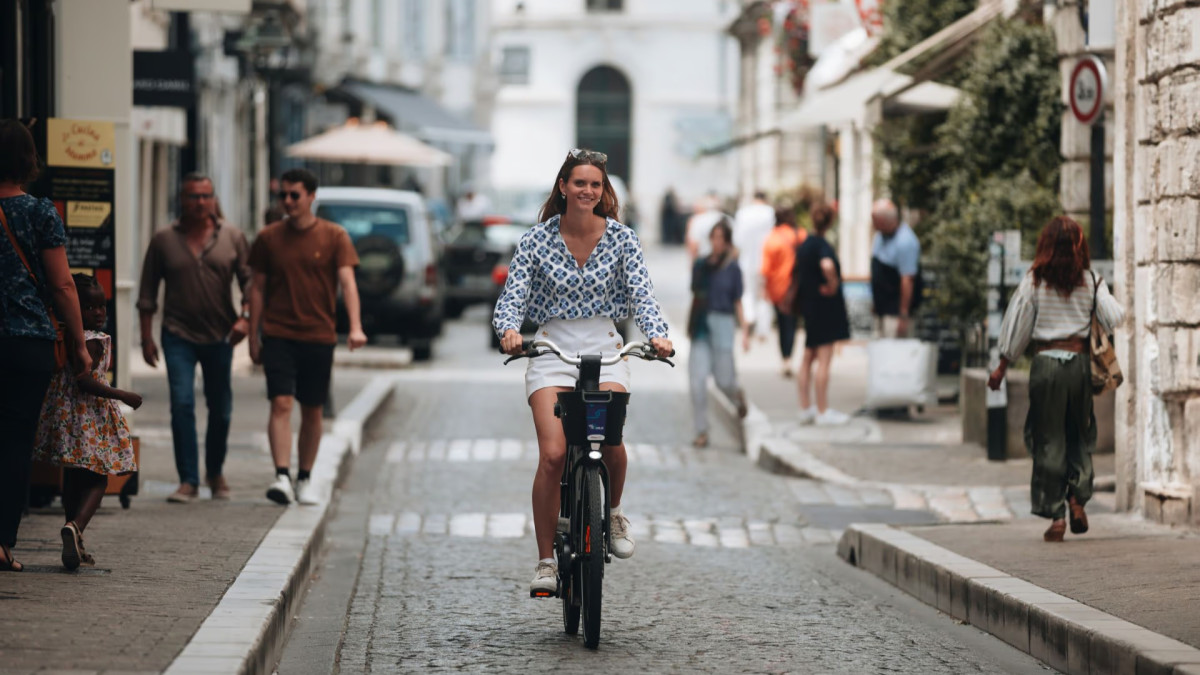
Every year on November 8, World Urbanism Day invites us to reflect on how the design of cities conditions the daily lives of their inhabitants. Few issues illustrate this more clearly than mobility: how we move around, what alternatives are within reach, and what place each form of transport occupies in public space. Yet, while the ecological transition is increasingly central in official discourse, its implementation is advancing at very different speeds from city to city. The shared bicycle is a telling example of this inequality. Although some large capitals have solidified these systems as part of their transport network, large portions of the country continue to accumulate delays, interrupted projects, and missed opportunities.
“Although some large capitals have consolidated these systems as part of their transport network, a large portion of the country continues to accumulate delays, interrupted projects, and missed opportunities”
The figures from the cities that have invested most in this service reflect its growing importance in daily mobility. In Barcelona, Bicing has 8,000 bicycles and recorded 19.5 million trips in 2025. In Madrid, Bicimad has extended to all 21 districts, surpassing 8,300 bicycles and reaching 13.7 million trips per year. But the growth of shared bicycles is not limited to Spain’s two main cities. Zaragoza, which refreshed its Bizi service in January 2025, had by July 2026 surpassed 11.3 million trips since its launch, with an average of more than ten rides per bicycle per day. The Aragonese capital has thus become one of the most notable examples of the recent expansion of this mode of transportation.
The data from the report The Economic and Social Potential of Shared Bicycles in Spain, produced by Fifteen, a European company specializing in public bicycle-sharing systems, help place these experiences in perspective. Based on an analysis of 144 Spanish cities with more than 50,000 inhabitants —home to over 26 million people—, the study identifies important differences in the needs of each municipality. Zaragoza leads the ranking of relative fleet demand, with an optimal estimate of nine bicycles for every 1,000 residents, ahead of Murcia (eight), Madrid (seven), or Barcelona (six). In absolute terms, Fifteen estimates that the Aragonese capital might need between 5,000 and 7,000 bicycles, a figure considerably higher than the 2,500 with which Bizi was completed in 2025.
The Fifteen diagnosis puts the potential annual active user base at 6.85 million, the demand if the 144 analyzed municipalities properly sized their fleets. The actual rollout of these systems, however, remains far from that scenario. The census conducted in July 2024 by the Network of Cities and Territories for Bicycles (RedBici) counted barely 37 public systems in operation across Spain, of which only seven exceeded a thousand bicycles. The snapshot from that moment showed that numerous medium-sized municipalities and larger population centers lacked a structured public network.
Differences can even appear between neighboring municipalities. This is the case of Seville and Alcalá de Guadaíra, which show very different results in the Opportunity Index compiled by Fifteen. This indicator links the potential demand for public bicycle systems with the available infrastructure and helps identify areas where there is greater development potential. While Seville records 3.6 points, Alcalá de Guadaíra reaches 16.7, one of the highest scores in Spain. The gap between the two cities is especially meaningful given their geographic proximity and their inclusion in the same metropolitan area.
The contrast repeats in other parts of the country. Arona (32.6), San Cristóbal de La Laguna (28.2), and Telde (24.5) top the Opportunity Index, signaling a high potential demand relative to existing cycling infrastructure. At the opposite end, municipalities such as Iruña (3.1), Getxo (3.2), or Barcelona (4.0) have lower indices, associated with more developed cycling networks and better conditions for expanding services. Thus, the gap affects not only the availability of bicycles but also the urban conditions necessary to use them.
Where the car is replaced
The consequences of this inequality go beyond mobility and directly affect social equity and climate goals. The role of shared bicycles in a major metropolis is not necessarily the same as in a mid-sized city. In Madrid or Barcelona, with dense and established public transport networks, a substantial portion of bicycle trips substitutes movements that would otherwise have been made by the metro or bus. By contrast, in cities with populations between 50,000 and 100,000, where urban bus services are often less frequent and intercity connections less flexible, public bicycles have a greater capacity to replace private car travel.
According to Fifteen’s estimates, each kilometer traveled on shared bicycles in these mid-sized cities saves around 21% more in emissions than in large capitals: 0.061 kg of CO₂ per km versus 0.051 kg. If optimal fleets were deployed across the 144 municipalities analyzed, the study projects that 26,518 tonnes of CO₂ could be avoided yearly.
“If the optimal fleets were deployed in the 144 municipalities analyzed, the study projects that 26,518 tonnes of CO₂ could be avoided per year”
This environmental impact also varies considerably from city to city. València, for example, leads the climate-saving potential per user, with seven kilograms of CO₂ avoided per year, followed by Seville (5.9) and Zaragoza (5.5). The report links these differences to car usage and the average distance of trips. In this way, cities where shared bicycles replace more car trips can achieve greater environmental benefits, even with smaller systems than those of large capitals.
Alongside these environmental benefits lie significant socio-economic advantages. The report estimates a net annual social return of 121 million euros for the whole of Spain, a figure derived from European investment-return models that account for various positive externalities. Among these are reductions in healthcare costs associated with sedentary lifestyles and cardiovascular diseases, traffic decongestion, and productivity gains. In a context where transport accounts for around 11.6% of the average household budget, according to INE, and where lower-income households devote a substantial portion of their income to maintaining a motor vehicle, shared bicycles can become an affordable option to facilitate daily access to work, university, and essential services.
If the potential benefits are so wide-ranging, why have so many town halls not taken the plunge? Experience shows that putting bicycles into circulation is a first step to ensuring the success of a public system, but there are also other important aspects.
“Shared bicycles can become an affordable option to facilitate daily access to work, university, and essential services”
The first barrier is structural. Having a safe, continuous, and well-connected cycling network makes it easier to bring in new users and allows shared bicycles to become a normal option for daily trips. Although these systems can work in cities with limited cycling infrastructure, their expansion also depends on citizens finding safe conditions in which to move. The second difficulty is financial and governance-related. Between 2021 and 2025, the Recovery Plan and Next Generation EU funds allowed financing up to 90% of the initial investment (CAPEX) in many municipalities. The main challenge arises later, when cities must shoulder operating costs (OPEX): redistribution of bicycles between stations, fleet maintenance, battery replacement, and maintenance of the technological systems. According to RedBici’s 2024 analysis, the average cost per inhabitant was around 2.43 euros per year, though with substantial differences depending on the scale of the service and the management model.
The design of the systems also conditions their viability. Traditional fixed stations, with individual docks for each bike, require permanent work and installations that entail high costs and offer limited flexibility in streets where space is already scarce. In contrast, some cities are exploring more agile solutions based on geolocation technologies and lightweight infrastructures, as well as hybrid models that combine single-use lending with mid-duration rental, such as MugiBIKE in Vitoria-Gasteiz.
Added to these considerations is the need to fully integrate the shared bicycle into the overall public transport network. Coordinating fares, payment systems, and connections with other modes of transport remains a pending challenge in many municipalities. In this area, the Sustainable Mobility Law and European funding instruments—such as the EDIL Plans linked to FEDER 2021-2027 or the Climate Social Fund for 2026-2032—offer opportunities to advance toward better-connected and more accessible mobility networks.
“The coordination of fares, payment systems and connections to other modes of transport remains a pending challenge in many municipalities”
The lesson from Madrid, Barcelona, or Zaragoza is that there is no one-size-fits-all recipe. It is not about reproducing the large metropolitan systems on a smaller scale, but about tailoring each network to the distances, the topography, and the real needs of its inhabitants. The Fifteen report helps identify where there is room to develop shared bicycles and what benefits it could bring. Some cities have been counting trips by public bicycle for years. Others are still calculating how many could be done.
In partnership with: