
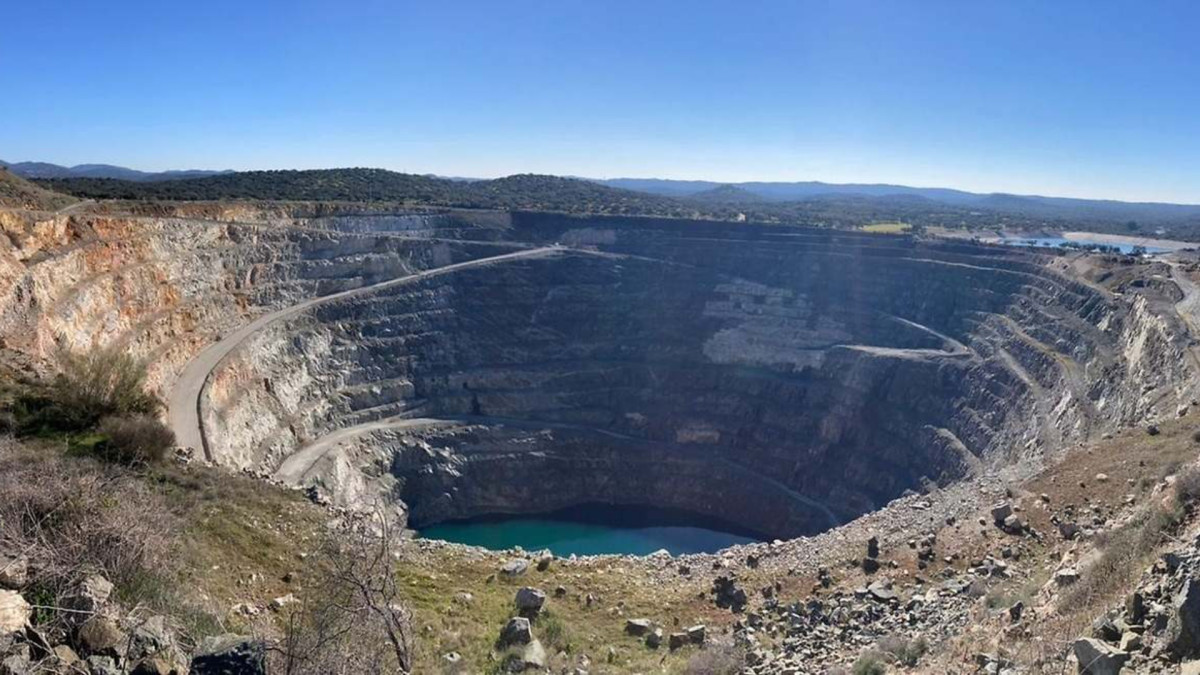
Spain has entered, almost without realizing it, into the European map of critical mining. Seven of the 47 strategic raw material projects selected by the European Commission are on Spanish soil, spanning extraction and processing of copper, lithium and other minerals essential for decarbonization. The First Action Plan for the Sustainable Management of Mineral Raw Materials 2026-2030 and the new European Regulation on Critical Raw Materials (CRMA) have given political backing to a sector that lives largely on the fringes of public debate. And it does so, moreover, under the 1973 Mining Law, pre-constitutional, designed for another country and another era, with hardly any environmental, social or territorial conditions.
The underlying reasoning is well known: there is no decarbonization without batteries, and batteries without lithium, cobalt or nickel. Europe currently imports 87% of the lithium it consumes, and the CRMA states that, from 2030, no more than 65% of the EU’s annual consumption of each strategic raw material, at any relevant stage of transformation, may come from a single third country. But it is worth remembering that minerals are not where they are convenient, but where geology deposited them. That is, almost always, in rural areas with less bargaining power against external capital and less political weight. The debate is not “yes or no to mining,” but how and under what conditions it is carried out where the resource exists, taking into account the current moment.
“The debate is not “yes or no to mining,” but how and under what conditions it is carried out where the resource exists, taking into account the current moment”
Spain also enters, in the entire value chain: what is extracted can end up processed, turned into a battery cell and installed in a vehicle without leaving the country, with recycling and reuse — the new Battery Regulation requires recovering up to 90% of cobalt and nickel— as the last link. That full chain is a real industrial opportunity, but it also multiplies the points where social legitimacy could fail. And here the problem is both rejection and ignorance: a 2025 study showed that 63% of Spaniards believe mining should be promoted, but eight out of ten are unaware that it generates more than 320,000 jobs, and nearly half do not know how they would react if a project opened near their town.
This mineral transition will only be viable if it is built from the outset on the principle of a just ecological transition, not as an afterthought. The agreements signed after the coal mining closures — assistance for restructuring, governance with unions, environmental restoration — demonstrate that it is possible, and mandatory, to bring companies, workers and territory to the same table before conflict erupts. And that table, that dialogue, must be established in the pre-project phase, with a shared diagnosis of expectations, risks and returns, not afterwards. It must be part of the design and implementation.
Meanwhile, reform of the Mining Law remains pending: the Action Plan approved in March 2026 includes its modification to integrate CRMA provisions, but the update has not yet been approved. Concretely, this requires: social legitimacy understood as a process, not a procedure; real participation of communities in the design of projects, not only in their environmental assessment; social and territorial sharing of the value generated, with binding restoration at closure; and due diligence in human rights that is demanded with the same rigor from companies and supply chains of imported materials, to avoid applying here a standard that we do not claim from third countries.
“From Spain it is clear that our country should condition its own public support on the strict compliance with these environmental, social and territorial criteria”
That double standard is avoidable, and the EU seems to be taking steps to address the how: the December 2025 Automotive Package and the European Commission’s March 2026 proposal for an Industrial Acceleration Regulation propose conditions of European content for investment in the battery chain, in the debate between a strict Made in Europe and a flexible Made with Europe. Whatever the outcome, from Spain it is clear that our country should condition its own public supports to the strict compliance with these environmental, social and territorial criteria from the very first moment of the project, not as a later revision.
At ECODES we argue that Spain should take advantage of this industrial window without sacrificing biodiversity, water or social and territorial trust. But only if we discard the idea that there exists mining that is “sustainable” or “responsible” by definition, since that is a content-empty concept through repeated statements without verifiable conditions behind. Social legitimacy is not decreed from Madrid nor from Brussels: it is built, project by project, with those who will live with the mine, the plant or the factory for decades. The transition toward a decarbonized economy will only deserve to be called a transition if it is, also, ecological, just and inclusive.
