
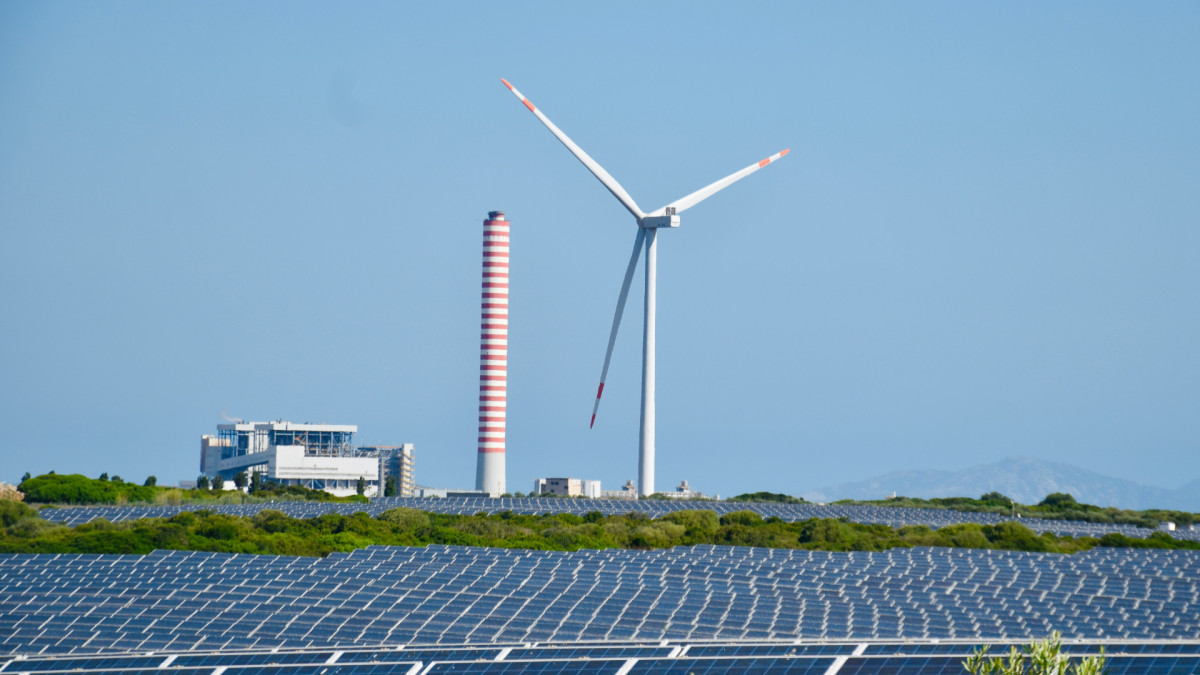
The climatic, socio-economic, and geopolitical reality places us before an uncertain, unstable, or unpredictable scenario, marked by real, concrete, and profound challenges. In any case, it is undeniable that we are facing an urgent paradigm shift, for which we may ask how we prepare ourselves and what tools we have to confront it. The current context of multi-conflict has increased uncertainty and its impact on national energy security.
A few days ago we witnessed one of the state’s early responses with the approval of Royal Decree-Law 7/2026, which incorporates the comprehensive crisis-response plan for the Middle East. This regulation highlights the urgent need to continue advancing toward greater strategic autonomy by increasing the penetration of renewable energies in our energy mix.
In this new situation, it is essential to equip ourselves with tools and instruments that allow us to advance in a firm and just manner in the energy transition, both to respond to the uncertainty of climate change and to strengthen our resilience and energy sovereignty.
“It is essential to equip ourselves with tools and instruments that allow us to advance in a firm and just manner in the energy transition”
Since 2023, the Red Española para el Desarrollo Sostenible (REDS-SDSN Spain) has been driving the project Renewables with the Territory in collaboration with Eudemon Project and Insta Jurídic, with the support of the European Climate Foundation and the involvement of more than seventy organizations. Thanks to the work carried out to date, we have a realistic, practical, and concrete roadmap that includes fifty measures aimed at guiding public administrations and actors in the energy sector in deploying solar and onshore wind renewable infrastructure.
During the latest phase of the project, developed between 2025 and 2026, we addressed three complementary and fundamental lines of work to promote multisectoral dialogue in Spain’s energy transition and to deepen the impact of the roadmap.
On the one hand, we scaled the document’s recommendations to those bodies and institutions competent in the development of public policies and with sectoral competencies in areas such as biodiversity preservation, adaptation and mitigation to climate change, the design of energy policies, or the just transition. On the other hand, in our habit of active listening and territorial work, we focused part of our actions on two autonomous communities with different realities in the deployment of renewable energies: Catalonia and Galicia. In both cases we worked to move from theory to territorial practice, exploring a social-licence model in which excellence takes precedence over mere compensation.
“The energy transition is not only a technological matter; it is a debate about model, sacrifices, and justice”
From the work carried out over the last year emerges a central learning: the energy transition is not merely a technological issue; it is a debate about model, sacrifices, and justice. In this transition, collective intelligence becomes fundamentally important. From Renewables with the Territory we undertake the challenge of translating the regulation into practice: the project can act as a support in turning part of the content of the newly approved Royal Decree-Law 7/2026 into reality. The roadmap driven by REDS-SDSN Spain collects and legitimizes a series of criteria that today are reflected in this RDL.
The new regulation establishes a legal framework that orders the sense of urgency. Within this legal framework, Renewables with the Territory constitutes a manual of instructions on how these processes should be operationalized, from design to decommissioning of projects, offering a shared vision of how renewable energies can contribute to territorial cohesion and reverse processes of rural depopulation.
This is, in essence, the raison d’être of the project itself: to define a shared vision of how renewable energy should advance. Because, without dialogue and participation, the ambition of the Royal Decree-Law will hardly achieve the legitimacy needed for the proposed changes to crystallize into a new energy reality in our country.
One aspect we believe could mark a before and after in the deployment of energy projects is the figure of the so-called social and territorial excellence projects, included in article 20 of Royal Decree-Law 7/2026.
From the roadmap’s content, we can contribute to the future definition of what could be a standard of social and environmental excellence, giving shape to a significant portion of the criteria necessary to obtain this recognition.
“In this scenario of urgent need, priority must be given not only to speed but also to suitability and quality of projects”
Aware of the need to increase the renewable share in our energy system as soon as possible, we consider it important to stress that, in this scenario of urgent need, priority must be given not only to speed but also to suitability and quality of projects. That is, seek what fits best and who can do it best, not who runs the fastest.
Lessons from past experiences should be used to reduce risks, minimize impacts, and position good governance and social equity as central values for a safe and sustainable rollout of renewable energies.
Another important aspect that is strengthened by the scenario outlined in the approved regulation is the reinforcement of municipal competencies, especially in areas such as promoting self-consumption, the energy transition, and driving or participating in energy communities within their territory. We deem this advance fundamental, since, in the face of global challenges, the power of the municipal and community scale is more relevant than ever. The energy transition will be local or it will not be.
Beyond the energy issue, the ecological transition is a complex process whose objectives can be undermined by waves of misinformation. Working in alliance with other organizations and institutions is key to ensuring that the advances achieved are shared, amplified, and inspire continued forward momentum.
From REDS-SDSN Spain we advocate for multi-actor shared responsibility and for institutionalizing quality in advancing the energy transition in Spain. We will continue working along this line, relying on ambitious regulatory frameworks and coordinating tools such as the roadmap, in coordination with many other initiatives that are driving the shift toward a fairer, cleaner, and more balanced energy model.
While the climate emergency requires quick action, social justice makes it unavoidable not to leave anyone behind. We believe that future actions promoted from Renewables with the Territory will serve as a catalyst to transform rules into effective management tools with which to build a new energy system worthy of the challenges of this 21st century.
