
The Unforeseen Move Shields Taxpayers from a Steep Bill—For Now
The shift in Virginia politics after the 2025 statewide elections left the Democratic Party with full control, spotlighting two longstanding labor-policy goals: repealing the state’s right-to-work regime and enforcing public-sector collective bargaining. Yet, less than half a year into Democratic governance in Richmond, the labor movement has come up short. While union advocates may be disappointed, taxpayers in Virginia have a fresh incentive to cheer.
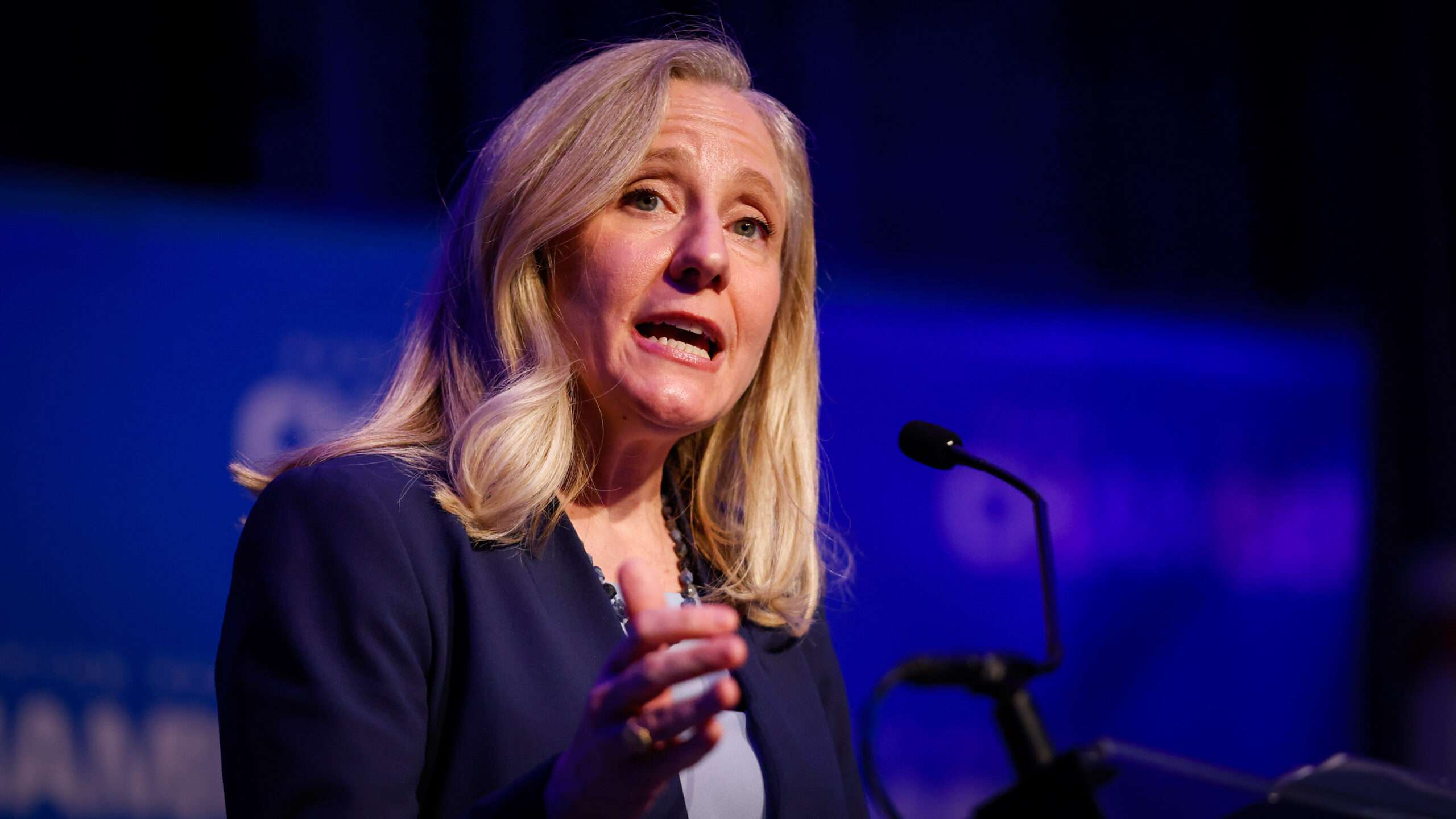
And they have an unlikely beneficiary to thank—at least for the moment: Governor Abigail Spanberger, who vetoed the collective-bargaining bill last week.
The arc of the story stretches back to the campaign trail. Spanberger entered the race with robust union backing and secured the Democratic nomination buoyed by that support. She even earned the endorsement of the Virginia Police Benevolent Association—a police union that had largely backed Republicans in recent cycles—over Republican challenger Winsome Sears, underscoring Spanberger’s appeal to organized labor.
Even so, Spanberger repeatedly indicated during the campaign that she did not back a complete repeal of Virginia’s right-to-work statute, a framework that has stood for roughly eight decades. That stance led observers to read her remarks for signs of a more limited or partial reform rather than an outright reversal.
There was significantly less ambiguity on the issue of public-sector bargaining. In response to a candidate questionnaire, she answered affirmatively to the question of whether she would “champion and sign legislation to ensure collective bargaining rights for all public employees.”
Virginia remains among the small group of states that prohibit public-sector collective bargaining, a prohibition that has been in place since a 1977 state Supreme Court decision. In 2021, under Democratic leadership, the law was tweaked to permit an opt-in arrangement, allowing localities to pass ordinances enabling bargaining rights. Only a modest share of localities chose to opt in.
The 2026 Democratic objective was to convert public-sector bargaining from a local option into a statewide requirement. Earlier this year, lawmakers introduced a bill to achieve that statewide mandate. After clearing the General Assembly, the measure reached Spanberger’s desk, with union supporters confident it would be signed into law.
But Spanberger surprised many by returning a revised version of the bill to the Legislature. Her amendments altered key provisions, including replacing language that used “shall”—which would compel bargaining on wages, hours, and benefits—with “may,” thereby softening the mandate. The revised version also pushed back the implementation timeline for localities from 2028 to 2030 and favored advisory arbitration rather than binding arbitration for contract disputes.
Perhaps most consequential, Spanberger’s rewrite empowered a newly created state agency—the Public Employee Relations Board—to oversee the process. An Economic Policy Institute analysis noted that the original bill laid out detailed rules for union elections and contract negotiation timelines, while Spanberger’s version left many of these specifics to the board’s discretion.
Unions warned that this amounted to a regulatory death sentence: the board’s five members would be appointed by the governor, raising fears that a future Republican administration could stack the panel with anti-union figures. Spanberger’s version also dropped a requirement that two board members be union representatives, further diluting union influence over the proceedings.
Confronted with the rewritten bill, the General Assembly yielded to union pressure and rejected Spanberger’s changes. That left the decision in the governor’s hands—either to veto the original legislation or to accept the amended version. Spanberger chose to veto.
Union representatives cried foul, accusing her of a bait-and-switch and drawing a parallel to the Republican predecessor, Gov. Glenn Youngkin. Even with the veto, Spanberger reiterates her support for public-sector bargaining and says she looks forward to a future bill she would be prepared to sign into law. Democrats will maintain their trifecta through at least the 2027 elections, which could provide time to resolve the disagreement before the political balance in Richmond shifts again.
In the meantime, residents of Virginia can breathe a sigh of relief—because mandating public-sector bargaining remains a politically risky policy, at least from a policy perspective. Research has consistently shown that mandatory bargaining drives up state and local government spending—roughly $600 to $750 more per person per year, a rise that could translate into higher taxes for many households. Projections tied to the proposed Virginia measure estimated annual state costs of about $50 million, with localities facing anywhere from $50,000 to $403 million over a two-year span.
In short, Virginia taxpayers dodged a substantial projected bill thanks to Spanberger’s veto. They will have to hope she continues to stand firm on the issue going forward.
