
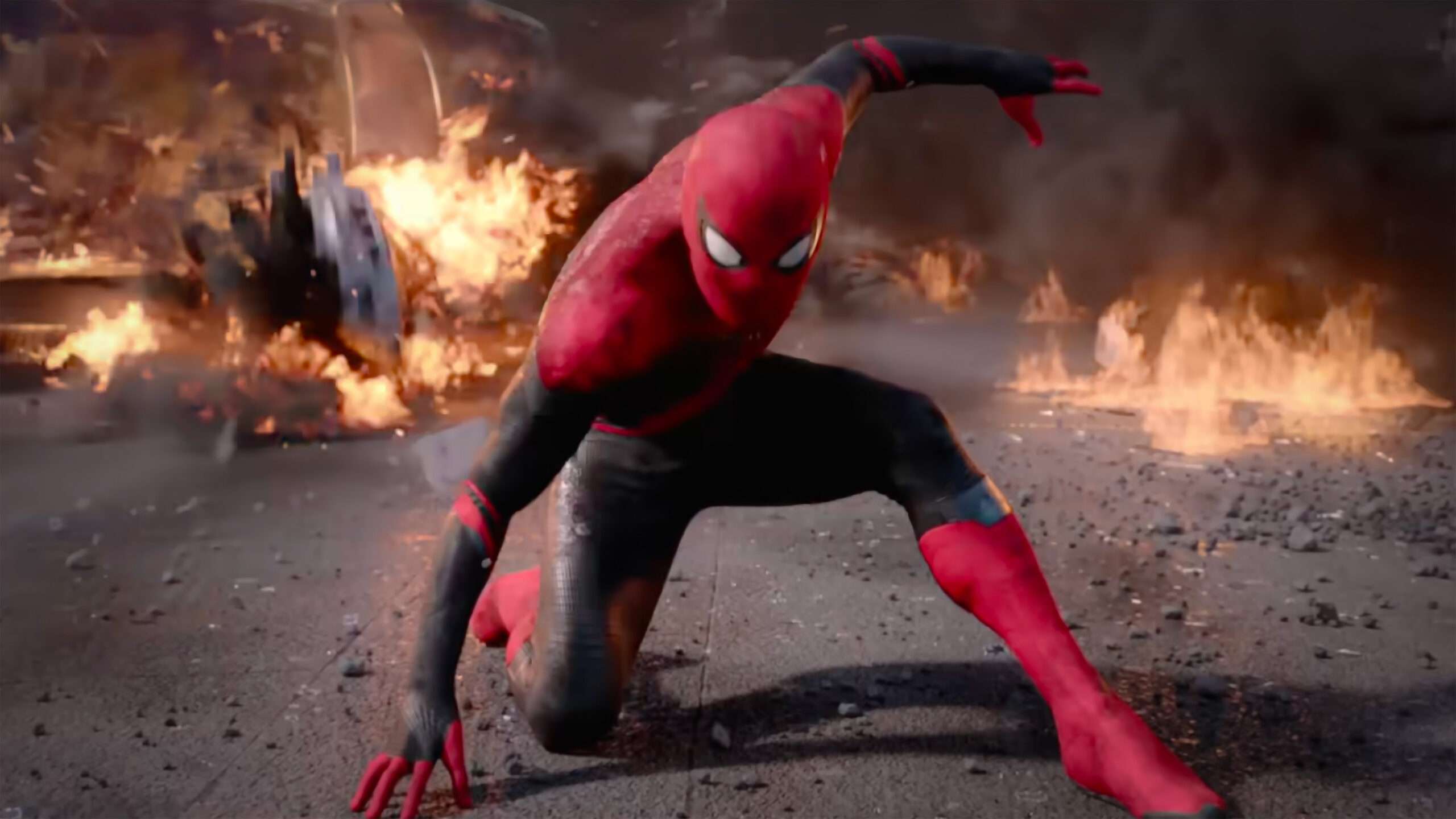
A grittier, more mature Spider-Man film that shines when the focus stays squarely on the hero.
Sure enough, it’s 2026, and another Spider-Man feature has arrived. Across nearly a quarter-century, these films have kept rolling, and yes, I’ve watched every single one.
Even after 25 years spent watching Spider-Man through films (and Spidey TV shows, and Spidey cartoons), I’m not tired of seeing him on the big screen, and judging by early box-office projections—the film could approach $2 billion worldwide—viewers aren’t either, even amid broader fatigue with superhero cinema.
Partly because even the weakest installments have managed to entertain sporadically, or at least feel curiously odd, and partly because Spider-Man stays as relevant as ever—a lovesick avatar of youthful freedom and unease, a charming parable about the burden of power and responsibility. It would be nice if real power holders in our world carried that weight.
Since Sam Raimi’s 2002 kickoff established Spider-Man as a box-office force and helped kick off the superhero boom, the character has been played by several actors—first Tobey Maguire, then Andrew Garfield, and since 2017, Tom Holland—each bringing a kind of franchise reset, with a new director and a new tone.
The latest entry, Brand New Day, offers another reset, with a new director, Destin Daniel Cretton, and a mood that blends grounded realism with painterly splash-page spectacle.
Tom Holland, however, remains. When we first met him nearly a decade ago in Spider-Man: Homecoming, he was wiry and boyish, an adolescent charmer bordering on cute. Holland is now 30. He’s a little older, a little more weary under the eyes, and while he’s no middle-aged grump, he’s more mature, and so is his Spider-Man. The movies have grown up with him.
Once again, Holland’s Spider-Man—alter ego Peter Parker—is paired up with Zendaya, playing his longtime flame Mary Jane Parker. The movie is chaste, as superhero films tend to be, but the chemistry between the two is exquisite, which is perhaps not surprising given that they’re a real-life couple. This is despite the fact that, for complicated narrative reasons dating to the end of the previous film, she doesn’t remember him. It’s the movie’s excuse for you, the viewer, to forget everything that has happened before and start over.
Which is great, considering the weight of the superhero chronology that has built up until now. Spider-Man was formally integrated into the Marvel Cinematic Universe (MCU) about a decade ago, and the saga has grown so labyrinthine that even fans struggle. At its best, Brand New Day offers something like a fresh start.
This isn’t a radical tonal experiment like the Spider-Verse animated films or the recent Spider-Noir series on Amazon. Rather, it’s a Spider-Man movie that, in its best moments, attempts to just be a story about Spider-Man. The problem is that fresh start is just a board clearing intended to spin up the wheels of yet another intertwined, multi-year, comic book movie saga, the next stage of the MCU.
It’s not that the extended cameos from The Punisher (the ever-electric Jon Bernthal) or The Hulk (Mark Ruffalo) are unwelcome, exactly. There’s a gargantuan mid-movie set piece pitting two of the trio against the other in a midtown office building that makes for one of Spider-Man’s better big-screen action sequences.
But a major reveal late in the film feels more like a setup for another movie, or more realistically multiple movies, in a way that comes across as almost compulsive, habitual—a formal tic this mega-franchise can’t quite quit.
In the run-up to this movie’s release, Holland, fresh off his time working with Christopher Nolan on this month’s other cinematic smash, The Odyssey, offered what amounted to an implicit criticism of the franchise:
“We need to know why we are making this movie beyond the fact that it’s Spider-Man 4 and they make loads of money and we’re going to just have a big summer,” Holland told GQ. Another Spider-Man sequel, he said, had to answer the question: “Why are we making this movie?”
Why, indeed. And in the film’s climactic moments, the answer seems to be: to set the stage for even more Marvel superhero movies.
I am all too aware that Marvel boss Kevin Feige has said there are MCU installments planned through 2042, which, if we get there, will be a solid 40 years since the very first, pre-MCU Spider-Man movie came out. Couldn’t this one movie stand alone, here and now? Not every movie needs to be a decision box in a larger franchise flowchart. (Yes, there are flowcharts, plural.) Sometimes another Spider-Man movie just needs to be another Spider-Man movie. If it simply does whatever a spider can, perhaps that’s enough.
