
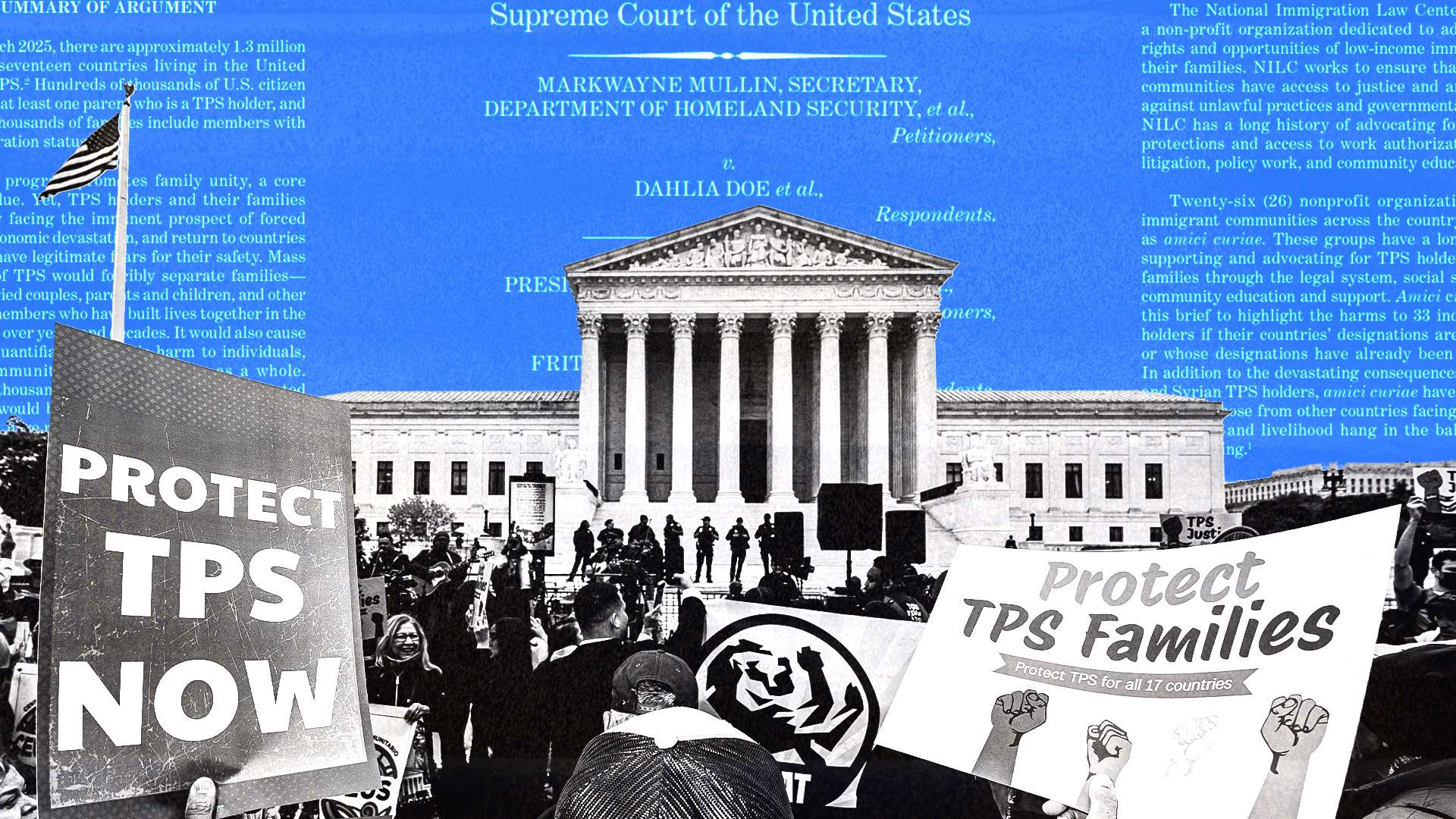
In a 6–3 decision handed down on Thursday, the U.S. Supreme Court backed the Trump administration’s move to strip Haiti and Syria of a legal shield that had allowed them to stay in the United States because returning home would put them at risk.
The case, Mullin v. Doe, centers on the Temporary Protected Status (TPS) program, a framework permitting executive branch officials to designate countries based on conditions such as ongoing conflict or natural disasters that render returns dangerous. Once designated, nationals from those countries can remain lawfully in the United States without fear of deportation, as the government has determined that repatriation would be too perilous.
The Court’s Thursday ruling confirms the administration’s authority to end TPS protections for Haitian and Syrian nationals.
Under the TPS statute, there is no judicial review of any designation, termination, or extension of a designation. In the majority opinion authored by Justice Samuel Alito, that language was deemed enough to dispose of most of the dispute, as it plainly bars all of the respondents’ non-constitutional claims.
Moving then to the constitutional challenges, Alito rejected them as well. He observed that one equal-protection argument claimed the termination of Haiti’s TPS designation reflected the country’s racial makeup; however, he found that argument without support, noting that another argument presented by the same respondents offers a race-neutral explanation: the current administration has opposed the TPS program at least as it has been applied previously and has terminated every designation brought up for renewal.
In dissent, Justice Elena Kagan, joined by Justices Sotomayor and Jackson, contended that the TPS statute does permit judicial review to assess whether the Secretary followed the mandated procedures, which is precisely what the plaintiffs challenge. They likewise rejected the majority’s view that race probably did not influence the government’s actions, pointing to evidence including remarks by the President that are deeply offensive and racially tinged.
The practical consequence is that hundreds of thousands of people who had been lawfully residing in the United States have now lost a central protection against deportation, even as executive control over immigration policy grows stronger.
The Supreme Court’s decision in Mullin v. Doe is available here.
