
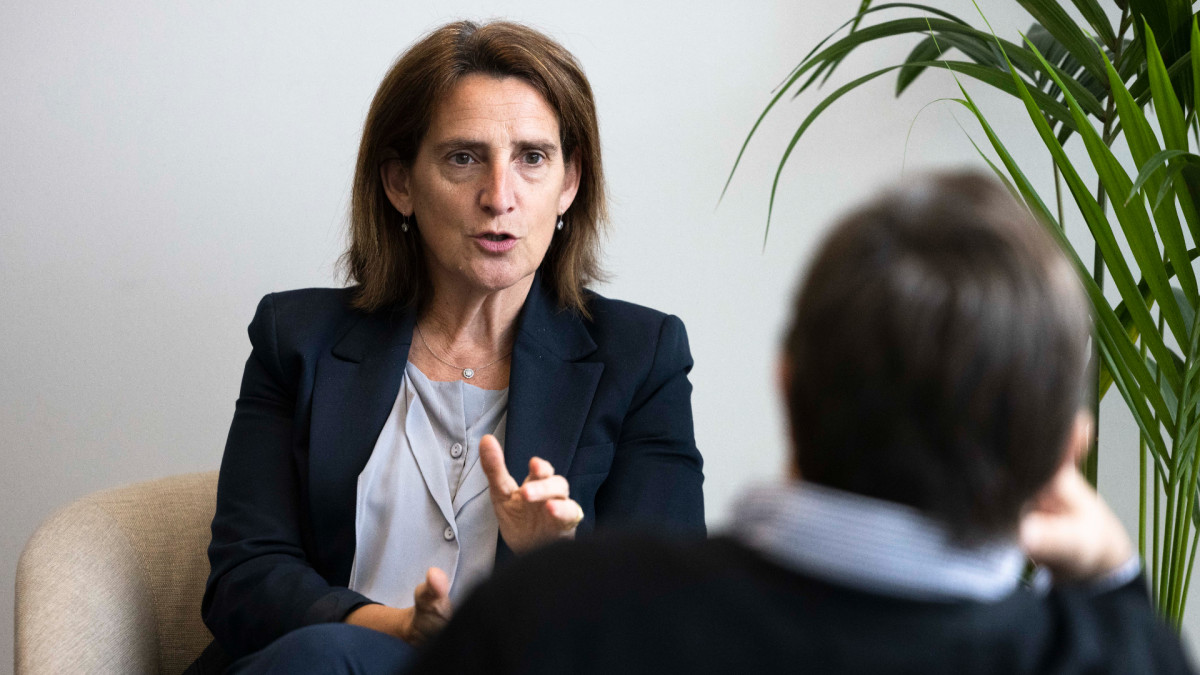
The European Union is navigating between unprecedented external pressure and internal fragmentation that threatens its ability to respond. In a conversation in Brussels, at the Berlaymont building —the European Commission’s headquarters where the executive vice president has her office— with Marc López Plana, Ribera frames the debate in terms of political survival: preserve the foundational values, avoid polarization, and gain agility without turning simplification into deregulation. For her, the European challenge is not a lack of diagnoses, but the difficulty of acting as a “political animal” at a moment when prosperity, the welfare state, and global influence depend on quicker decisions.
The conversation covers the main fronts of the European debate: competition, European champions, energy, industrial policy, state aid, the single market, and the power of digital platforms. Ribera defends updating competition rules to allow scale without giving “blank checks” to large companies, defends Spain’s push for renewables, and warns that Europe cannot replace one dependency with another—digital. Her stance blends industrial pragmatism with a defense of standards: more integration, more of Europe’s own capabilities, and common rules so that the transformation does not fracture the European project.
Teresa Ribera hosts Marc López Plana at the Berlaymont to discuss the current political moment of the European Union. Photo: Bru Agency
How would you define the moment of the European Union?
It is an existential moment. The European Union must decide whether to cling to its founding values and its will to continue building a genuine union, capable of creating space and dimension to guarantee the high quality of life promised to its citizens in the Treaties; or, on the contrary, to fall prey to rising polarization and the search for scapegoats in such a turbulent time.
Evidently, external pressures generate tension within Europe. In a very short time we’ve moved to a situation where our main partner in constructing multilateralism since the end of World War II no longer practices that trustful relationship and, in addition, directs a good portion of its attacks toward the European Union.
Added to this is a near neighbor with an expansionist vocation that is enormously dangerous and aggressive, and an industrial power growing at breakneck speed, like China. There are also the difficulties in maintaining coherence in defending our values on the international stage and in reconciling our domestic agenda with our foreign policy.
“If we stay slow, if we betray our values, and if we unravel the European project, we will be doomed to an agony”
All of this is tremendously challenging. We have strengths, values, and opportunities to keep finding solutions, but if we stay slow, if we betray our values, and if we unravel the European project, we will be doomed to an agony and a major shift in the geopolitical order, but also in our ability to deliver prosperity, the welfare state, and the model of success that Europe represents in the world today.
It seems difficult to reconcile two realities: on one hand, a European Union that needs to be more united; on the other, politically fragmented countries more and more. Spain, Italy, France, and Germany show increasing difficulty in forming majorities and making decisions. Does that national fragmentation then affect the European Council and the European Parliament? How do you link this complicated moment of national policies with the need for greater European unity?
If we take a bit of distance, which is always advisable for big problems, we are much closer than that vast parliamentary arc we see in our national parliaments and in the European Parliament. The values, the principles, the sense of Europe, and the pride in feeling European remain very present. That helps.
Moreover, the European project has long shown that, even in very complex situations, we are capable of finding creative solutions to face our responsibilities together. Perhaps the most terrifying recent challenge was Russia’s invasion of Ukraine and the coercion Europe faced in terms of the availability of high-priority energy commodities. The aim was clearly fragmentation, and it did not succeed. It was not easy to address that issue, and we did it successfully.
Now external pressures have accumulated, and that has created the space needed to fuel populism and to unleash the frustration or fear we may feel in the need to be brave in our responses.
Therefore, two things should be kept in mind. First, if we step back, we are closer than we think. Second, to succeed now we need to operate on two different planes.
“This is a moment to remember what works, defend it, and keep our values in mind when shaping responses”
On one hand, use that proximity for the big lines of European construction and the European response. On the other hand, be far more effective and agile in responses that impact citizens, external action, or the defense of that political animal the European Union was never designed to be.
What do I mean? When we look at the big topics, how simplification and agility can improve responses, how we gain competitiveness and continue generating wealth internally, or how we expand our space as a middle power by building updated alliances with third countries, we know that is where the space is for a proposal aligned with today’s challenges.
For too long we have assumed that advantages would remain by themselves, without needing care, and that we could focus only on criticizing, shaming, or underscoring what does not work. This is a moment to remember what does work, defend it, and keep our values in mind when shaping our responses.
The Commission is trying to carry out that exercise, sometimes with great difficulty, but with a firm commitment. If the traditional timing for finding responses used to be two or three years before a legislative proposal, we now know we must be extraordinarily agile. Perhaps we need to reduce the regulatory ambition and act within the margins we already have, which are many, very creative, and allow us to tackle field work more effectively.
In communication and explanation, we must demand of our political representatives —those in European institutions, but also those in national politics— to be much more careful about how they explain, criticize, and propose.
“We cannot stay with the short, petty bargaining of being angry because we believe there are endless reasons to be so”
Everyone has the right, and also the duty, to criticize what does not work. Yet this is a moment where the most important thing is to build bridges, join forces, and be effective in the response. We cannot stay in the short-sighted bargaining of being angry just because we find countless reasons to be so.
Let us transform that anger and displeasure into proposals for solutions. The list of problems is relatively easy to construct. The responsibility of a good politician is to find solutions to those problems.
Ribera is also Commissioner for Competition. Photo: Bru Agency
Simplifying and moving faster, could that come into conflict with protecting certain rights?
It depends on how it is done. I have been very critical of some initiatives that have been pushed forward because, if simplification equates to lowering environmental and social standards, that is not simplification. That is deregulation and undoing the core premises of a project based on an open market economy with high social and environmental standards.
That is our model. It is what citizens aspire to. I do not think our democratic societies can weather a crisis of protecting values as would be entailed by deregulating environmentally and socially our model.
That said, of course there is room for simplification. Simplification does not mean shedding the shared umbrella among the Twenty-Seven, because that would lead us to twenty-seven different regulations. Simplification means asking how we can be more agile in our responses; how we can ensure the Commission’s ability to act or to fund projects is much more operational and rapid; and how we can accompany the transformation of our economies.
Simplifying means that, where we identify a need —for example, electrifying our final energy consumption as quickly as possible— we should consider how solutions can be provided so that all citizens have access to obvious responses, such as heat pumps.
“Simplification does not mean shedding the shared umbrella among the Twenty-Seven”
That is simplification: not having to go through a three-year regulatory process and then wait for transposition of those rules at the national level. We can be much more agile with instruments directly linked to implementation, to operability, or to clarifying a regulatory fabric that sometimes overlaps, contradicts, and develops differently in each member state, with other intermediate levels also completing their application.
Therefore, simplifying means thinking about how we build a single market, deepen our borderless economy, and facilitate that citizens and businesses have faster access to their daily reality without lowering environmental or social standards.
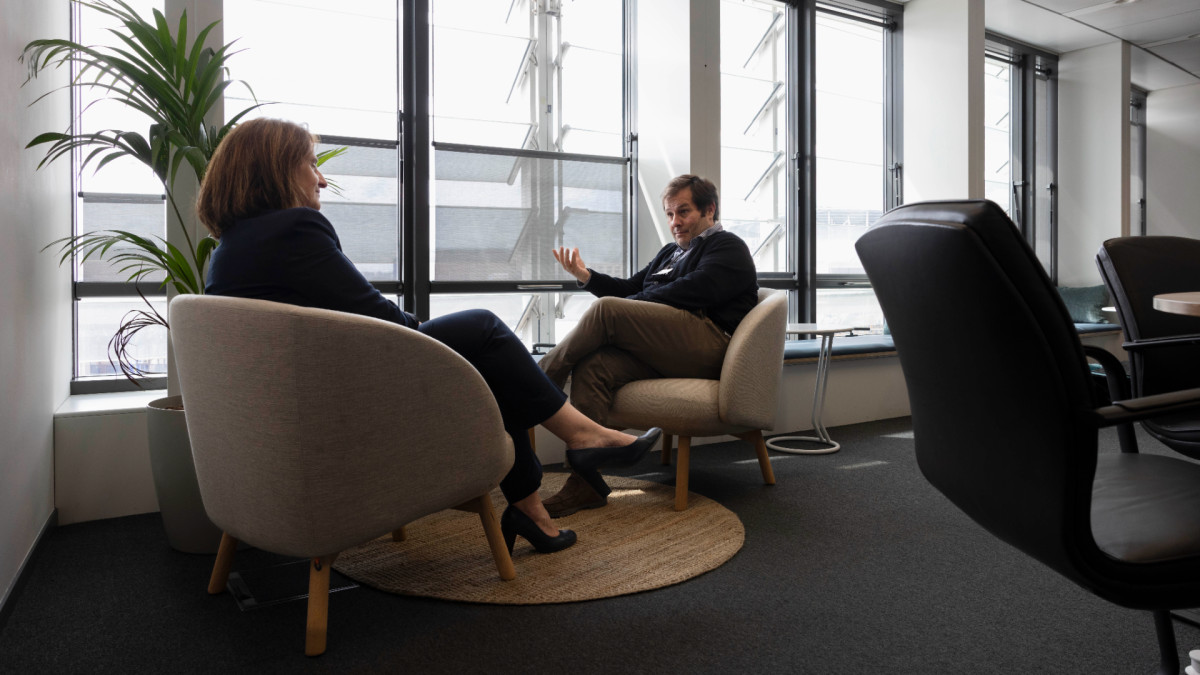
Marc López Plana questions Teresa Ribera about the tension between regulatory simplification and rights protection on the European agenda. Photo: Bru Agency
Champions on a global stage, competition, or the single market: which should be Europe’s priority?
All three.
There is a very important debate here. I do not believe Europe, its economy, its companies, or its consumers benefit from a blank-check policy where large firms set the rules of the world or the interests that deserve protection.
In fact, we are seeing the opposite: a challenge to the sector where power is most concentrated, namely the digital realm. We are not interested in that lack of competition. It would curb the incentive to innovate, improve, and produce high-quality goods and services.
Fortunately, today we live in a world with many more players who have developed greater capabilities and are in a position to make notable leaps in technological innovation. If there are two vectors driving major global economic growth, they are the green — clean technologies — and the digital. And they are growing very strongly in many economies that are very different, not only Western.
There is also a willingness to participate in our internal market because it is a high-quality market with 450 million people with strong purchasing power by comparison.
The reality is that, in many cases, building European champions capable of competing in global markets faces a difficulty that does not stem from a lack of commitment to ensuring competition, competitiveness, and innovation incentives. It is more tied to the difficulty of operating at the European level due to fragmentation among twenty-seven national markets, which has not yet been overcome thanks to the construction of the internal market.
“The building of European champions capable of competing in global markets faces the difficulty of operating at the European level”
There are sectors particularly important in this regard. We lack a single telecommunications market, a single energy market, a single capital and financial services market. That fragmentation generates higher costs for companies that operate, but also for consumers seeking alternatives in other markets, whether to grow as companies or to avoid being resigned to what their national market offers.
That is where we must reconcile how to facilitate rapid integration of these markets. This has been one of the commitments the President echoed in her recent State of the Union address. It was also emphasized by both Draghi and Letta in their reports, and Letta again in a recent meeting proposing the idea of One Europe, One Market.
From a competition perspective, we must also modernize how we assess the advantages, drawbacks, and potential harms of these operations. If we need innovation, scale, and resilience in our internal market to give space for our own industries to grow, we must recognize that the benefits of a merger or acquisition often take time to materialize.
Consumer protection remains the most important priority. The harms are certain: we can identify them immediately, as they would occur right after a merger. The benefits, however, can take time to materialize.
What we have sought to do is think about how we can contribute, while respecting our own mandate, to that effort to spur innovation, resilience, sustainability, size, and scale of our companies. And we have chosen to do so in a highly transparent way: by explaining which criteria we consider important and sharing them in advance.
We also aim to establish from the outset a dialogue that allows a clearer understanding of the advantages and disadvantages of such a transaction. That makes it possible to evaluate from the start to what extent they are solvent and promising in terms of mid-term benefits, or to what extent there are difficulties that would make the operation insurmountable and save us all the time of that debate.
We are now in the midst of a public consultation on those guidelines, which I believe are groundbreaking and perhaps the most innovative published and shared by any jurisdiction so far. There have been recent updates in the United Kingdom and the United States, and I think they are extremely interesting.
The path is made by walking. At this moment we have an opportunity to fine-tune and adjust. It has been an immensely participatory process, in which we have heard from everyone. A large part of the competition community —academic, legal, and business— has publicly contributed and helped us reach this point.
So we need it all at once: global scale, internal market, and updated criteria to assess pro-competitive, scale-gaining operations, while respecting the ultimate sense of what we are.
The European Commission’s First Vice President addresses the debate on competition, the single market, and European champions. Photo: Bru Agency
Spain has made a clear bet on renewable energy and on ensuring energy prices cheaper than in other countries. The European debate features three vectors: Spain’s cheap energy that attracts investment but does not always reach the rest of Europe; France and its nuclear strategy; and Germany, undergoing economic difficulties but still able to rely on state aid. How can these three realities be reconciled within the European industrial agenda?
Beyond National policy commentaries that do not fall under my remit in my role, there are several important reflections. The first is a retroactive reproach to those who clogged the wheels —and continue to do so— of the green economy, sustainability, and the efficient use of resources. Efficient resource use frees money for training improvements and more innovation.
The example of some consumer goods, which can be clean or not, shows how far blunt attacks on this transformation process, which Europe identified early and has been driving for years, have been a mistake.
Over twenty years ago we started a process to electrify mobility, knowing the importance of the automotive industry for our continent, in terms of direct and indirect jobs. There was fierce opposition to that change process. Some even irresponsibly accused those of us who supported a paced, industry-friendly transition of defending ideological positions.
Suddenly we face two significant things. First: some have managed to get ahead of us. Second: we depend on something we do not have. We depend on fossil fuels that we do not possess, when we actually have the capacity to electrify those final uses.
Some countries also lack fossil resources and have achieved electrification of their final energy use above 30% at a rapid pace. Europe, by contrast, remains stuck around 23%. Mobility and thermal uses still largely depend on imported gas and oil, which complicates the transformation.
“It wasn’t just about having cheaper energy than others, but about having affordable energy”
Spain learned well the lesson of how much betting on something we did have and turning it into a vector for building a powerful industrial and services ecosystem was a great move. It wasn’t merely about having cheaper energy; it was about affordable energy, removing unnecessary import costs, improving air quality, health, and dependencies, while also generating a vibrant fabric of capital goods, installation, and maintenance industries that are highly attractive.
I think we did well. We still have unresolved arbitral decisions from previous political choices, but today Spain enjoys a much stronger, solvent, and attractive position from an industrial deployment and much safer for its households than other EU countries that did not push the transformation with the same intensity.
Today we know, and Iran’s war underscores, that the reasons to accelerate electrification, use energy efficiently, and build responses based on our available resources are not only environmental, public health, or moral ones, though those are crucial. They are also reasons of supply security, economic security, and security, period.
We cannot leave ourselves at the mercy of third countries’ coercion, geopolitical tensions, conflicts, or wars that have been linked to energy since the 19th century.
Other central European countries have made different bets. France chose nuclear energy early and maintains that bet for the next generation. Other countries that have long driven Europe’s economy and led in terms of technological revolutions are now facing tough times.
The collective responsibility of all is to find the balance so that everyone feels comfortable continuing to build. That includes how to cover the modernization need and reduce Germany’s dependencies. At the same time, responses to this need for adaptation and to this transformation of our continent’s economy and the single market cannot be done at the cost of breaking that single market or risking unraveling decades of internal market construction.
That is why, from the early days of this mandate, we wanted to reflect that our economic bet and our industrial vocation as a continent are tied to clean industry. We know this is a race against the clock, and a large portion of member states wants to accompany the modernization of their industry.
However, if we want to accompany that process, we must have common rules. We must identify where there is a market failure that needs support, understand what provisional support is being provided in one place or another, and avoid distortions, improper use of public resources, or real inequalities within a similar market level. That is what guarantees effective, transparent, and fair competition among different industries.
This is the reality we have today, regardless of the challenge still posed to national governments in accommodating those rules.
“The Commission also bears responsibility as guardian of the Treaties, which may eventually involve opening infringement procedures or sanctions”
And again, regarding the Commission’s role or how we simplify, I believe our obligation in this difficult moment is to facilitate that change process. It is not enough to simply say “you cannot do that,” although that is important and part of the conclusions that keep appearing. The Commission also bears responsibility as guardian of the Treaties, which may eventually involve opening infringement procedures or sanctions.
But there is a dimension that is gaining particular relevance now: being facilitators of that change while respecting the treaties. Therefore, this openness to finding the simplest possible answers is crucial.
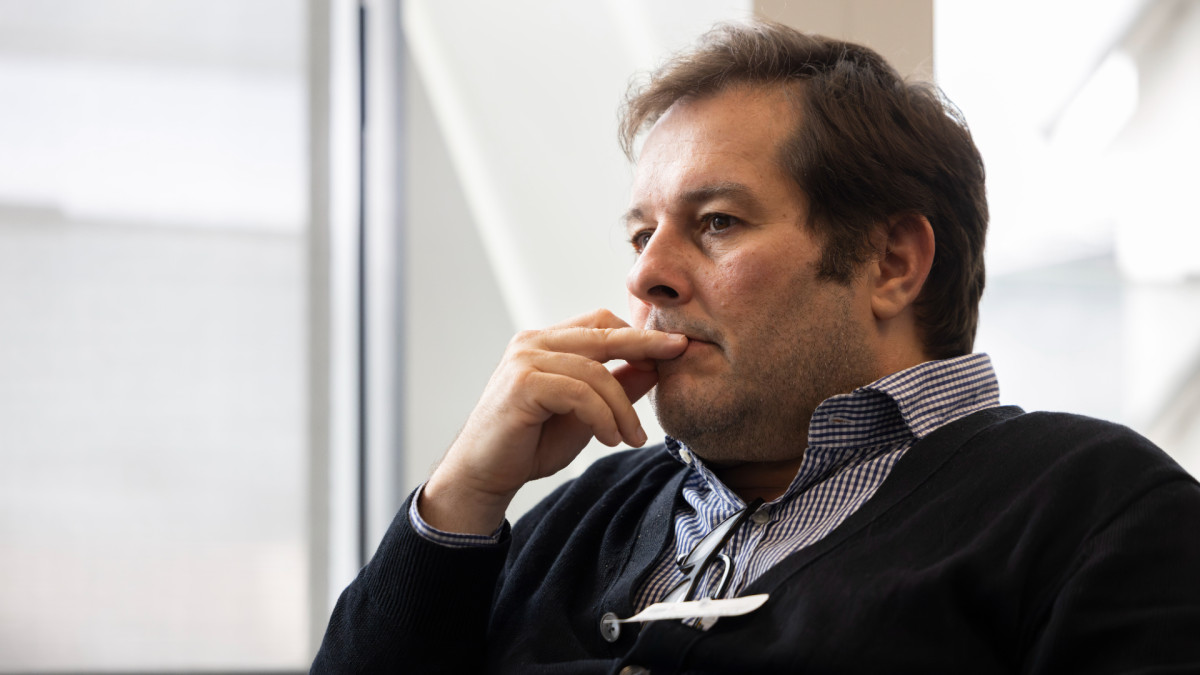
Teresa Ribera analyzes the power of the big tech firms and the need for platforms to respect European rules. Photo: Bru Agency
There is an ongoing debate about the big tech companies. For example, concerns have been raised about minors’ access to social networks. But there is also the question of how non-European firms act in a market like the European one, with its own rules. At the same time, it seems the U.S. government wants to use these companies in its dealings with the European Union to obtain greater regulatory flexibility. How can we ensure that companies with greater economic power than many countries respect European rules?
This is a very interesting area in which we must be very fast for many reasons. When we look at the competitiveness gaps between the U.S. and European economies, they are not in manufacturing or in services in general. They are fundamentally in two types of services: digital and financial. There is a competitiveness gap there that also introduces a different productivity dynamic in the economy.
In other areas—industry, basics—we remain far more competitive in terms of quality, remuneration, and worker satisfaction. Therefore, we clearly know where we must place a very notable bet as a continent and as an economic power.
“We are facing a profound transformation of the economic model, of productivity, of social relations, and of how information reaches us”
Europe has a wealth of startups, knowledge, quantum development, and computing that can turn into digital services. Yet in the growth of these digital services and companies, the difficulty of finding financing instruments to scale and the speed with which others have grown enormous makes many disappear or be absorbed. We are trying to address this with our entire digital development package, which has a notable industrial and economic component.
We once had Skype, which Microsoft bought. We had WhatsApp, which Facebook bought. We also had Booking… We have seen many companies disappear or be integrated into large groups.
Regarding the digitization of the economy and the digital reality, we are facing a deep transformation of the model, of productivity, of social relations, and of the way information, advertising, or services reach us, with potential risk of bias.
The first important point is that the growth of these companies has occurred in a context of tacit consent, lack of governance, and absence of rules beyond those they set for themselves. The response came late, primarily through competition rules, both in the United States and in our jurisdiction.
Reacting a posteriori is always more difficult, but we have powerful tools: the Digital Markets Act and the Digital Services Act, which I believe are more effective and faster than traditional antitrust mechanisms.
These companies, which have been enormously successful, have more than 30% of their business volume and results in the European market. Therefore, they care about and must comply with European rules. One complies with the rules of the place where it operates, not with the country where its head office is located.
This happens everywhere, regardless of nationality. Quality or health-protection standards in the U.S. olive oil market are met by the companies, regardless of whether the oil is produced in Italy, Greece, or Spain. Well, this is the equivalent. The functioning patterns in the European digital markets must comply with the rules of the European digital market.
This must be beyond any doubt. It is our obligation to our consumers and to our market. It is also our duty to try to ensure that our relationship with the rest of the market watchdogs in other jurisdictions is as smooth as possible, because the more compatible and coherent it is, the better.
Ultimately, the concern of an average American citizen about the unsanctioned use of their children’s images or the introduction of addictive elements into an algorithm is very similar to the concern of an average European citizen. And a U.S. court’s ruling can be very similar to what a European court might have ruled.
We are not talking about drastically different things. But we are addressing a reality that has grown outside regulation because there were no regulatory barriers to that growth. It is always harder to impose limits after the fact.
Likewise, there is a fair consensus at this moment as we witness the exponential growth of new digital realities. Content created from synthetic sources, without human involvement, is already part of our daily digital reality. Artificial intelligence is growing at an exponential rate and is already applied in terms of defense, aggression, social surveillance, and rights restriction.
This raises extremely important issues. What is the code of ethics behind it? What is the truth regarding transparency or accountability? How can we ensure it is used for good, for people, and that it maintains a human-centered purpose?
“Are democratic governments the ones with power, or are those who have built such an intricate web of dependencies the ones who hold the power?”
It also raises a challenge about who truly holds power. Are democratic governments the ones with power, or are those who have built such an intricate web of dependencies the ones who hold it? Because, clearly, these tools are useful and have brought many benefits, but they also place certain actors in a position of power beyond national realities. Today we ask how it is possible to declare some form of civil death due to lack of access to digital services that are part of our daily lives: bank accounts, transfers, hotel bookings. This has happened with judges of the International Criminal Court and with United Nations officials. As one might put it, here’s an obvious example with a button.
How can someone be digitally identified and tracked to the death? How can AI tools be used as a weapon of war? How can a business owner warn: “We have developed a tool we must curb, because we know it can identify weaknesses and exploit them”?
Our air traffic, our financial traffic, and much of our reality are already virtual. So too are public health services, citizens’ data, election results, and the information that reaches us. Therefore, yes, we face a truly generational challenge.
We cannot succumb to any temptation, pressure, or blackmail regarding our duty as Europeans to develop our own industrial capacities to avoid reliance on others. We cannot wind up facing a coercion similar to the one we faced not long ago with energy goods. At the same time, we must think about what kind of governance and guarantees we want to ensure that our progress remains linked to people’s progress.
This is one of the most important challenges ahead. We cannot renounce it. We are making a notable effort, and my conviction is that, beyond being remarkable and cross-cutting, it must be a rapid effort, very fast, grounded in values and in the early identification of risks we do not want to face in the medium term.
But I insist: in many of these elements, our concerns may coincide with the concerns of a large portion of the rest of the world’s people.
Thank you very much.
